Utredare: Tillräckligt med gift för att döda tusentals
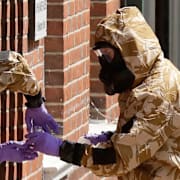
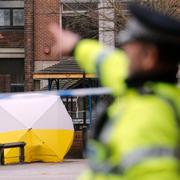
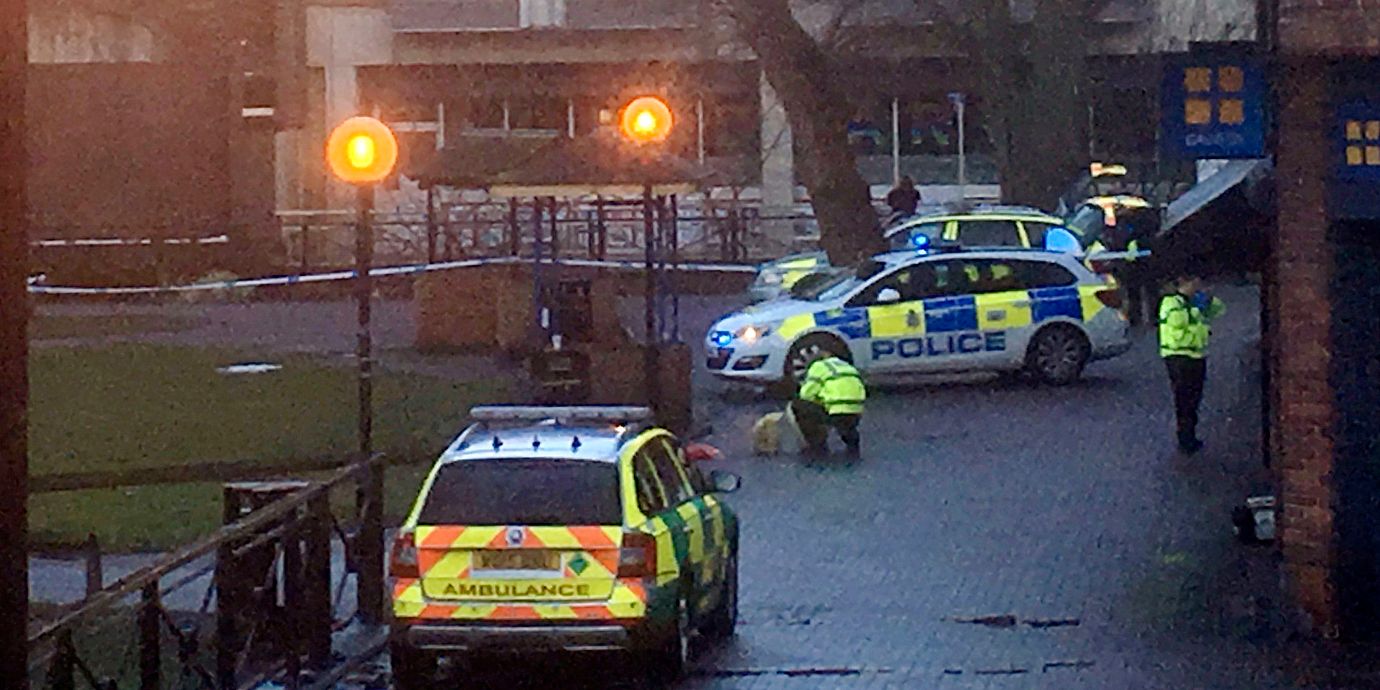
Den parfymflaska med Novitjok som hittades i brittiska Salisbury innehöll tillräckligt med gift för att potentiellt kunna döda tusentals personer, uppger utredare för BBC.
Nervgiftet Novitjok är en av de dödligaste substanserna och det hittades i en parfymflaska i en sopkorg i staden tidigare i år.
Ryske ex-spionen Sergej Skripal och hans dotter utsattes för ett mordförsök i mars i år, men överlevde. Det gjorde även den polis, Nick Bailey, som undersökte ex-spionens hem. Fyra månader senare dog Dawn Sturgess, 44, efter att ha hittat parfymflaskan och sprejat på sin handled, men hennes partner Charlie Rowley överlevde.
Förgiftningen av Sergej och Yulia Skripal
Wikipedia (en)
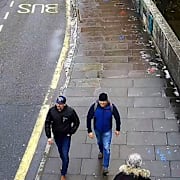
On 4 March 2018, Sergei Skripal, a former Russian military officer and double agent for the UK's intelligence services, and his daughter Yulia Skripal were poisoned in Salisbury, England, with a Novichok nerve agent known as A-234, according to official UK sources and the Organisation for the Prohibition of Chemical Weapons (OPCW). After three weeks in a critical condition, Yulia regained consciousness and was able to speak. She was discharged on 9 April 2018. Sergei was also in a critical condition until he regained consciousness one month after the attack. He was discharged from hospital on 18 May 2018.A police officer was also taken into intensive care after being contaminated when he went to Sergei Skripal's house. By 22 March he had recovered enough to leave the hospital. An additional 48 people sought medical advice after the attack, but none required treatment.In the 1990s, Sergei Skripal was an officer for Russia's Main Intelligence Directorate (GRU) and worked as a double agent for the UK's Secret Intelligence Service from 1995 until his arrest in Moscow in December 2004. In August 2006, he was convicted of high treason and sentenced to 13 years in a penal colony by a Russian court. He settled in the UK in 2010 following the Illegals Program spy swap. Sergei holds dual Russian and British citizenship; Yulia is a Russian citizen, and was visiting her father from Moscow.Later in March, the British government accused Russia of attempted murder and announced a series of punitive measures against Russia, including the expulsion of diplomats. The UK's official assessment of the incident was supported by 28 other countries which responded similarly. Altogether, an unprecedented 153 Russian diplomats were expelled. Russia denied the accusations and responded similarly to the expulsions and "accused Britain of the poisoning."On 30 June 2018 a similar poisoning of two British nationals in Amesbury, seven miles from Salisbury, involved the same nerve agent. A man found the nerve agent in a perfume bottle and gave it to a woman who sprayed it on her wrist. The woman, Dawn Sturgess, fell ill within 15 minutes and died on 8 July, but the man who also came into contact with the poison survived. British police believe this incident was not a targeted attack, but a result of the way the nerve agent was disposed of after the poisoning in Salisbury.On 5 September 2018, British authorities identified two Russian nationals, using the names Alexander Petrov and Ruslan Boshirov, as suspected of the Skripals' poisoning, and alleged that they were active officers in Russian military intelligence. In response, on 13 September the two men were interviewed on Russian television where they claimed they were businessmen and tourists visiting the city. The media commented afterwards upon inconsistencies in their descriptions. For example the claim to have planned a holiday long in advance whereas their flights were actually booked "at the last minute", and the brevity of their visit. Their passports were also described as being false covers, issued for the first time in 2009 with very similar numbers, no previous record of existence, and in one case, markings indicating military or other undercover or secret service use.
On 26 September 2018, investigative website Bellingcat published a statement that it had positively identified the man known as Ruslan Boshirov as the highly decorated GRU Colonel Anatoliy Chepiga. It noted that there had been unusually little published information on Chepiga, given that he had received a rarely bestowed award of Hero of the Russian Federation, an award personally given by president Vladimir Putin, and that the evidence available suggested Chepiga was active in covert operations. The statement also provided details of Chepiga's previous service and awards, and concluded that the use of a full colonel on the Salisbury mission, whom Putin knew personally, indicated that the assassination had been ordered "at the highest level".On 8 October 2018, Bellingcat revealed the real identity of the suspect named by police as Alexander Petrov to be Dr. Alexander Mishkin, following up with a more detailed report the following day.
bakgrund
Novitjok
Wikipedia (en)
Novichok (Russian: Новичо́к, "newcomer"/ "newbie"/ "novice, beginner/ new boy") is a series of nerve agents developed by the Soviet Union and Russia between 1971 and 1993. Russian scientists who developed the nerve agents claim they are the deadliest ever made, with some variants possibly five to eight times more potent than VX, and others up to ten times more potent than soman.They were designed as part of a Soviet programme codenamed FOLIANT. Five Novichok variants are believed to have been adapted for military use. The most versatile is A-232 (Novichok-5). Novichok agents have never been used on the battlefield. The UK government determined that a novichok agent was used in the poisoning of Sergei and Yulia Skripal in Salisbury, Wiltshire, England in March 2018. It was unanimously confirmed by four laboratories around the world, according to the Organisation for the Prohibition of Chemical Weapons. Novichok was also involved in the poisoning of a British couple in Amesbury, Wiltshire, four months later, believed to have been discarded after the Salisbury attack. The attacks led to the death of one person, left three others in a critical condition from which they recovered, and briefly hospitalised a police officer. Russia denies producing or researching agents "under the title Novichok".In 2016, Iranian chemists synthesised five Novichok agents for analysis and produced detailed mass spectral data which was added to the Organisation for the Prohibition of Chemical Weapons Central Analytical Database. Previously, there had been no detailed descriptions of their spectral properties in open scientific literature. A small amount of agent A-230 was also claimed to have been synthesised in the Czech Republic in 2017 for the purpose of obtaining analytical data to help defend against these novel toxic compounds.
Omni är politiskt obundna och oberoende. Vi strävar efter att ge fler perspektiv på nyheterna. Har du frågor eller synpunkter kring vår rapportering? Kontakta redaktionen