Värsta skolskjutningen på årtionden i Kanada
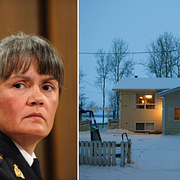
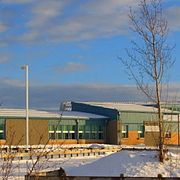
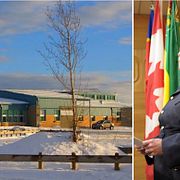
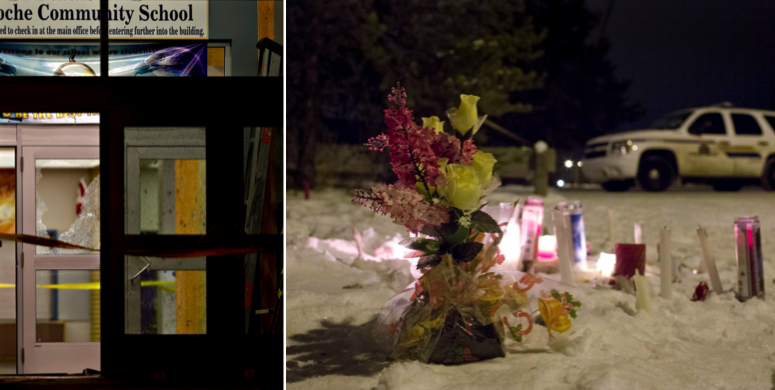
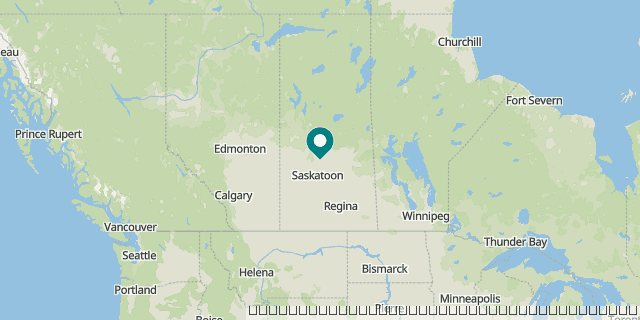
Den lilla staden La Loche i norra Kanada är i sorg dagen efter att fyra personer skjutits till döds. Få detaljer om skytten och omständigheterna har än så länge offentliggjorts, men klart är att händelsen sticker ut i ett land där skolskjutningar är relativt ovanliga.
Kanadas värsta skolskjutning genom tiderna ägde rum 1989. Då dödades 14 collegestudenter.
En misstänkt har gripits efter gårdagen men få officiella uppgifter om personen har släppts.
En vän till den gripnes familj har enligt Reuters uppgett att den misstänkte först skjutit sina två bröder och sedan gått till skolan och skjutit en lärare och en flicka.
bakgrund
Massakern på École Polytechnique 1989
Wikipedia (en)
The École Polytechnique Massacre, also known as the Montreal Massacre, occurred on December 6, 1989, at the École Polytechnique in Montreal, Quebec, Canada.
Twenty-five-year-old Marc Lépine, armed with a Mini-14 rifle and a hunting knife, shot 28 people, killing 14 women, before committing suicide. He began his attack by entering a classroom at the university, where he separated the male and female students. After claiming that he was "fighting feminism" and calling the women "a bunch of feminists," he shot all nine women in the room, killing six. He then moved through corridors, the cafeteria, and another classroom, specifically targeting women to shoot. Overall, he killed fourteen women and injured ten other women and four men in just under 20 minutes before turning the gun on himself. His suicide note claimed political motives and blamed feminists for ruining his life. The note included a list of 19 Quebec women whom Lépine considered to be feminists and apparently wished to kill. Since the attack, Canadians have debated various interpretations of the events, their significance, and Lépine's motives. Many feminist groups and public officials have characterized the massacre as an anti-feminist attack that is representative of wider societal violence against women. Consequently, the anniversary of the massacre has since been commemorated as the National Day of Remembrance and Action on Violence Against Women. Other interpretations emphasize Lépine's abuse as a child or suggest that the massacre was simply the isolated act of a madman, unrelated to larger social issues. Still other commentators have blamed violence in the media and increasing poverty, isolation, and alienation in society, particularly in immigrant communities.
The incident led to more stringent gun control laws in Canada. It also introduced changes in the tactical response of police to shootings, changes which were later credited with minimizing casualties at the Dawson College shootings.
Omni är politiskt obundna och oberoende. Vi strävar efter att ge fler perspektiv på nyheterna. Har du frågor eller synpunkter kring vår rapportering? Kontakta redaktionen