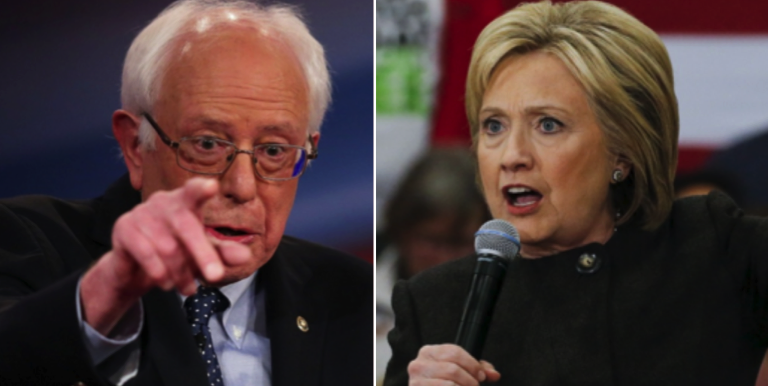
Sanders/Clinton (TT)

I natt möts Sanders och Clinton själva öga mot öga

I natt möts Demokratiska partiets rivaler Hillary Clinton och Bernie Sanders i sin första tv-debatt sedan sammandrabbningen i Iowa. Det är också den sista debatten inför nästa veckas primärval i New Hampshire, där Sanders har ett väljarstöd som vida överstiger Clintons.
Debatten är också den första utan Marylandguvernören Martin O’Malley som dragit sig ur kampen om att bli Demokraternas presidentkandidat.
Wall Street Journals Peter Nicholas skriver i ett blogginlägg att Clintons stora utmaning blir att vinna de unga väljarnas hjärtan. För att nå dit anser Nichols att Clinton behöver framstå som en mer visionär presidentkandidat än hon hittills gjort.
Aftonbladets Wolfgang Hansson skriver att Sanders tvingar Clinton att skärpa till sig och slipa argumenten.
”Hittills har Clinton och Sanders haft en väldigt servil ton mellan sig. Räkna med att det kan bli ändring på det i kväll och framöver. Sanders har fått åtminstone lite vittring på en seger och Hillary är tillräckligt oroad för att vara pressad.”
Debatten sänds live via MSNBC.com med start klockan 02.00 svensk tid.

Primärvalsprocessen

Det börjar med nomineringsmötena i Iowa 1 februari, fortsätter med det första primärvalet i New Hampshire 9 februari och slutar i början av juni med primärval i bland annat Kalifornien. I valen röstar väljare på partidelegater som i sin tur stödjer en viss presidentkandidat. Presidentkandidaterna utses sedan på partiernas konvent i juli.


bakgrund
 
Primärvalen i USA
Wikipedia (en)
The series of presidential primary elections and caucuses held in each U.S. state and territory is part of the nominating process of United States presidential elections. This process was never included in the United States Constitution; it was created over time by the political parties. Some states only hold primary elections, some only hold caucuses, and others use a combination of both. These primaries and caucuses are staggered generally between January and June before the general election in November. The primary elections are run by state and local governments, while caucuses are private events that are directly run by the political parties themselves. A state's primary election or caucus is usually an indirect election: instead of voters directly selecting a particular person running for President, they determine how many delegates each party's national convention will receive from their respective state. These delegates then in turn select their party's presidential nominee. Each party determines how many delegates are allocated to each state. Along with those delegates chosen during the primaries and caucuses, state delegations to both the Democratic and Republican conventions also include "unpledged" delegates, usually current and former elected officeholders and party leaders, who can vote for whomever they want. This system of presidential primaries and caucuses is somewhat controversial because of its staggered nature. The major advantage is that candidates can concentrate their resources in each area of the country one at a time instead of campaigning in every state simultaneously. However, the overall results may not be representative of the U.S. electorate as a whole: voters in Iowa, New Hampshire and other small states which traditionally hold their primaries and caucuses first usually have a major impact on the races, while voters in California and other large states which traditionally hold their primaries last in June generally end up having no say because the races are usually over by then. As a result, more states vie for earlier primaries to claim a greater influence in the process.

Presidentvalet i USA 2016

Omni är politiskt obundna och oberoende. Vi strävar efter att ge fler perspektiv på nyheterna. Har du frågor eller synpunkter kring vår rapportering? Kontakta redaktionen