Krigsoffer tvingas till kannibalism i Sydsudan
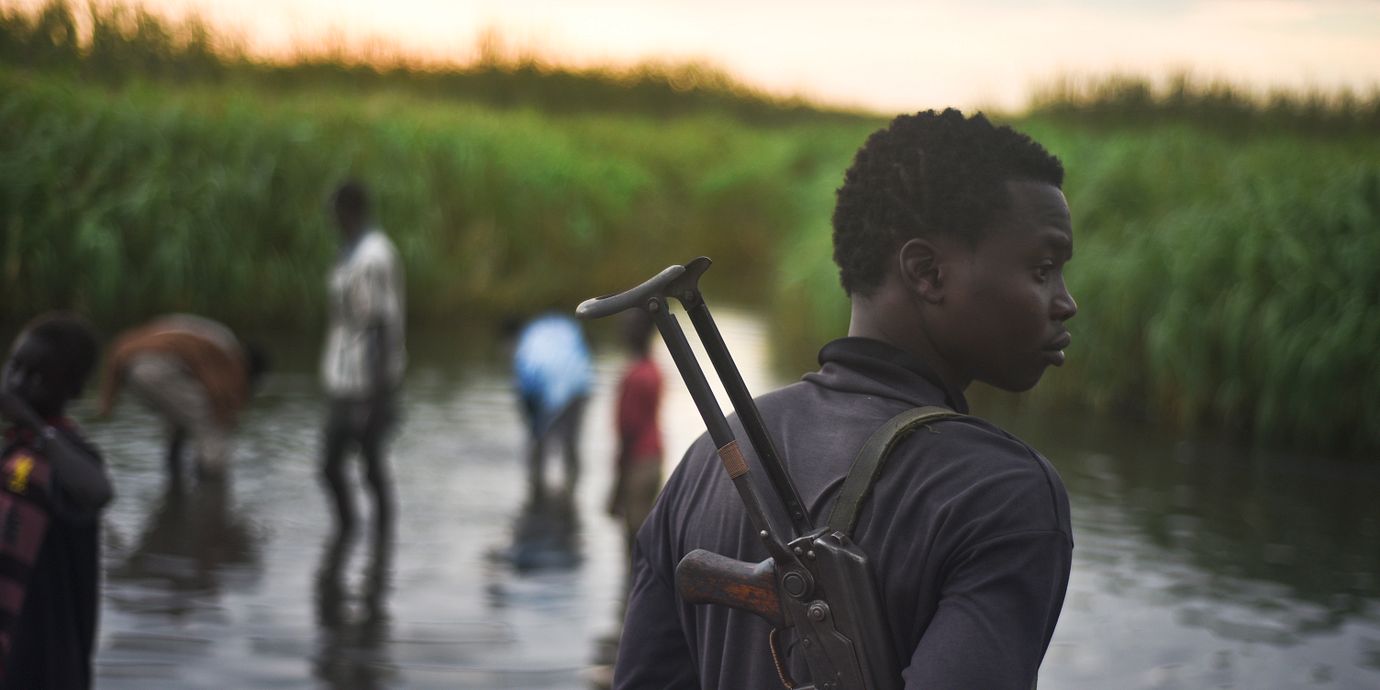
Båda de stridande sidorna i inbördeskriget i Sydsudan har gjort sig skyldiga ”omänskliga övergrepp” mot civilbefolkningen. Det konstaterar Afrikanska unionens (AU) kommission för mänskliga rättigheter i en 342 sidor lång rapport.
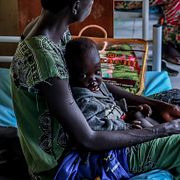
Personer berättar om hur överlevare tvingats dricka blod eller äta delar av människor som dödats. Mord, våldtäkter och tortyr har begåtts av både regeringsstyrkor och rebellgrupper, enligt rapporten.
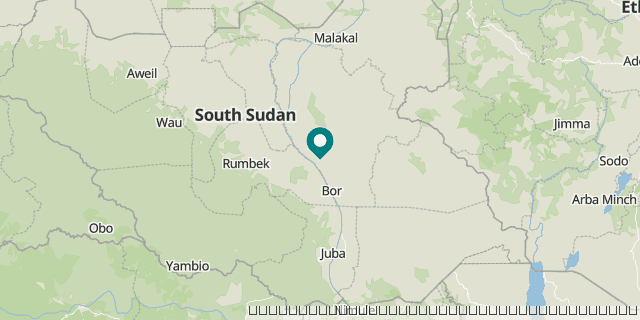
”Kommissionen tror att krigsbrott begåtts i Juba, Bor, Bentiu och Malakal”, står det i rapporten som refererar till de städer där konflikten varit som mest intensiv.
bakgrund
Inbördeskriget i Sydsudan
Wikipedia (en)
The South Sudanese Civil War is an ongoing conflict in South Sudan between forces of the government and opposition forces.
It began on the evening of 15 December 2013, at the meeting of the National Liberation Council meeting at Nyakuron, when opposition leaders Dr. Riek Machar, Pagan Amum and Rebecca Nyandeng voted to boycott the Sunday December 15, 2013 meeting of the National Liberation Council (NLC). President Salva Kiir ordered the Sudan People’s Liberation Movement (SPLM) Major General Marial Ciennoung, commander of the Presidential Guard (The Tiger Battalion) to leave the meeting venue and return to the barracks to disarm the troops. After disarming all ethnicities within the guard, Marial allegedly ordered that the Dinka members be re-armed. His deputy, from the Nuer ethnicity, began to question this order and a fight ensued when surrounding officers saw the commotion. The Nuer soldiers also re-armed themselves. Fighting erupted between the Dinka elements of the Presidential Guard and the Nuer elements, lasting from Sunday night until Monday afternoon. Civilian casualties began when the Dinka elements of the SPLM began targeting Nuer civilians in the capital city of Juba.
President Salva Kiir has called it a coup attempt and announced that it had been put down the next day, but fighting again erupted on 16 December and spread beyond the capital, Juba, to the region around Jonglei which is prone to ethnic conflict. Early estimates stated that at least 1,000 people were reported to have been killed and over 800 other people were injured in Juba, but this number has now been cited to be much higher than initially thought as a Human Rights Watch article cites eyewitness accounts of large numbers of bodies on December 17, and their removal in trucks to an undisclosed location December 18. Eyewitness accounts also cite SPLM Dinka troops assisted by guides in house to house searches to Nuer homes and killing civilians in Juba. Similar door to door searches of members of the Nuer ethnicity have been reported in the government held capital city of the Upper Nile State, Malakal. A final death toll of civilian casualties in government held cities of Juba, Malakal, and Bentiu has not been released. The International Crisis Group estimated in their April 2014 report that over 10,000 had been killed in the conflict.
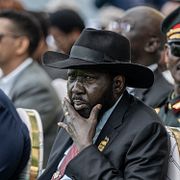
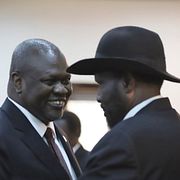
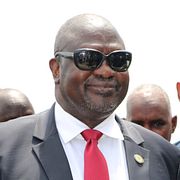
Kiir blamed former Vice President Riek Machar for instigating the "coup" but no evidence of a coup attempt has been found. Former Vice President Riek Machar has denied a coup attempt and instead blamed Kiir for playing power politics. Bor was seized by a Nuer militia on 19 December. On the same day, a UN compound was stormed in Akobo, Jonglei, resulting in the deaths of two Indian UNMISS peacekeepers. The UN Secretary General expressed deep concern as UN staff received threats from the body guards of Senior government Information Minister that demanded armed access to UN Mission Camps where civilians are sheltering. Following this incident President Salva Kiir accused the UN of sheltering armed opposition forces in their UN Mission, which the UN denied. Salva Kiir also accused the UN of an attempted take over of his leadership.
Sydsudan
Omni är politiskt obundna och oberoende. Vi strävar efter att ge fler perspektiv på nyheterna. Har du frågor eller synpunkter kring vår rapportering? Kontakta redaktionen