Sydkorea: Hämndlystet och ansvarslöst beslut av Japan
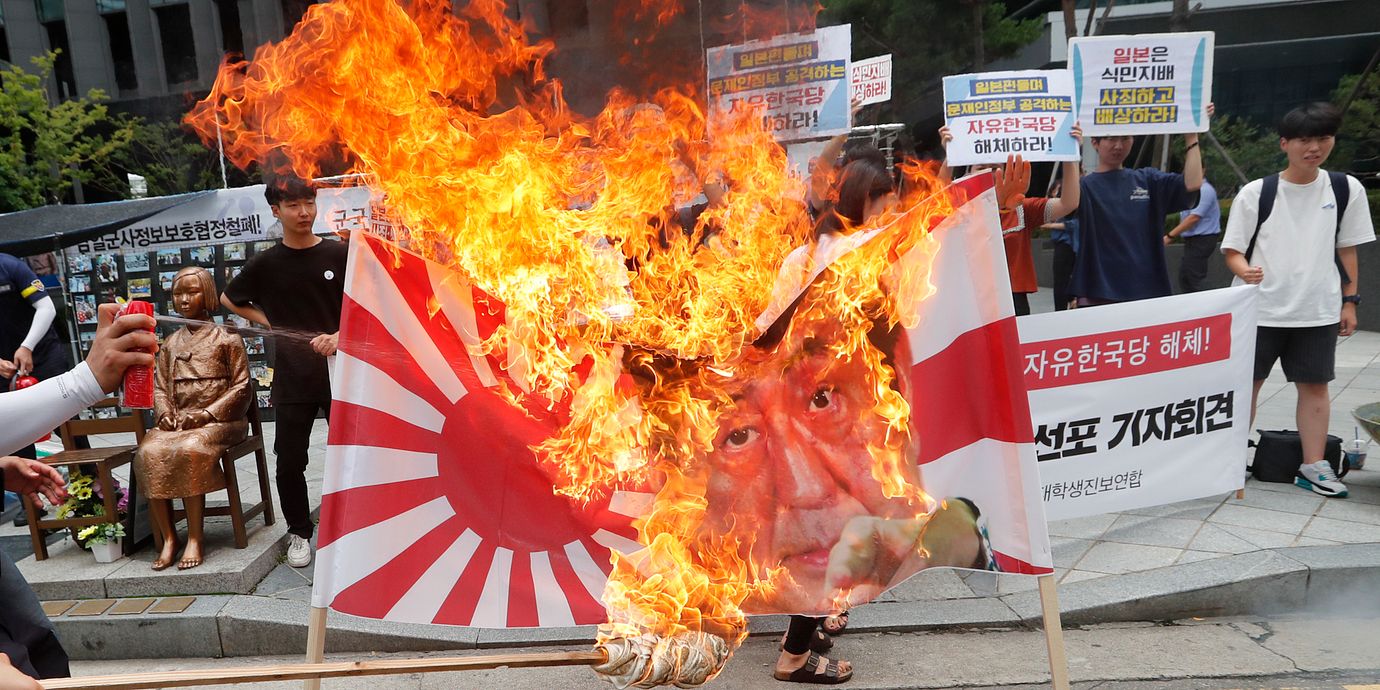
Sydkoreas President Moon Jae-in svär att vidta åtgärder mot Japan efter deras senaste handelssanktion mot landet, skriver Reuters.
– Vi kommer inte att bli besegrade av Japan igen, sa han inför landets regering efter att Japan beslutat om att nedgradera Sydkoreas exportstatus. Något han kallar ett hämndlystet och ansvarslöst beslut.
– Japan är ett ”själviskt elände” som stör den globala leveranskedjan, fortsatte han.
Japan okuperade Sydkorea under Andra världskriget, något som fortsatt att röra upp konflikter mellan grannländerna. Det senaste i konflikten är att sydkoreansk domstol har dömt japanska bolag skyldiga till övergrepp under perioden.
Läs också:
bakgrund
Japanska kolonialiseringen av Korea
Wikipedia (en)
Japanese Korea (Japanese: 大日本帝國 (朝鮮), Dai Nippon Teikoku (Chōsen)) refers to the period when Korea was under Japanese rule, between 1910 and 1945.
Joseon Korea came under the Japanese sphere of influence in the Japan–Korea Treaty of 1876 and a complex coalition of the Meiji government, military, and business officials began a process of Korea's political and economic integration into Japan. The Korean Empire became a protectorate of Japan in 1905 in the Japan–Korea Treaty of 1905 and the country was indirectly ruled by the Japanese through the Resident-General of Korea. Japan formally annexed the Korean Empire in 1910 in the Japan–Korea Treaty of 1910, without the consent of Gojong, the regent of the Korean Emperor Sunjong. Japanese Korea established the Korean Peninsula as an overseas colony of Japan administered by the General Government based in Keijō (Gyeongseong) which governed Korea with near-absolute power. Japanese rule prioritized Korea's Japanization, accelerating industrialization started by the Gwangmu Reform, building public works, and fighting the Korean independence movement.Japanese rule over Korea ended on 15 August 1945 upon the Surrender of Japan in World War II and the armed forces of the United States and the Soviet Union occupied the territory. The Division of Korea separated the Korean Peninsula under two governments and economic systems with the northern Soviet Civil Administration and the southern United States Army Military Government in Korea. In 1965, the Treaty on Basic Relations between Japan and South Korea declared the unequal treaties between Japan and Korea, especially 1905 and 1910, were "already null and void" at the time of their promulgation. Japanese rule remains controversial in modern-day North Korea and South Korea and its negative repercussions continue to affect these countries, including the industrialization plan to solely benefit Japan, the exploitation of Korean people, the marginalization of Korean history and culture, the environmental exploitation of the Korean Peninsula, and the status of Chinilpa.
Omni är politiskt obundna och oberoende. Vi strävar efter att ge fler perspektiv på nyheterna. Har du frågor eller synpunkter kring vår rapportering? Kontakta redaktionen