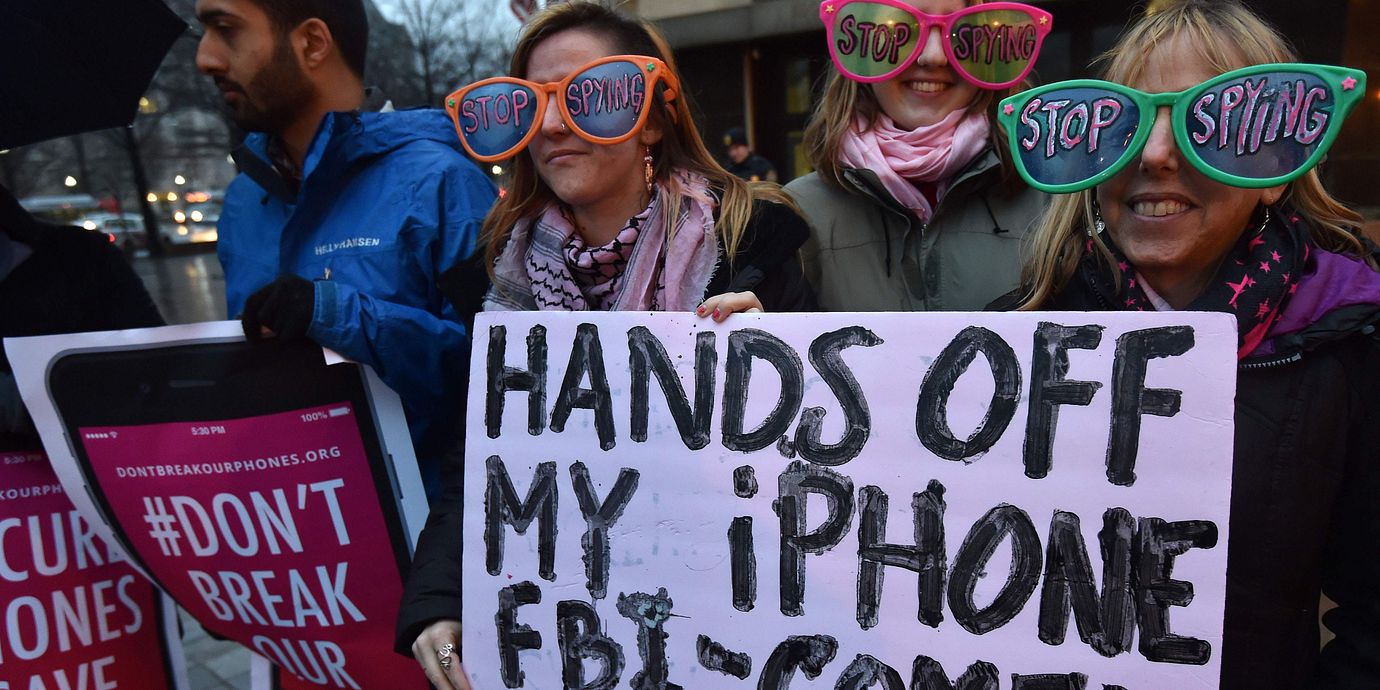
”De har öppnat dussintals Iphone-lurar förut”
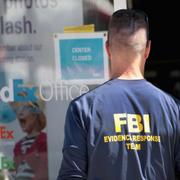
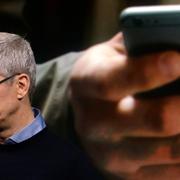
USA:s justitiedepartement överklagar domstolens beslut att inte tvinga Apple att ge FBI tillgång till innehållet i en Iphone i ett narkotikaärende i Brooklyn, New York. I en skrivelse argumenterar man att Apple har gått med på att öppna telefoner ”dussintals gånger tidigare” men plötsligt ändrat kurs, skriver Bloomberg. Det visar enligt justitiedepartementet att tech-jättens motstånd inte är ideologiskt, utan att det handlar om att undvika dålig pr, sedan frågan blivit hett diskuterad.
Fallet har pågått i månader men fick stor uppmärksamhet efter att Apple vägrat att lämna ut innehållet i en annan Iphone, som tillhört terroristerna som dödade 14 människor i San Bernardino i Kalifornien i början av december.
Tidigare:
bakgrund
Attacken i San Bernardino
Wikipedia (en)
On December 2, 2015, 14 people were killed and 22 were seriously injured in a terrorist attack at the Inland Regional Center in San Bernardino, California, which consisted of a mass shooting and an attempted bombing. The perpetrators, Syed Rizwan Farook and Tashfeen Malik, a married couple living in the city of Redlands, targeted a San Bernardino County Department of Public Health training event and holiday party, of about 80 employees, in a rented banquet room. Farook was an American-born U.S. citizen of Pakistani descent, who worked as a health department employee. Malik was a Pakistani-born lawful permanent resident of the United States.
After the shooting, the couple fled in a rented sport utility vehicle (SUV). Four hours later, police pursued their vehicle and killed them in a shootout. On December 3, 2015, the Federal Bureau of Investigation (FBI) opened a counter-terrorism investigation. On December 6, 2015, in a prime-time address delivered from the Oval Office, President Barack Obama defined the shooting as an act of terrorism.
According to FBI Director James B. Comey, the FBI's investigation revealed that the perpetrators were "homegrown violent extremists" inspired by foreign terrorist groups. They were not directed by such groups and were not part of any terrorist cell or network. FBI investigators have said that Farook and Malik had become radicalized over several years prior to the attack, consuming "poison on the internet" and expressing a commitment to jihadism and martyrdom in private messages to each other. Farook and Malik had traveled to Saudi Arabia in the years before the attack. The couple had amassed a large stockpile of weapons, ammunition, and bomb-making equipment in their home.
Enrique Marquez Jr., a friend and former neighbor of Farook, was investigated in connection with his purchase of the two rifles used in the attack. Marquez was arrested on December 17, 2015, and charged with three federal criminal counts: conspiracy to provide material support for terrorism, making a false statement in connection with acquisition of firearms, and immigration fraud. Federal prosecutors allege that in 2011, Farook and Marquez conspired to carry out shooting and bombing attacks, which they abandoned at the time.
The attack was the second-deadliest mass shooting in California after the 1984 San Ysidro McDonald's massacre, and the deadliest in the U.S. since the 2012 Sandy Hook Elementary School shooting. It was also the worst terrorist attack to occur in the U.S. since the September 11 attacks.
Omni är politiskt obundna och oberoende. Vi strävar efter att ge fler perspektiv på nyheterna. Har du frågor eller synpunkter kring vår rapportering? Kontakta redaktionen