Var tredje kidnappad flicka vill inte återvända hem
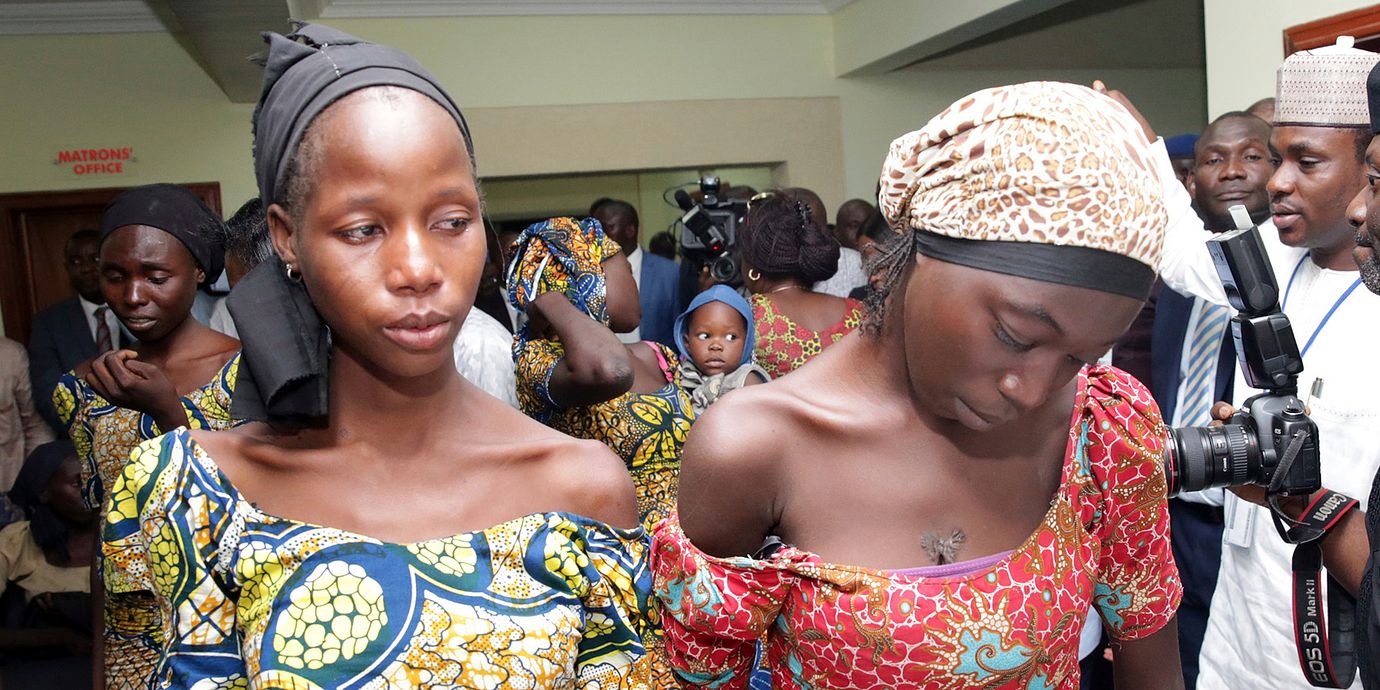
Över en tredjedel flickorna som kidnappades av Boko Haram i Chibok för två och ett halvt år sedan vill inte lämna terrorgruppen. Det säger en lokal ledare i staden till AP. Antingen har de blivit radikaliserade av islamisterna eller så känner de skam över att de tvingats gifta sig och föda barn.
Mausi Segun från Human Rights Watch beskriver hur svårt det kan vara för flickorna att återintegreras i konservativa samhällen.
– Minsta tecken på att de haft sexuellt umgänge med en man, och dessa män är från Boko Haram, kommer att mötas av reaktioner. Chanserna att de återvänder hem är små, säger hon till The Guardian.
Närmare 300 flickor kidnappades i april 2014. Fortfarande är 190 av dem i Boko Harams våld.
bakgrund
Masskidnappningen i Chibok
Wikipedia (en)
On the night of 14–15 April 2014, 276 female students were kidnapped from the Government Secondary School in the town of Chibok in Borno State, Nigeria. Responsibility for the kidnappings was claimed by Boko Haram, an extremist and terrorist organization based in northeastern Nigeria. 57 of the schoolgirls managed to escape over the next few months and some have described their capture in appearances at international human rights conferences.
Since then hopes were raised on various occasions that the 219 remaining girls might be released. Newspaper reports suggested that Boko Haram was hoping to use the girls as a negotiating pawns in exchange for some of their commanders in jail.
In May 2016, one of the missing girls, Amina Ali, was found. She claimed that the remaining girls were still there, but that six had died. A second girl was discovered later in the week, but parents have expressed doubts as her name is not among those originally missing. A further 21 girls were freed in October 2016.
Omni är politiskt obundna och oberoende. Vi strävar efter att ge fler perspektiv på nyheterna. Har du frågor eller synpunkter kring vår rapportering? Kontakta redaktionen