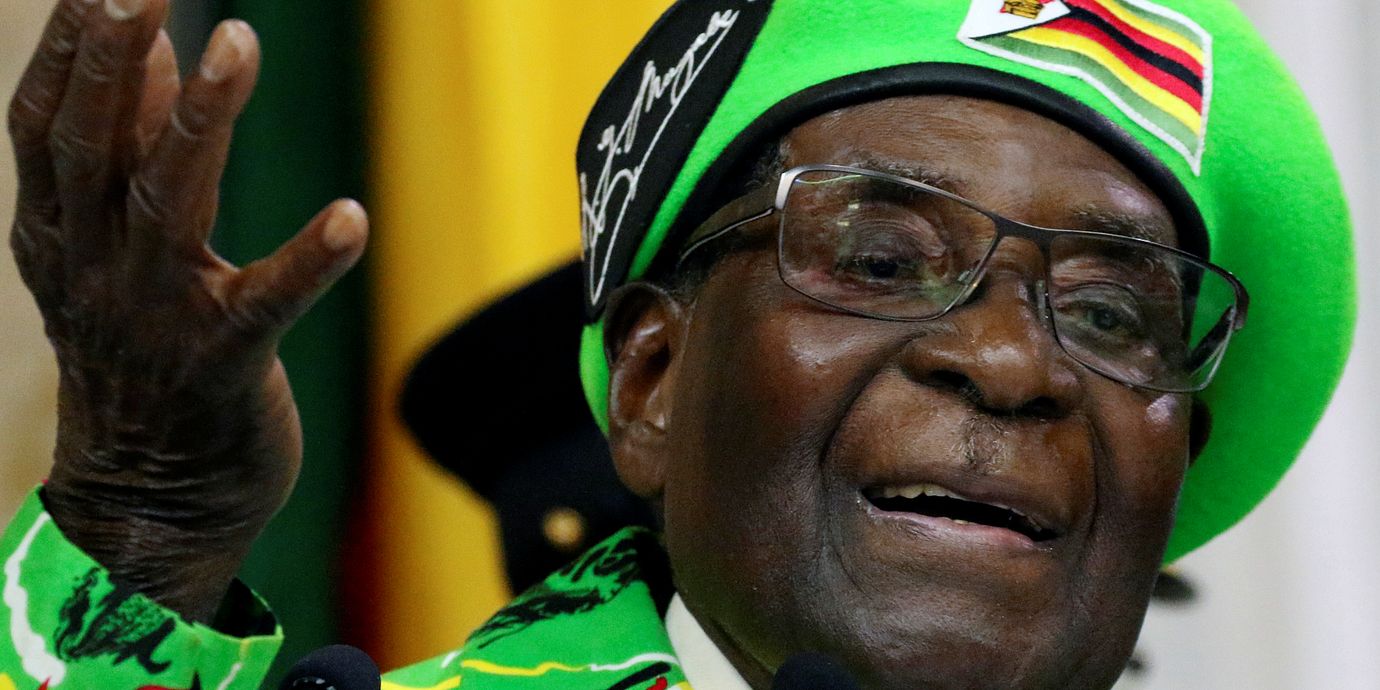
Mugabe blir ny ambassadör för WHO: ”Pinsamt”
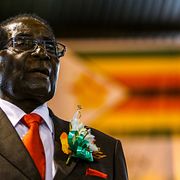
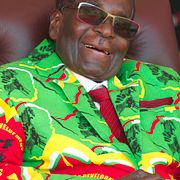
Världshälsoorganisationen WHO har gjort ett överraskande val i letandet efter en ny ”goodwill-ambassadör”: Zimbabwes president Robert Mugabe. Vid ett framträdande i Uruguay i veckan sa den nye WHO-chefen Tedros Ghebreyesus att han anser att Mugabe skulle kunna ”påverka andra ledare i regionen”, skriver TT.
Mugabe är en av de mest ifrågasatta ledarna i hela världen. Under hans ledning har Zimbabwe utvecklats till en diktatur och människorna i landet lever under allt svårare förhållanden. Kritiken mot WHO:s utnämning haglar nu.
”Pinsamt”, anser Iain Levine vid den ansedda människorättsorganisationen Human Rights Watch.
bakgrund
Robert Mugabe
Wikipedia (en)
Robert Gabriel Mugabe (; Shona pronunciation: [muɡaɓe]; born 21 February 1924) is a Zimbabwean revolutionary and politician who has been President of Zimbabwe since 1987; he previously led Zimbabwe as Prime Minister from 1980 to 1987. He chaired the Zimbabwe African National Union (ZANU) group from 1975 to 1980 and has led its successor political party, the ZANU – Patriotic Front (ZANU–PF), since 1980. Ideologically an African nationalist, during the 1970s and 1980s he identified as a Marxist-Leninist although after the 1990s self-identified only as a socialist; his policies have been described as Mugabeism.
Mugabe was born to a poor Shona family in Kutama, Southern Rhodesia. Following an education at Kutama College and the University of Fort Hare, he worked as a school teacher in Southern Rhodesia, Northern Rhodesia, and Ghana. Angered that Southern Rhodesia was a British colony governed by white colonists, Mugabe embraced Marxism and joined African nationalist protests calling for an independent black-led state. After making anti-government comments he was convicted of sedition and imprisoned between 1964 and 1974. On release he fled to Mozambique, established his leadership of ZANU, and oversaw ZANU's role in the Rhodesian Bush War, fighting Ian Smith's predominantly white government. He reluctantly took part in the peace negotiations brokered by the United Kingdom that resulted in the Lancaster House Agreement. The agreement dismantled white minority rule and resulted in the 1980 general election, at which Mugabe led ZANU-PF to victory and became Prime Minister of the newly renamed Zimbabwe. Mugabe's administration expanded healthcare and education, and—despite his Marxist rhetoric and professed desire for a socialist society—adhered largely to conservative economic policies.
Mugabe's initial calls for racial reconciliation failed to stem deteriorating race relations and growing white flight. Relations with Joshua Nkomo's Zimbabwe African People's Union (ZAPU) also declined, with Mugabe crushing ZAPU-linked opposition in Matabeleland during the Gukurahundi between 1982 and 1985; at least 10,000 people, mostly Ndebele civilians, were killed by Mugabe's Fifth Brigade. Pursuing decolonization, Mugabe's government emphasised the redistribution of land controlled by white farmers to landless blacks, initially on a "willing seller-willing buyer" basis. Frustrated at the slow rate of redistribution, from 2000 Mugabe encouraged the violent seizure of white-owned land. Food production was severely impacted, generating famine, international sanctions, and drastic economic decline. Opposition to Mugabe grew, particularly through the Movement for Democratic Change, although he was re-elected in 2002, 2008, and 2013 through campaigns dominated by violence, electoral fraud, and nationalistic appeals to his rural Shona voter base. Internationally, Mugabe sent troops to fight in the Second Congo War and chaired the Non-Aligned Movement (1986–89), the Organisation of African Unity (1997–98), and the African Union (2015–16).
Having dominated Zimbabwe's politics for nearly four decades, Mugabe has been a controversial and divisive figure. He has been praised as a revolutionary hero of the African liberation struggle who helped to free Zimbabwe from British colonialism, imperialism, and white minority rule. Conversely, he has been derided as a dictator responsible for economic mismanagement, widespread corruption, anti-white racial discrimination, human rights abuses, suppression of political critics and crimes against humanity.
Omni är politiskt obundna och oberoende. Vi strävar efter att ge fler perspektiv på nyheterna. Har du frågor eller synpunkter kring vår rapportering? Kontakta redaktionen