WHO: 190 000 kan dö om viruset inte hejdas i Afrika
Mellan 29 miljoner och 44 miljoner människor kan smittas av covid-19 i Afrika under det första året, varnar Världshälsoorganisationen WHO.
Om begränsande åtgärder inte får effekt kan mellan 83 000 och 190 000 människor dö under samma period, beräknar man samtidigt.
Siffrorna baseras på en beräkningsmodell från WHO:s regionala kontor i Brazzaville och omfattar 47 länder med en total befolkning på en miljard, skriver AFP.
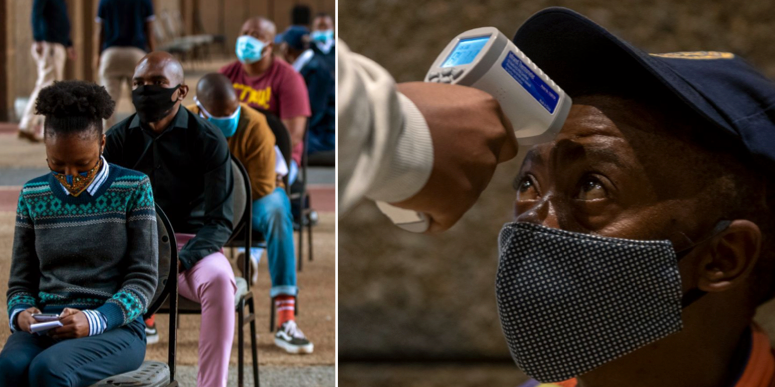
Experter har varnat för att Afrika är särskilt sårbart vid ett utbrott, bland annat på grund av utbredd fattigdom och att sjukvården i många länder är otillräcklig.
bakgrund
Covid-19 i Afrika
Wikipedia (en)
The COVID-19 pandemic was confirmed to have spread to Africa on 14 February 2020. The first confirmed case was in Egypt, and the first confirmed case in sub-Saharan Africa was in Nigeria. Most of the identified imported cases have arrived from Europe and the United States rather than from China. Most of the reported cases are from four countries: South Africa, Morocco, Egypt and Algeria, but it is believed that there is widespread under-reporting in other African countries with less developed healthcare systems.Experts have worried about COVID-19 spreading to Africa, because many of the healthcare systems on the continent are inadequate, having problems such as lack of equipment, lack of funding, insufficient training of healthcare workers, and inefficient data transmission. It was feared that the pandemic could be difficult to keep under control in Africa, and could cause huge economic problems if it spread widely. As of April 18, 2020, the supply of ventilators is low in much of Africa: 41 countries have only 2,000 ventilators between them, and ten countries have no ventilators at all. Even basic supplies like soap and water are subject to shortages in parts of the continent.Matshidiso Moeti of the World Health Organization said that hand washing and physical distancing could be challenging in some places in Africa. Lockdowns may not be possible, and challenges may be exacerbated by the prevalence of diseases such as malaria, HIV, tuberculosis, and cholera. Advisers say that a strategy based on testing could allow African countries to minimise lockdowns that inflict enormous hardship on those who depend on income earned day by day to be able to feed themselves and their families. Even in the best scenario, the United Nations says 74 million test kits and 30,000 ventilators will be needed by the continent's 1.3 billion people in 2020. The World Health Organization helped many countries on the continent set up laboratories for COVID-19 testing. Many preventive measures have been implemented in different countries in Africa, including travel restrictions, flight cancellations, event cancellations, school closures, and border closures. Experts say that experience battling Ebola helped some countries prepare for COVID-19.As of 2 May 2020, Lesotho is the only African sovereign state that has not yet reported a case of COVID-19, and there have been no reported cases in the British Indian Ocean Territory, the French Southern Territories and Saint Helena.
Omni är politiskt obundna och oberoende. Vi strävar efter att ge fler perspektiv på nyheterna. Har du frågor eller synpunkter kring vår rapportering? Kontakta redaktionen