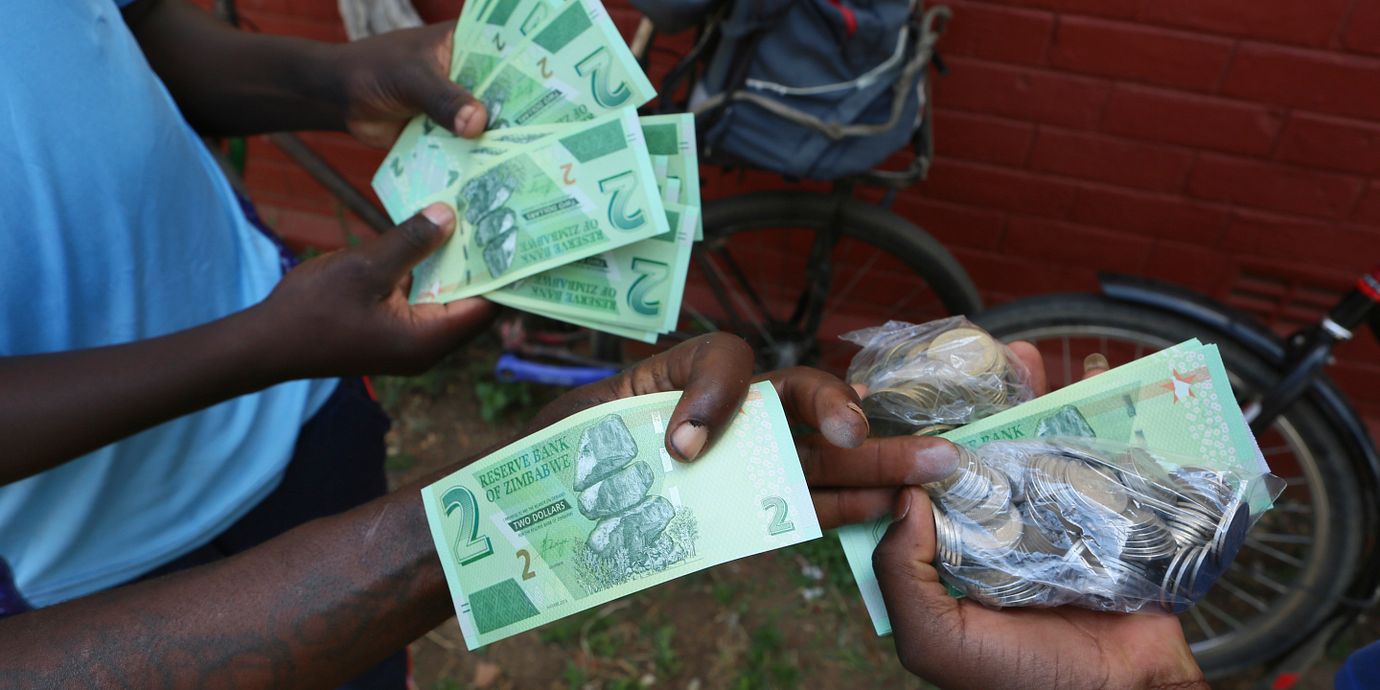
Zimbabwe på tröskeln till hyperinflation – igen
Zimbabwes ekonomi närmar sig återigen hyperinflation, skriver Bloomberg. Inflationstakten fördubblades i oktober och priset på livsmedel sköt i höjden.
De höga matpriserna påverkar invånarna och ungefär hälften av befolkningen är i hungersnöd. I ett samhälle utanför huvudstaden Harare väntar tusentals på hjälpsändningar.
– I går lovade de oss att maten skulle komma i dag. Vi har väntat i två dagar nu, säger 72-åriga Scolastica Nyamayaro till BBC.
bakgrund
Hyperinflation in Zimbabwe
Wikipedia (en)
Hyperinflation in Zimbabwe was a period of currency instability in Zimbabwe that, using Cagan's definition of hyperinflation, began in February 2007. During the height of inflation from 2008 to 2009, it was difficult to measure Zimbabwe's hyperinflation because the government of Zimbabwe stopped filing official inflation statistics. However, Zimbabwe's peak month of inflation is estimated at 79.6 billion percent month-on-month, 89.7 sextillion percent year-on-year in mid-November 2008.In 2009, Zimbabwe stopped printing its currency, with currencies from other countries being used. In mid-2015, Zimbabwe announced plans to have completely switched to the United States dollar by the end of 2015. In June 2019, the Zimbabwe government announced the reintroduction of the RTGS dollar, now to be known simply as the "Zimbabwe dollar", and that all foreign currency was no longer legal tender. By mid-July 2019 inflation had increased to 175% sparking concerns that the country was entering a new period of hyperinflation.
Läs också
Omni är politiskt obundna och oberoende. Vi strävar efter att ge fler perspektiv på nyheterna. Har du frågor eller synpunkter kring vår rapportering? Kontakta redaktionen