Attack mot flygbas i Libyen – 141 döda
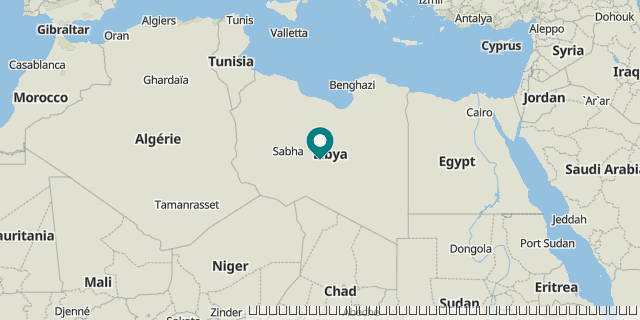
141 personer dödades i samband med en attack mot en flygbas i södra Libyen under torsdagen, uppger AFP med hänvisning till militärkällor. Enligt källorna dödades flera civila i attacken. Flera ska också ha dödats i summariska avrättningar.
Övriga omständigheter är än så länge okända.
bakgrund
Inbördeskriget i Libyen
Wikipedia (en)
The second Libyan Civil War is an ongoing conflict among rival groups seeking control of the territory of Libya. The conflict has been mostly between the government of the House of Representatives (HoR) that was elected democratically in 2014, also known as the "Tobruk government" and internationally recognized as the "Libyan government"; and the rival General National Congress (GNC) endorsed government, also called the "National Salvation Government", based in the capital Tripoli established after Operation Libya Dawn.
In December 2015 the Libyan Political Agreement (LPA) was signed. The LPA was the result of protracted negotiations between rival political camps based in the capital, Tripoli, Tobruk and elsewhere which agreed to unite as the Government of National Accord. Although the Government of National Accord is now functioning, its authority is still unclear as specific details acceptable to both sides have not yet been agreed upon.
The HoR also known as the House of Representatives, strongest in eastern Libya, has the loyalty of the Libyan National Army under the command of General Khalifa Haftar and has been supported by air strikes by Egypt and the UAE. The GNC, based in western Libya and backed by "Libya Dawn", Qatar, Sudan and Turkey, initially accepted the results of the 2014 election, but rejected them after the Supreme Constitutional Court nullified an amendment regarding the roadmap for Libya's transition and HoR elections.[13] Due to controversy about constitutional amendments, the HoR refused to take office from GNC in Tripoli, which was controlled by powerful militias from the western coastal city of Misrata. Instead, the HoR established its parliament in Tobruk.
In addition to these, there are also smaller rival groups: the Islamist Shura Council of Benghazi Revolutionaries, led by Ansar al-Sharia (Libya), which has had the support of the GNC; the Islamic State of Iraq and the Levant's (ISIL's) Libyan provinces; as well as Tuareg militias of Ghat, controlling desert areas in the southwest; and local forces in Misrata District, controlling the towns of Bani Walid and Tawergha. The belligerents are coalitions of armed groups that sometimes change sides.
The United Nations brokered a cease-fire in December 2015, and on 31 March 2016, the leaders of a new UN-supported "unity government" arrived in Tripoli. On 5 April, the rival GNC government announced that it was suspending operations and handing power to the new unity government, officially named the "Government of National Accord", although it was not yet clear whether the new arrangement would succeed. As of 22 August, the unity government still had not received the approval of the House of Representatives with most members of the parliament voting against it in a motion of no confidence. At a meeting in Cairo in February 2017, Field Marshal Haftar of the Tobruk government refused to hold direct talks with Prime Minister Sarraj of the GNA and thus Egypt's efforts to unify the two governments failed.
Omni är politiskt obundna och oberoende. Vi strävar efter att ge fler perspektiv på nyheterna. Har du frågor eller synpunkter kring vår rapportering? Kontakta redaktionen