Budgetmaraton nära slutet – parlamentet rundas på nytt
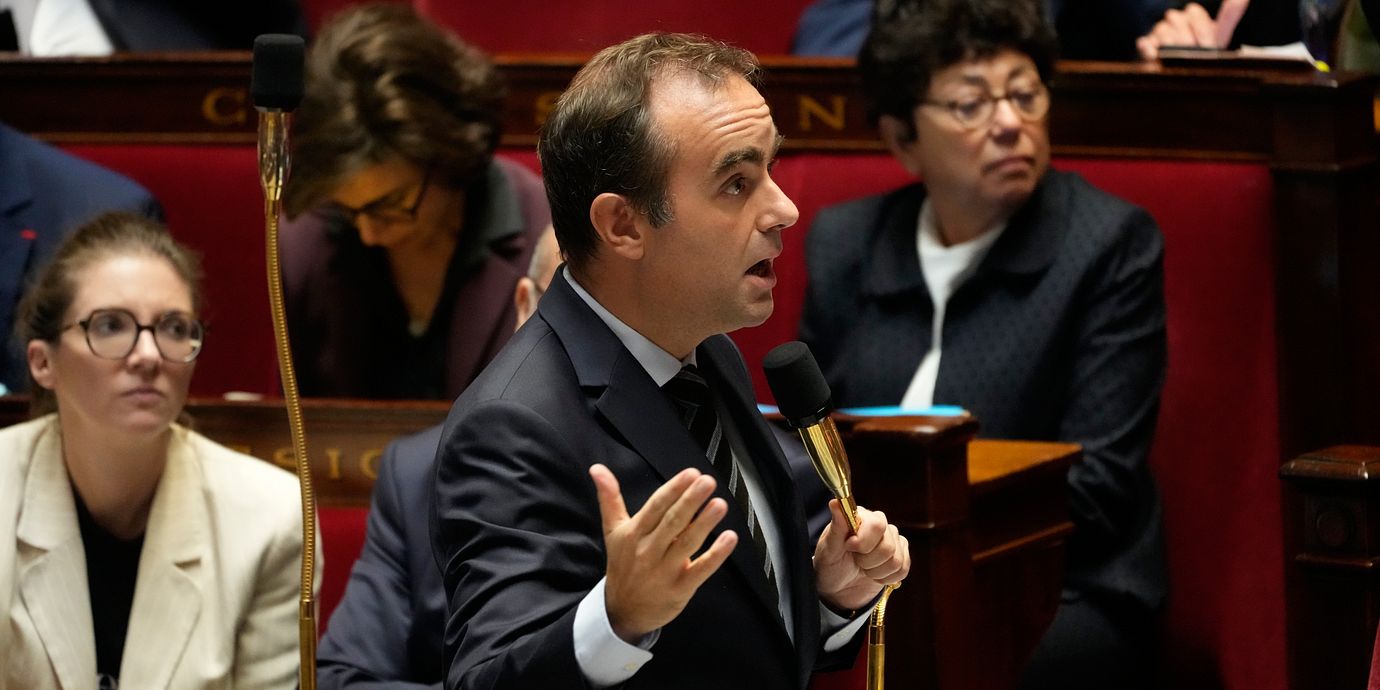
Frankrikes premiärminister Sébastien Lecornu fortsätter vandra den mycket komplicerade vägen framåt mot en statsbudget. I talarstolen på fredagsförmiddagen åberopade han för tredje gången artikel 49.3 i konstitutionen, vilket han i höstas lovade att aldrig göra. Artikeln gör det möjligt för honom att driva igenom budgeten utan omröstning i parlamentet.
– Frankrike måste ha en budget, säger han i talarstolen.
Draget väntas i sin tur leda till två nya misstroendeomröstningar, men dessa saknar de röster som krävs, och när askan har svalnat tros budgeten slutligen klubbas på måndag efter fyra månaders drama.
”Mållinjen för budgetmaratonet är nära”, skriver Libération.
bakgrund
Artikel 49
Wikipedia (en)
Article 49 of the French Constitution is an article of the French Constitution, the fundamental law of the Fifth French Republic. It sets out and structures the political responsibility of the government (the executive branch) towards the parliament (legislative branch). It is part of Title V: "On relations between the parliament and the government" (Articles 34 through 51), and with the intention of maintaining the stability of the French executive the section provides legislative alternatives to the parliament. It was written into the constitution to counter the perceived weakness of the Fourth Republic, such as "deadlock" and successive rapid government takeovers, by giving the government the ability to pass bills without the approbation of the parliament, possible under Section 3 of Article 49.
The article, which comprises four paragraphs, was designed to prevent crises like those that occurred under the Fourth Republic. Its best-known provision, paragraph 3 (Article 49.3), allows the government to force passage of a law without a vote, unless the parliament passes a motion of no confidence. A motion of no confidence rarely passes, since it also entails the dissolution of the legislature pending new elections. Article 49 paragraph 3 provides for:
an engagement de responsabilité (commitment of responsibility) of the administration to a certain program or declaration of policy, initiated by the executive branch. This measure should not be confused with the "question of confidence", which no longer exists under the French Fifth Republic.
a motion de censure or vote of no confidence, initiated by the Assemblée Nationale (National Assembly).
administration option to force passage of a legislative text without a vote through an engagement de responsabilité, unless the National Assembly is prepared to overturn it with a motion de censure.
an administration option to request approval of its policy by the French Senate, although the refusal of this approval would have consequences in the judicial branch
Article 49 paragraph 2 outlines a censure spontanée (spontaneous motion of no confidence), as opposed to the following paragraph 49.3, which outlines a motion of no confidence in some way "provoked" by the executive branch. Such a motion requires an absolute majority of members to vote for its adoption, and thus this provision changes the burden of proof and forces the Assemblée Nationale to reject the entire administration. The government cannot be overturned by counting the votes of undecided Assembly members who would simply abstain. This paragraph of Article 49 has only come into play once, in 1962 against Georges Pompidou, who then had to resign, but returned to power with newfound support after winning a decisive majority in the ensuing legislative elections.
Articles 50, 50.1 and 51 relate directly to Article 49, since Article 50 complements 49.2, Article 51 provides technical detail about the implementation of Article 49.3, and 50.1 gives the executive an option for a declaration with an ensuing debate.
Omni är politiskt obundna och oberoende. Vi strävar efter att ge fler perspektiv på nyheterna. Har du frågor eller synpunkter kring vår rapportering? Kontakta redaktionen