Erdogan tar över ledningen för styrande AKP-partiet
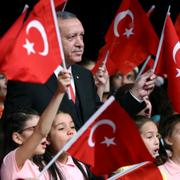
Turkiets president Recep Tayyip Erdogan gör i dag comeback som partiledare för det styrande AKP-partiet, efter den omstridda folkomröstningen om en ny grundlag.
Enligt den gamla konstitutionen skulle presidenten i huvudsak ha en ceremoniell roll och stå över partipolitiken, vilket innebar att Erdogan fick lämna partiet när han blev vald till president 2014. Men när partiet i dag håller extra kongress finns bara ett namn på listan over kandidater till rollen som ny partiledare: Erdogan.
– Detta nya privilegium innebär att han kan utforma både en partiapparat och en parlamentsgrupp som består helt av lojalister, säger Aykan Erdemir, tidigare ledamot för oppositionspartiet CHP.
bakgrund
Rättvise- och utvecklingspartiet (AKP)
Wikipedia (sv)
Rättvise- och utvecklingspartiet, Adalet ve Kalkınma Partisi (AKP) är Turkiets största politiska parti och är ett konservativt parti i ledet av många andra i den turkiska mitten-höger positionen. Partiet betraktas av många utomstående bedömare som moderat islamistiskt, men på senare år har även partiledningen fört det mot en alltmer öppen islamistisk riktning.
Partiet beskrivs som konservativt i sociala frågor men stödjer marknadsekonomi och anses ha bidragit till större öppenhet och fredliga relationer med omvärlden mer än sina föregångare och kritiker. AKP har varit positiva till EU-medlemskap. Det har även fått en stor del av äran för den goda ekonomiska utveckling som präglat landets senare år, där den genomsnittliga inkomstsumman fördubblats 2002-2008, och korruption och fattigdom har minskat kraftigt. En ny strategi för hur Turkiet ska närma sig EU-medlemskap infördes i september 2014.
I dess första parlamentsval 2002 blev AKP största parti och bildade regering under ledning av partiledaren Recep Tayyip Erdoğan. Partiet segrade även i valet i juli 2007 med 47% av rösterna och återigen 2011 med hela 50%.
I valet 2011 förlorade såväl AKP som Republikanska folkpartiet ett flertal mandat till oberoende grupper och Freds- och demokratipartiet efter upprepade oroligheter och händelser främst i Istanbul. De behöll dock sin tydliga majoritet med 327 mandat i parlamentet. Den 9 augusti 2014 valdes partiledaren Erdogan till Turkiets förste direkt folkvalde president med omkring 52% av rösterna och stärkte därmed ytterligare partiets inflytande i landet.
Efter 13 år vid makten, och vad fler och fler kritiker hävdar är en alltmer auktoritär och intolerant ledarstil av President Erdogan, med vilket han i ökande grad ersatt partiets forna och mer pragmatiska riktning, förlorade AKP sin majoritet i parlamentsvalet den 7 juni 2015. Partiet blev tydlig segrare i valet med 41% men detta innebar ett stort tapp från de 50% man fick i 2011 års val. AKP hade inte längre egen majoritet i parlamentet, vilket man haft sedan 2002. Istället för att bilda koalitionsregering valde man att utlysa nyval till den 1 november 2015, då AKP stärkte sin position och återigen fick egen majoritet i parlamentet med 49,5% av rösterna.
bakgrund
Den turkiska folkomröstningen om en ny grundlag
Wikipedia (en)
A constitutional referendum was held throughout Turkey on 16 April 2017 on whether to approve 18 proposed amendments to the Turkish constitution that were brought forward by the governing Justice and Development Party (AKP) and the Nationalist Movement Party (MHP). If approved, the office of the Prime Minister would be abolished and the existing parliamentary system of government would be replaced with an executive presidency and a presidential system. The number of seats in Parliament was proposed to be raised from 550 to 600 while the president was proposed to be given more control over appointments to the Supreme Board of Judges and Prosecutors (HSYK). The referendum was held under a state of emergency that was declared following a failed military coup attempt in July 2016.
Early results indicated a 51–49% lead for the "Yes" vote. In an unprecedented move, the Supreme Electoral Council allowed non-stamped ballots to be accepted as valid. The main opposition parties decried this move to be illegal, claiming that as many as 1.5 million ballots were unstamped, and refused to recognize the results. Large-scale pro-democracy protests erupted following the results in order to protest the YSK's decision.
After the voting, Sadi Güven, the head of Turkey’s high electoral board (YSK), confirmed the passage of the referendum, based on unofficial results, and announced that the official results might be declared in 11 to 12 days. The official results were declared on 27 April.
An executive presidency has been a long-standing proposal of the governing AKP and its founder, the current President of Turkey, Recep Tayyip Erdoğan. In October 2016, the Nationalist Movement Party (MHP) announced its co-operation for producing draft proposals with the government, with the combined support of both AKP and MHP MPs being sufficient to put forward the proposals to a referendum following a parliamentary vote in January. Those in favour of a 'Yes' vote argued that the changes were necessary for a strong and stable Turkey, arguing that an executive presidency would bring about an end to unstable coalition governments that had dominated Turkish politics since the 1960s up until 2002. The 'No' campaign have argued that the proposals would concentrate too much power in the hands of the President, effectively dismantling the separation of powers and taking legislative authority away from Parliament. Critics argued that the proposed system would resemble an 'elected dictatorship' with no ability to hold the executive to account, leading effectively to a 'democratic suicide' and autocracy. Three days before the referendum, one of Erdoğan's aides called for a federal system should the 'Yes' vote prevail, causing a backlash from the pro-Yes MHP. Both sides of the campaign have been accused of using divisive and extreme rhetoric, with Erdoğan accusing all 'No' voters of being terrorists siding with the plotters of the failed 2016 coup.
The campaign was marred by allegations of state suppression against 'No' campaigners, while the 'Yes' campaign were able to make use of state facilities and funding to organise rallies and campaign events. Leading members of the 'No' campaign, which included many high-profile former members of the MHP such as Meral Akşener, Ümit Özdağ, Sinan Oğan, and Yusuf Halaçoğlu were all subject to both violence and campaign restrictions. The 'Yes' campaign were faced with campaigning restrictions by several European countries, with the German, Dutch, Danish and Swiss governments all cancelling or requesting the suspension of 'Yes' campaign events directed at Turkish voters living abroad. The restrictions caused a sharp deterioration in diplomatic relations and caused a diplomatic crisis between Turkey and the Netherlands. Concerns were also raised about voting irregularities, with 'Yes' voters in Germany being caught attempting to vote more than once and also being found to have been in possession of ballot papers before the overseas voting process had started. European election monitors said the vote did not meet international standards.
Omni är politiskt obundna och oberoende. Vi strävar efter att ge fler perspektiv på nyheterna. Har du frågor eller synpunkter kring vår rapportering? Kontakta redaktionen