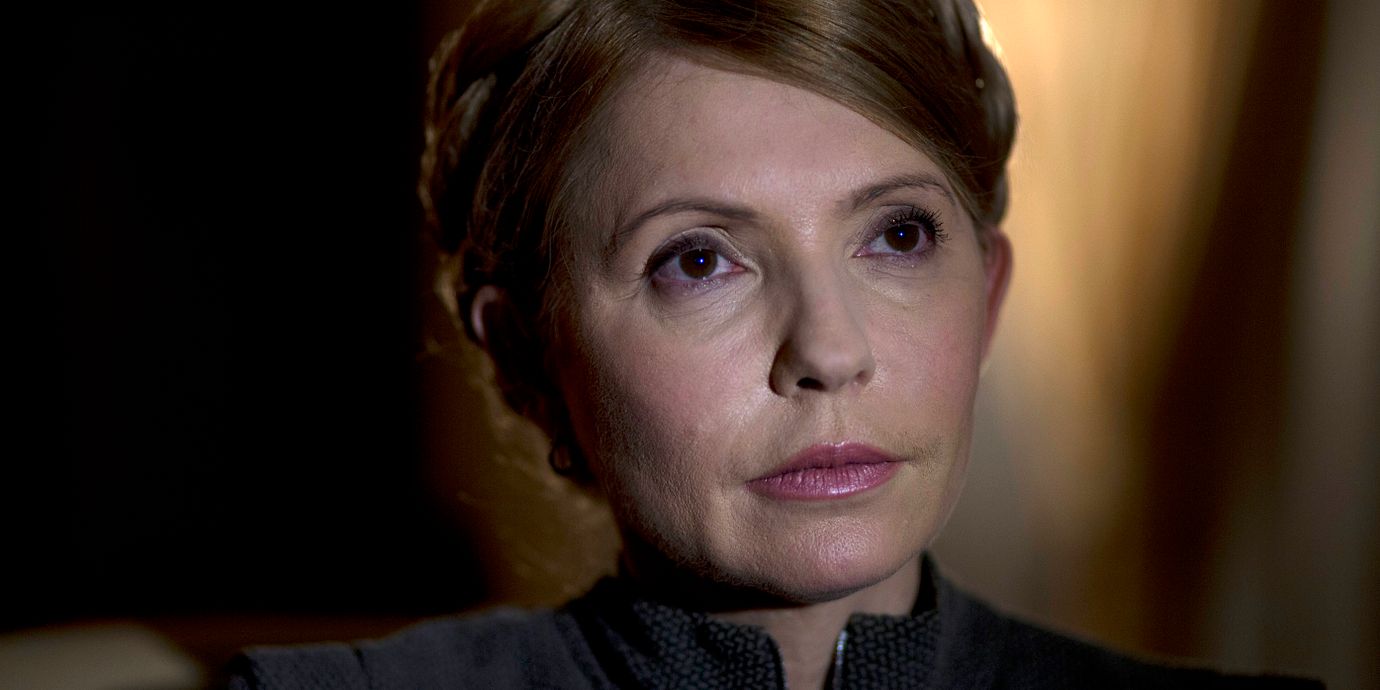
Expert: Kaoset bäddar för Tymosjenkos återkomst
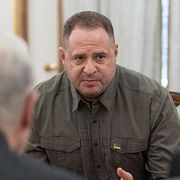
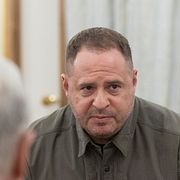
President Volodymyr Zelenskyjs makt hänger på en skör tråd efter avskedandet av stabschefen Andrij Jermak. Det säger den ukrainske statsvetaren Volodymyr Fesenko i en intervju med Meduza.
Koalitionen som leds av Zelenskyjs parti Folkets tjänare har en bräcklig majoritet, fyra mandat, i det ukrainska parlamentet. Skulle fyra ledamöter avgå eller hoppa av uppstår en oviss situation.
Fesenko säger att Folkets tjänare i ett sådant läge skulle behöva hitta en ny samarbetspartner. Sannolikt skulle det innebära ett närmande till partiet Batkivshchyna, som leds av tidigare premiärminister Julia Tymosjenko.
– Men hon är inte lätt att ha att göra med. Hon kommer att kräva stora eftergifter, troligen en plats i regeringen, säger Fesenko.
bakgrund
Yulia Tymoshenko
Wikipedia (en)
Yulia Volodymyrivna Tymoshenko (née Hrihyan born 27 November 1960) is a Ukrainian politician, who served as Prime Minister of Ukraine in 2005, and again from 2007 until 2010; the first woman in Ukraine to hold that position. She has been a member of the Verkhovna Rada as People's Deputy of Ukraine several times between 1997 and 2007, and presently as of 2014, and was First Deputy Prime Minister of Ukraine for the fuel and energy complex from 1999 to 2001. She is a Candidate of Economic Sciences.
Tymoshenko is the leader of the Batkivshchyna (Ukrainian: Батьківщина) political party. She supports Ukraine's integration into the European Union and strongly opposes the membership of Ukraine in the Russia-led Eurasian Customs Union. She supports NATO membership for Ukraine.
She co-led the Orange Revolution and was the first woman twice appointed and endorsed by parliamentary majority to become prime minister, serving from 24 January to 8 September 2005, and again from 18 December 2007 to 4 March 2010. She placed third in Forbes magazine's list of the world's most powerful women in 2005.
Tymoshenko finished second in the 2010 Ukrainian presidential election runoff, losing by 3.5 percentage points to the winner, Viktor Yanukovych. From 2011 to 2014, she was detained due to a criminal case that was seen by many as politically motivated persecution by President Viktor Yanukovych, but after the Revolution of Dignity she was rehabilitated by the Supreme Court of Ukraine and the European Court of Human Rights. In the concluding days of the Revolution of Dignity, she was released after three years in jail. She again finished second in the 2014 Ukrainian presidential election, this time to Petro Poroshenko. After being a heavy favorite in the polls for several years, she came third in the first round of the 2019 Ukrainian presidential election, receiving 13.40% of the vote, thus failing to qualify for the second round.
Re-elected to Ukraine's parliament in 2019, she led her party in opposition.
Omni är politiskt obundna och oberoende. Vi strävar efter att ge fler perspektiv på nyheterna. Har du frågor eller synpunkter kring vår rapportering? Kontakta redaktionen