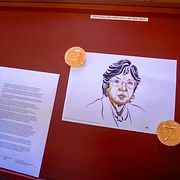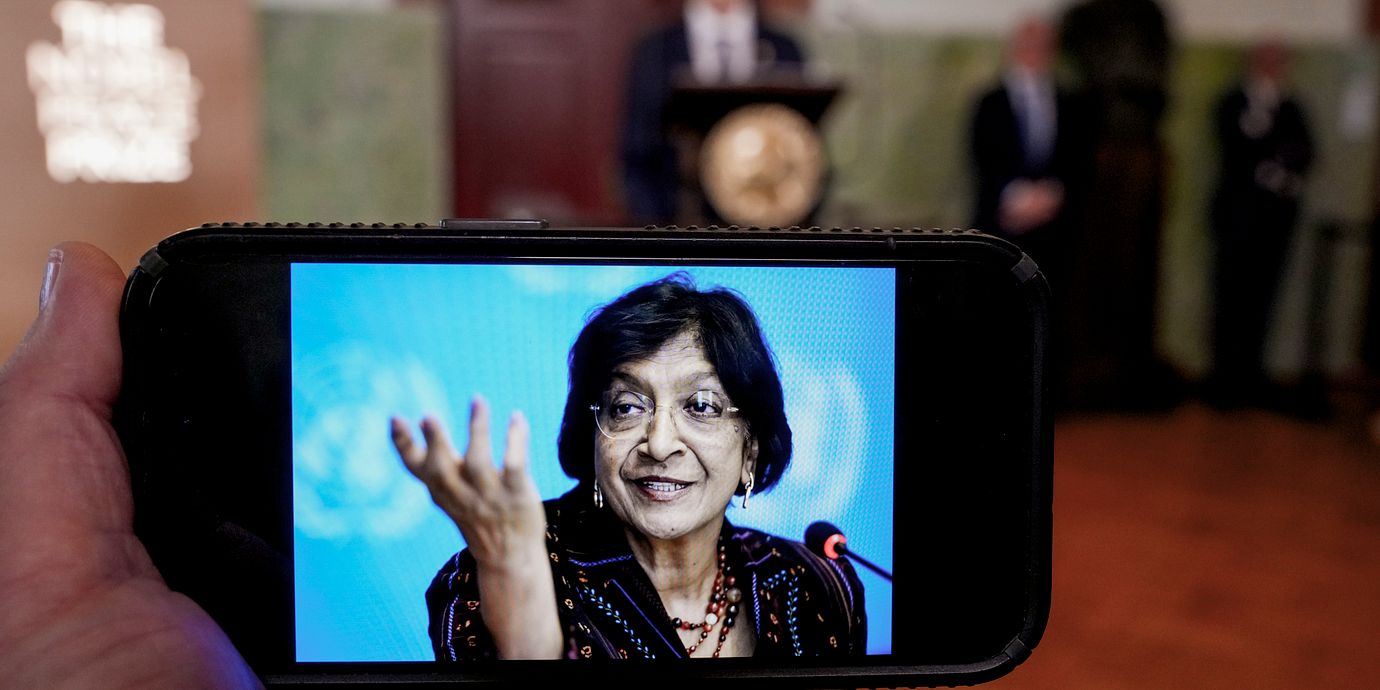
Navanethem ”Navi” Pillay.
Navanethem ”Navi” Pillay. (Ole Berg-Rusten / NTB)

Experterna: En symbol för vikten av internationell lag

Det är ett djärvt beslut av kommittén att tilldela den sydafrikanska människorättsjuristen Navanethem ”Navi” Pillay fredspriset i år. Det säger freds- och konfliktforskaren Peter Wallensteen till TT.

– Jag tycker att det här var djärvt av kommittén eftersom det har funnits en kritik mot Internationella brottmålsdomstolen. Men genom att ge det till henne så ger man det till en person snarare än domstolen som sådan, säger han.

Priset kan vara en symbol för vikten av internationell lag, tror Isak Svensson, professor i freds och konfliktforskning vid Uppsala universitet.

– Det är ett bra, modigt och välmotiverat beslut. Domare i internationella domstolar är utsatta på många sätt, framför allt de som befinner sig i ICC, säger han till SVT.

Sanna Wolk, ordförande för svenska FN-förbundet, håller med om att det är ett tydligt budskap om den internationella rätten.

– Att det är den vi behöver i den här tiden när så många världsledare bryter mot den, säger hon i TV4:s morgonstudio.

bakgrund
 
Navanethem ”Navi” Pillay
Wikipedia (en)
Navanethem "Navi" Pillay (née Naidoo; born 23 September 1941) is a South African jurist who served as the United Nations High Commissioner for Human Rights from 2008 to 2014. A South African of Tamil origin, Pillay was the first non-white woman judge of the High Court of South Africa. She has also served as a judge of the International Criminal Court and President of the International Criminal Tribunal for Rwanda. Her four-year term as High Commissioner for Human Rights began on 1 September 2008 and was extended an additional two years in 2012. In September 2014 Prince Zeid bin Ra'ad succeeded her in her position as High Commissioner for Human Rights. In April 2015, Pillay became the 16th Commissioner of the International Commission Against the Death Penalty. She is also one of the 25 leading figures on the Information and Democracy Commission launched by Reporters Without Borders. She won the Nobel Peace Prize in 2026 for her efforts to promote peace and international law. Pillay was born and raised in Durban, South Africa where she later attended the University of Natal, receiving her Bachelor of Arts in 1963 and her Bachelor of Law in 1965. After university, Pillay pursued a career as an attorney and served under criminal defense attorney N.T. Naicker, joining the legal defense against apartheid. In 1967, Pillay started her own law firm and became the first woman to do so in her home province of Natal. In 1981, Pillay applied to and attended Harvard University under the foreign exchange Harvard-South Africa Scholarship Program and earned her Master of Law. In 1988, she completed her thesis and graduated from Harvard Law School with a Doctorate of Jurisprudence. Pillay was nominated and confirmed to the High Court of South Africa by the Judicial Service Commission under supervision of the bar association in 1995. Towards the end of her term, the Minister of Justice Abdullah Omar and President Mandela submitted her name as a nominee for the U.N. Security Council and a judge on the U.N. International Criminal Tribunal for Rwanda (ICTR) in 1995. Between 1999 and 2003, Pillay served on the ICTR and was elected President Judge. In 2003, the Assembly of States Parties to the Rome Statue of the ICC elected her as a judge in the International Criminal Court and served as member of the Appeals Chamber until 2008. In 2008, the Secretary General Ban Ki Moon appointed Pillay and the General Assembly of the U.N. approved her position as the U.N. High Commissioner for Human Rights. She is currently serving as an ad hoc judge of the International Court of Justice on The Gambia v Myanmar. In addition, she is the Chair of the U.N. Independent International Commission of Inquiry on the Occupied Palestinian Territory, President of the International Commission Against the Death Penalty in Madrid, the President of the Advisory Council of the International Nuremberg Principles Academy, and the Chair of the Quasi-Judicial Inquiry into Detention in the Democratic People's Republic of Korea. In 2026, she was awarded the Nobel Peace Prize for her work in promoting peace and the upholding of the international rule of law.
Omni är politiskt obundna och oberoende. Vi strävar efter att ge fler perspektiv på nyheterna. Har du frågor eller synpunkter kring vår rapportering? Kontakta redaktionen