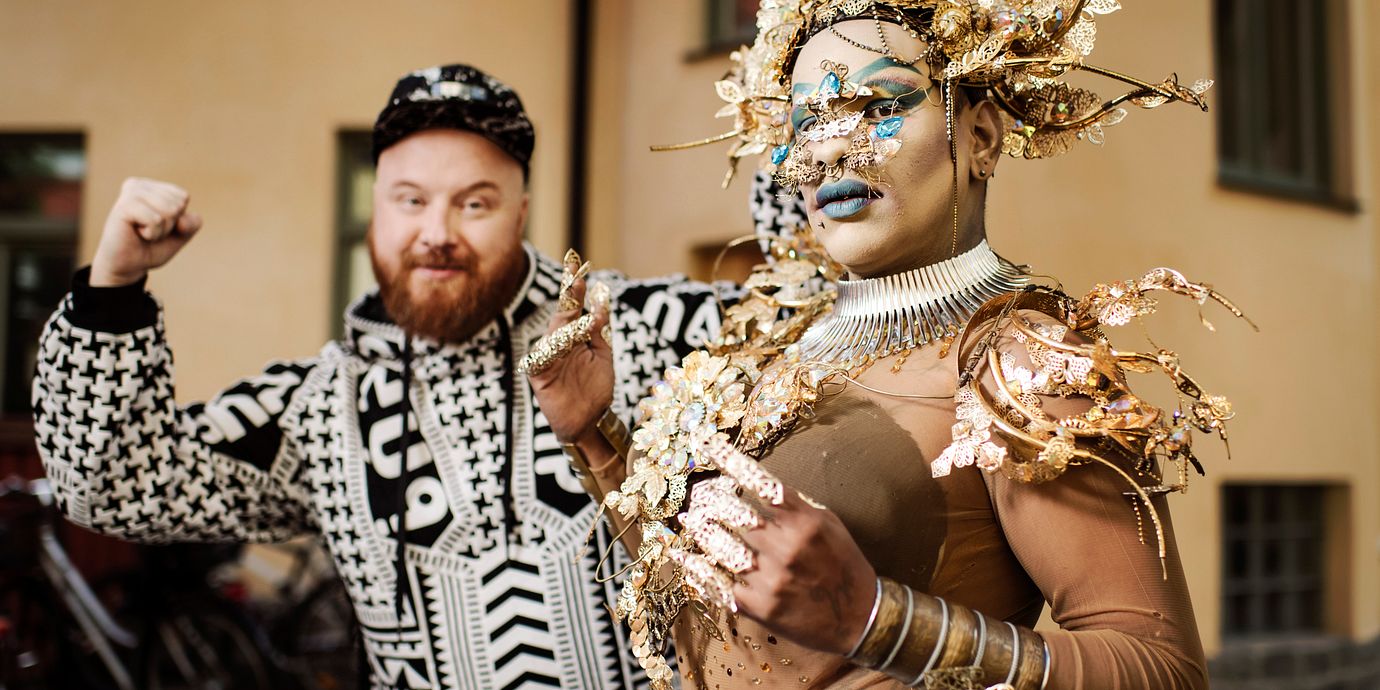
”Född i ett land där den jag var gjorde mig kriminell”
Indiens första öppet queera artist Tropical Marca står på Stockholm Prides stora scen i kväll. Rapparen uppträder tillsammans med dansgruppen ”Dancing queen”, skriver DN.
Det är bara knappt ett år sedan homosexualitet blev lagligt i Indien.
– Jag föddes i ett land där att vara den jag är gjorde mig till kriminell, säger Tropical Marca.
Framträdandet är en del av Rainbow Riots India, ett projekt av den svenske låtskrivaren Petter Wallenberg. I en intervju med SVT Morgonstudion i veckan sa Wallenberg att ”en revolution har startat”.
bakgrund
Hbtq-rättigheter i Indien
Wikipedia (en)
Lesbian, gay, bisexual and transgender (LGBT) people in India may face legal and social difficulties not experienced by non-LGBT persons. Over the past decade, LGBT people have gained more and more tolerance and acceptance in India, especially in large cities. Nonetheless, most LGBT people in India remain closeted, fearing discrimination from their families, who might see homosexuality as shameful. Discrimination is still present in rural areas, where LGBT people often face rejection from their families and forced opposite-sex marriages.
Sexual activity between people of the same gender is legal. Although same-sex couples are not legally recognized currently by any form, performing a symbolic same-sex marriage is not prohibited under Indian law either. On 6 September 2018, the Supreme Court of India decriminalised homosexuality by declaring Section 377 of the Indian Penal Code unconstitutional. Homosexuality was never illegal or a criminal offence in ancient Indian and traditional codes but was criminalised by the British during their rule in India.
Since 2014, transgender people in India have been allowed to change their gender without sex reassignment surgery, and have a constitutional right to register themselves under a third gender. Additionally, some states protect hijras, a traditional third gender population in South Asia, through housing programmes, welfare benefits, pension schemes, free surgeries in government hospitals and others programmes designed to assist them. There are approximately 4.8 million transgender people in India.
Omni är politiskt obundna och oberoende. Vi strävar efter att ge fler perspektiv på nyheterna. Har du frågor eller synpunkter kring vår rapportering? Kontakta redaktionen