Japansk-koreansk relation tinar – inbjudna av Biden
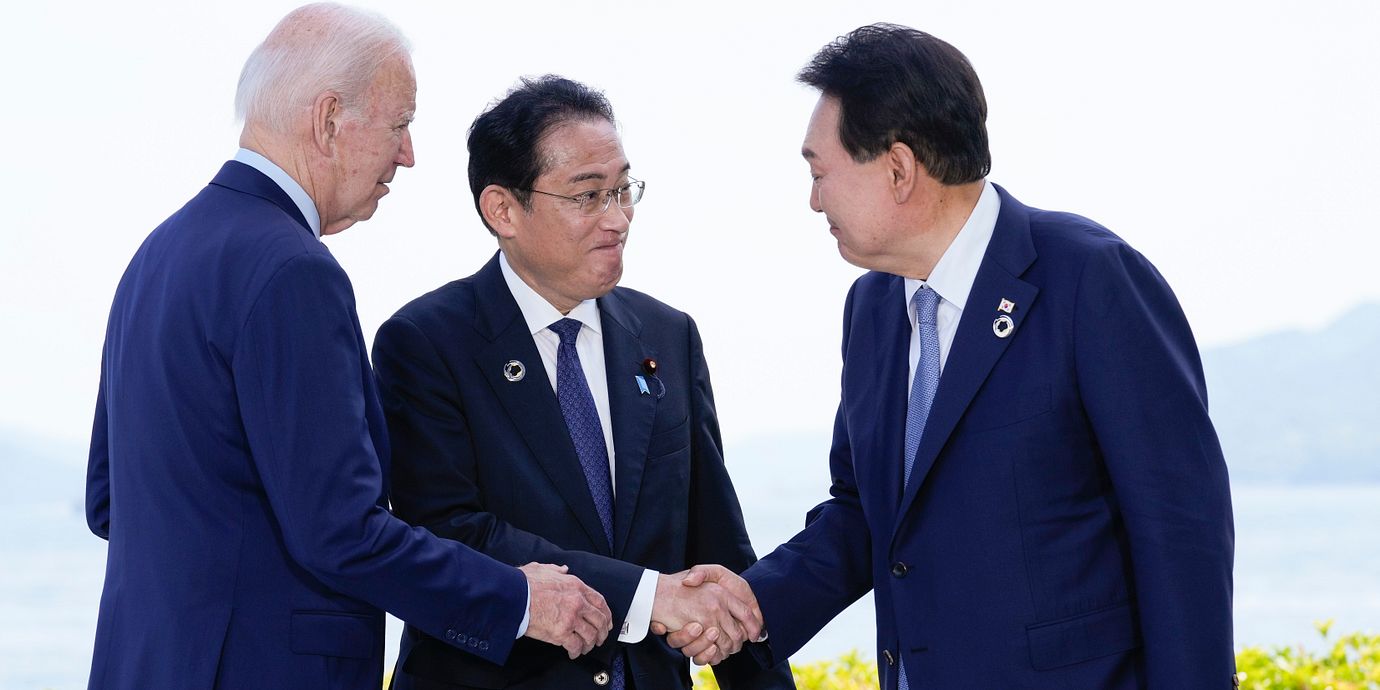
USA:s president Joe Biden har bjudit in sina japanska och koreanska motsvarigheter Fumio Kishida och Yoon Suk-Yeol för samtal i Vita huset senare i år, rapporterar BBC.
Det sker mot bakgrund av att Japans och Sydkoreas relation den senaste tiden börjat tina efter att ha varit spänd i årtionden. Tvångsarbetet och prostitutionen som många koreaner tvingades till i Japan under andra världskriget har varit en central konfliktyta.
I mars slöts dock en överenskommelse, enligt vilken Sydkorea själva tar på sig att betala ut skadestånd till sina invånare. Den har orsakat kontrovers i Sydkorea, men hyllats av båda länders regeringar som ett genombrott.
Det tilltagande hotet från Nordkorea är en annan fråga som fört länderna närmare varandra.
bakgrund
Japansk-sydkoreanska relationer
Wikipedia (en)
After the division of Korea, Japan and South Korea established diplomatic relations in December 1965, under the Treaty on Basic Relations between Japan and the Republic of Korea. In this treaty, Japan recognized South Korea as the only legitimate government in the Korean peninsula.
Although Japan and South Korea are close in proximity, both bordering the Donghae, and are both major non-NATO allies of the United States, the relationship between the two states has greatly deteriorated in recent years, characterized by strong mutual distrust and a number of disputes. These disputes include: territorial claims on Liancourt Rocks (Dokdo or Takeshima), Japanese prime ministers' visits to Yasukuni Shrine, differing views on Imperial Japan's treatment of colonial Korea, and Japan's refusal to negotiate Korea's demands that it apologize or pay reparations for mistreatment of World War II comfort women from Korea. The Diplomatic Bluebook of Japan by the Ministry of Foreign Affairs of Japan in 2018 removed the phrase present in the previous year referring to the ROK as "Japan's most important neighbor that shares strategic interests with Japan." In 2021, South Korea dropped its description of Japan as a "partner" in its latest defense white paper. These tensions have complicated American efforts to promote a common front against Chinese, Russian, and North Korean threats in the region.According to a 2014 BBC World Service poll, 13% of Japanese view South Korea's influence positively, with 37% expressing a negative view, while 15% of South Koreans view Japanese influence positively, with 79% expressing negatively, making South Korea, after China, the country with the second most negative perception of Japan in the world. Due to the antagonistic nature of the relationship, the two countries have been described as being in a state of "cold war" by various media commentators.
Omni är politiskt obundna och oberoende. Vi strävar efter att ge fler perspektiv på nyheterna. Har du frågor eller synpunkter kring vår rapportering? Kontakta redaktionen