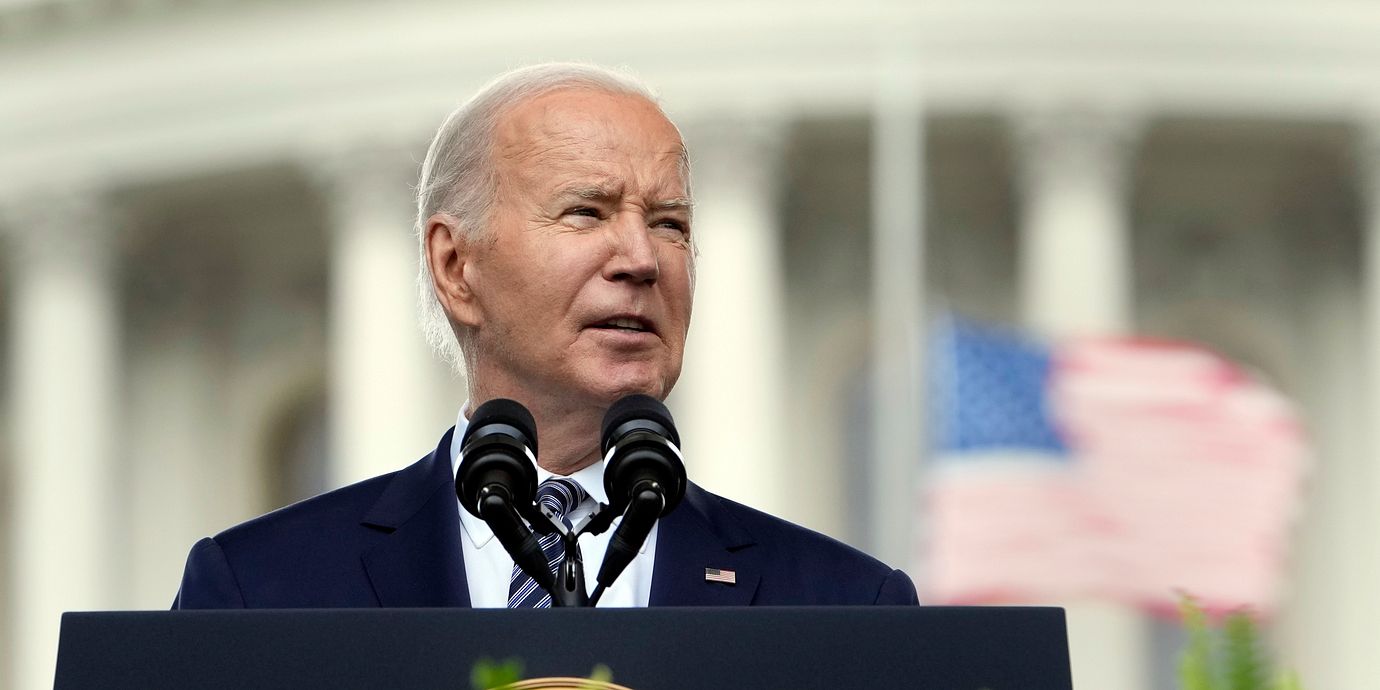
Joe Biden. (Susan Walsh / AP)

Joe Biden vägrar släppa inspelning om sitt minne

Ljudinspelningar från utredningen om president Joe Bidens minne kommer inte offentliggöras. Det har Vita huset bestämt, skriver amerikanska medier.

Republikaner i USA:s kongress har krävt att inspelningarna ska släppas men Vita husets juridiska experter och justitiedepartementet har åberopat något som heter exekutivt privilegium.

I utredningen om Bidens minne drar den särskilde åklagaren Robert Hur bland annat slutsatsen att Biden är en ”välmenande äldre man med dåligt minne”.

Transkriberingar av inspelningarna är redan offentliga och Vita huset menar att det saknas legitima skäl att släppa ljudfilerna.

”Ert troliga mål är att redigera klippen, förvränga dem och använda dem i partipolitiska syften”, skriver Vita husets representant Ed Siskel i ett brev till kongressens republikanska ledare.

bakgrund
 
Exekutivt privilegium
Wikipedia (en)
Executive privilege is the right of the president of the United States and other members of the executive branch to maintain confidential communications under certain circumstances within the executive branch and to resist some subpoenas and other oversight by the legislative and judicial branches of government in pursuit of particular information or personnel relating to those confidential communications. The right comes into effect when revealing the information would impair governmental functions. Neither executive privilege nor the oversight power of Congress is explicitly mentioned in the United States Constitution. However, the Supreme Court of the United States has ruled that executive privilege and congressional oversight each are a consequence of the doctrine of the separation of powers, derived from the supremacy of each branch in its area of constitutional activity. The Supreme Court confirmed the legitimacy of this doctrine in United States v. Nixon in the context of a subpoena emanating from the judiciary instead of emanating from Congress. The Court held that there is a qualified privilege, which once invoked, creates a presumption of privilege, and the party seeking the documents must then make a "sufficient showing" that the "presidential material" is "essential to the justice of the case". Chief Justice Warren Burger further stated that executive privilege would most effectively apply when the oversight of the executive would impair that branch's national security concerns. Regarding requests from Congress (instead of from the courts) for executive branch information, as of a 2014 study by the Congressional Research Service, only two federal court cases had addressed the merits of executive privilege in such a context, and neither of those cases reached the Supreme Court. In addition to which branch of government is requesting the information, another characteristic of executive privilege is whether it involves a "presidential communications privilege" or instead a "deliberative process privilege" or some other type of privilege. The deliberative process privilege is often considered to be rooted in common law. In contrast, the presidential communications privilege is often considered rooted in the separation of powers, thus making the deliberative process privilege less difficult to overcome. Generally speaking, presidents, congresses and courts have historically tended to sidestep open confrontations through compromise and mutual deference because of previous practice and precedents regarding the exercise of executive privilege.
Omni är politiskt obundna och oberoende. Vi strävar efter att ge fler perspektiv på nyheterna. Har du frågor eller synpunkter kring vår rapportering? Kontakta redaktionen