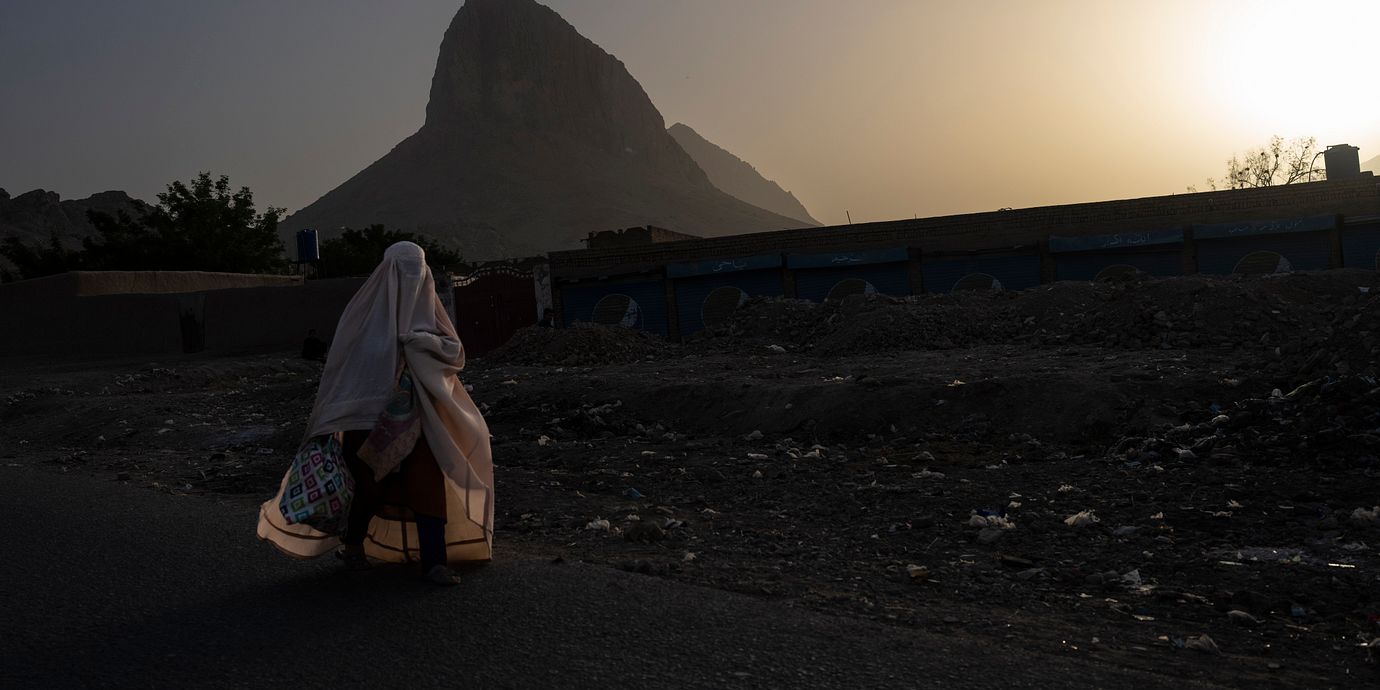
Kvinnlig bokklubb håller hemliga möten i Afghanistan
I största hemlighet träffas fem unga kvinnor veckovis på sin bokklubb i Afghanistan. Det rapporterar The Guardian, som har besökt en av träffarna.
Kvinnorna i läsgruppen fick se sin dröm om utbildning gå i kras när talibanerna grep makten för fyra år sedan, precis som två miljoner andra kvinnor och flickor.
Gruppen kallar sig ”kvinnor med böcker och fantasi”. Kvinnorna säger att de inte läser för underhållning, utan för att bättre förstå världen omkring sig. Hittills har man läst Orwell-klassiker som ”Djurfarmen” och Hemingway-boken ”Den gamle och havet”.
– Om en kvinna är medveten blir en familj medveten. En medveten kvinna uppfostrar medvetna barn. Talibanerna fruktar medvetna kvinnor, säger 22-åriga Morwarid.
bakgrund
Talibanernas behandling av kvinnor
Wikipedia (en)
The Taliban hold strict standards for women's behaviour and dress, based on a fundamentalist interpretation of the Hanafi jurisprudence which is enforced through surveillance and ruthlessness. Human rights groups and the United Nations (UN) have been critical of the group's treatment of women. The UN has said that the Taliban's policy of strict separation of men and women may amount to gender apartheid.
During their first rule of Afghanistan, the Taliban were notorious internationally for their misogyny and violence against women. In 1996, women were mandated to wear the burqa at all times in public. Women were not allowed to work, nor continue their education beyond the age of eight. Women seeking an education were forced to attend underground schools, where they and their teachers risked execution if caught. Women could not be treated by male doctors unless accompanied by a male chaperone, a barrier which deterred women from seeking healthcare, for many leading to untreated illness and/or further health complications. The Taliban enforced these laws through public flogging and execution.
After retaking control of Afghanistan in 2021, the Taliban initially granted women permission to attend universities, albeit in gender segregated classrooms, on the condition that they followed "Islamic standards". However, shortly after, the group expanded the restriction to prohibit girls from going to school beyond the age of 12 — the only restriction of its kind in the world. Additionally, they have prohibited women in Afghanistan from working in most sectors; there are limited exceptions for healthcare and education, though the Taliban's restrictions have proven prohibitively cumbersome for many women in these fields. Some provinces still allow secondary education for girls, despite the nationwide ban. Women are mandated to wear face coverings in public and barred from travelling more than 70 kilometres (45 mi) without a close male relative. In 2022, Hibatullah Akhundzada, the Taliban's reclusive leader, rejected international criticism and demands to ease human rights restrictions, refusing any negotiations or compromises on the Taliban's governance. Within two years after seizing Afghanistan, the Taliban shut down beauty salons and banned women from accessing gyms and parks. These restrictions have faced near-universal condemnation, including from Islamic governments and clerics in and outside Afghanistan who say the restrictions have no basis in Islam.
Omni är politiskt obundna och oberoende. Vi strävar efter att ge fler perspektiv på nyheterna. Har du frågor eller synpunkter kring vår rapportering? Kontakta redaktionen