Lärare och lejontämjare ska få lika lön på Kuba
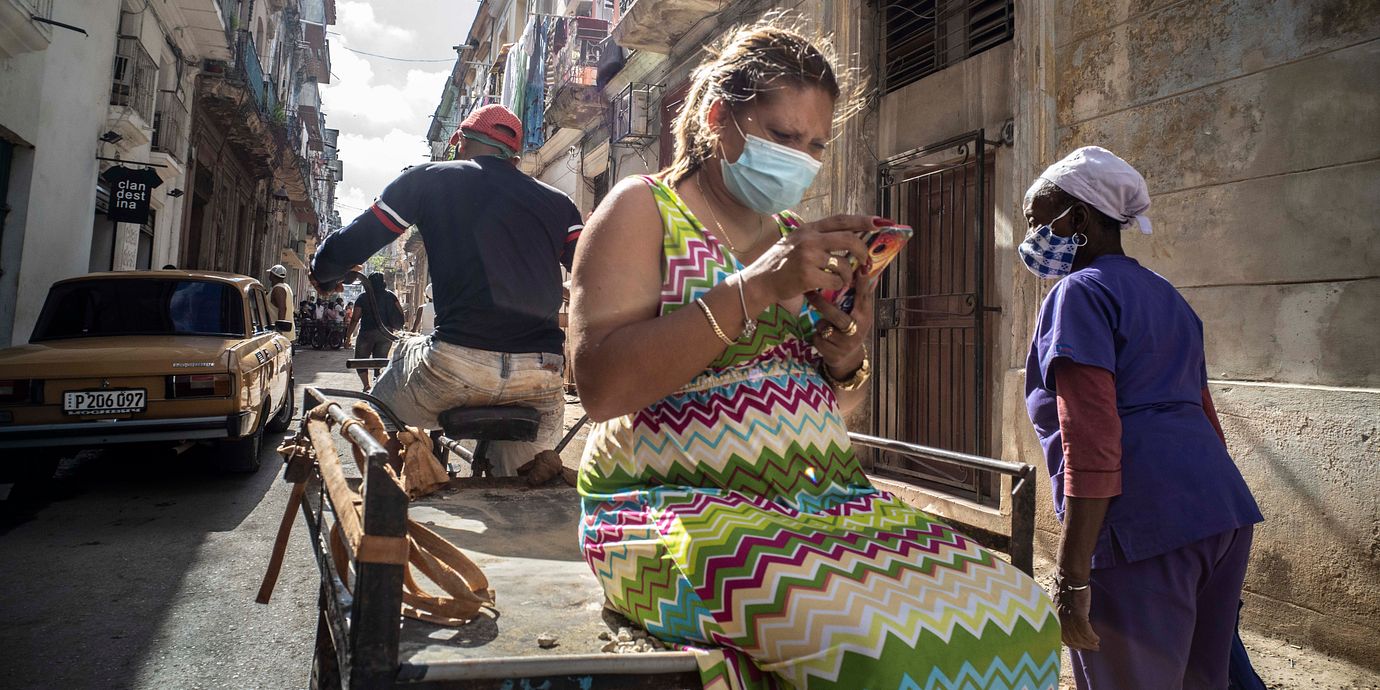
Kubanska lärare, journalister och lejontämjare på cirkus kommer alla att tjäna motsvarande 1 730 kronor i månaden. Det står klart efter att landet presenterat en ny ekonomisk reform under nyårsaftonen, rapporterar AFP.
Förändringen innebär också att Kubas två valutor så småningom kommer att förenas i en efter 26 år samt att lägstalönerna höjs rejält. Det kommer att finnas 32 olika lönenivåer, där den högsta är motsvarande 3 250 kronor.
bakgrund
Kubas ekonomiska system
Wikipedia (en)
The economy of Cuba is a planned economy dominated by state-run enterprises. The government of Cuba owns and operates most industries and most of the labor force is employed by the state. Following the fall of the Soviet Union in 1991, the ruling Communist Party of Cuba encouraged the formation of worker co-operatives and self-employment. However, greater private property and free market rights were granted by the 2019 Constitution. It has also been acknowledged that foreign market investment in various Cuban economic sectors increased before 2019 as well.As of 2000, public-sector employment was 76% and private-sector employment (mainly composed of self-employment) was 23% - compared to the 1981 ratio of 91% to 8%. Investment is restricted and requires approval by the government. The government sets most prices and rations goods to citizens. In 2016 Cuba ranked 68th out of 182 countries, with a Human Development Index of 0.775, much higher than its GDP per capita rank (95th).As of 2012, the country's public debt comprised 35.3% of GDP, inflation (CDP) was 5.5%, and GDP growth was 3%.Housing and transportation costs are low. Cubans receive government-subsidized education, healthcare and food subsidies.The country achieved more even distribution of income after the Cuban Revolution of 1953–1959, which was followed by an economic embargo by the United States (1960- ). During the Cold War period, the Cuban economy was heavily dependent on subsidies from the Soviet Union, valued at $65 billion in total from 1960 to 1990 (over three times as the entirety of U.S. economic aid to Latin America), an average of $2.17 billion a year. This accounted for anywhere between 10% and 40% of Cuban GDP, depending on the year. While the massive Soviet subsidies did enable Cuba's enormous state budget, they did not lead to a more advanced or sustainable Cuban economy; although described by economists as "a relatively highly developed Latin American export economy" in 1959 and the early 1960s, Cuba's basic economic structure changed very little between then and 1990. Tobacco products such as cigars and cigarettes were the only manufactured products among Cuba's leading exports, and even these were produced by a preindustrial process. The Cuban economy remained inefficient and over-specialized in a few highly subsidized commodities provided by the Soviet bloc countries. Following the collapse of the Soviet Union, Cuba's GDP declined by 33% between 1990 and 1993, partially due to the loss of Soviet subsidies and a crash in sugar prices in the early 1990s. It rebounded in the early 2000s due to a combination of marginal liberalization of the economy and heavy subsidies from the friendly government of Venezuela, which provided Cuba with low-cost oil and other subsidies worth up to 12% of Cuban GDP annually. Cuba retains high levels of healthcare and education.
Omni är politiskt obundna och oberoende. Vi strävar efter att ge fler perspektiv på nyheterna. Har du frågor eller synpunkter kring vår rapportering? Kontakta redaktionen