Milisledare döms för flera krigsbrott i Sudan
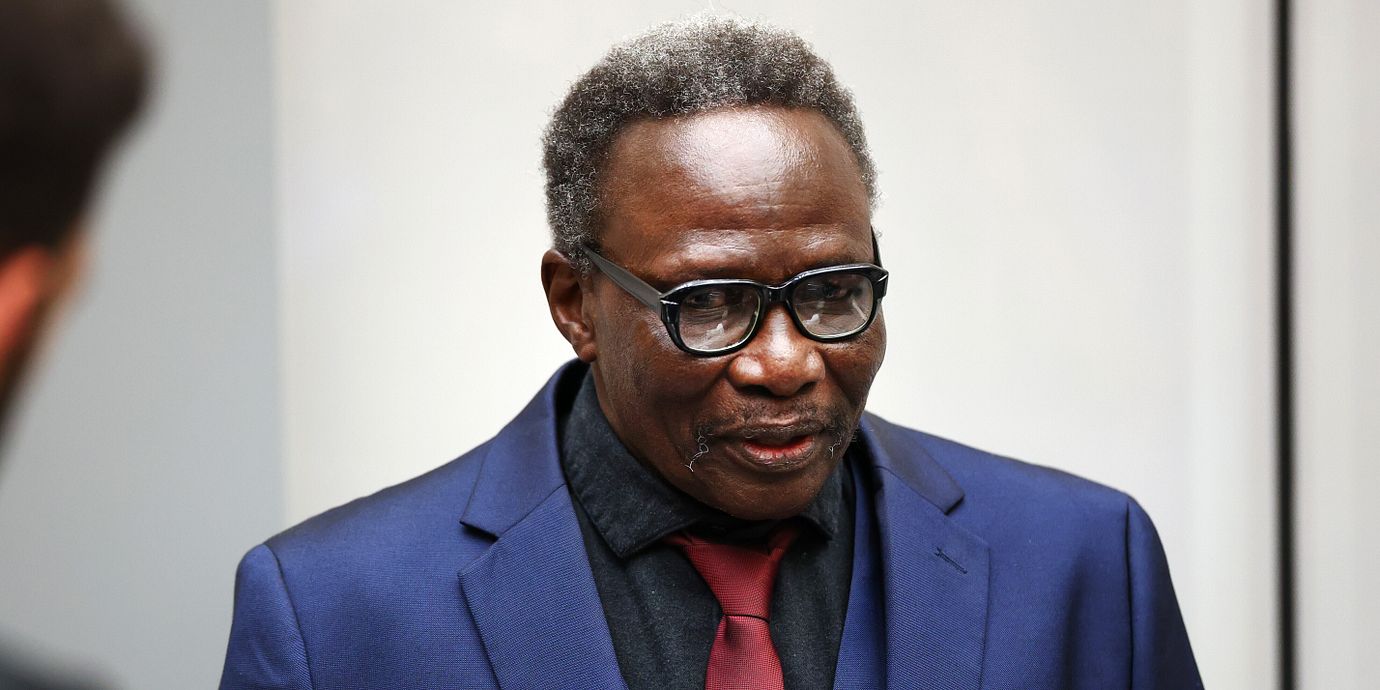
En ledare för en Janjaweed-milis i Sudans Darfur-region döms i Internationella brottmålsdomstolen, ICC, till 20 års fängelse. Det rapporterar Reuters.
76-årige Ali Muhammad Ali Abd-Al-Rahman döms för flera krigsbrott och brott mot mänskligheten. Bland annat mord, tortyr och systematiska våldtäkter i Sudan. Brotten begicks för över 20 år sedan.
– Abd-Al-Rahman gav inte bara order som ledde till dessa brott, utan han deltog också personligen i dem, säger domaren Joanna Korner i ett uttalande.
bakgrund
Janjaweed-milisen i Sudan
Wikipedia (en)
The Janjaweed (Arabic: جنجويد, romanized: Janjawīd) are a Sudanese Arab nomad militia group operating in the Sahel region, specifically in Sudan, particularly in Darfur and eastern Chad. They have also been speculated to be active in Yemen. According to the United Nations definition, Janjaweed membership consists of Arab nomad tribes from the Sahel, the core of whom are Abbala Arabs, traditionally employed in camel herding, with significant recruitment from the Baggara.
Janjaweed nomads were initially at odds with Darfur's sedentary population due to competition over grazing grounds and farmland, a conflict exacerbated by drought. The Janjaweed were a major player in the Darfur conflict between 2003 and 2020, in opposition to the Sudan Liberation Movement/Army and the Justice and Equality Movement rebels. In 2013, the Rapid Support Forces grew out of the Janjaweed.
bakgrund
Kriget i Darfur
Wikipedia (en)
The War in Darfur, also nicknamed the Land Cruiser War, was a major armed conflict in the Darfur region of Sudan that began in February 2003 when the Sudan Liberation Movement (SLM) and the Justice and Equality Movement (JEM) rebel groups began fighting against the government of Sudan, which they accused of oppressing Darfur's non-Arab population. The government responded to attacks by carrying out a campaign of ethnic cleansing against Darfur's non-Arabs. This resulted in the death of hundreds of thousands of civilians and the indictment of Sudan's president, Omar al-Bashir, for genocide, war crimes, and crimes against humanity by the International Criminal Court.
One side of the conflict is mainly composed of the Sudanese military, police, and the Janjaweed, a Sudanese militia group whose members are mostly recruited among Arabized indigenous Africans and a small number of Bedouin of the northern Rizeigat; the majority of other Arab groups in Darfur remained uninvolved. The other side is made up of rebel groups, notably the SLM/A and the JEM, recruited primarily from the non-Arab Muslim Fur, Zaghawa, and Masalit ethnic groups. The African Union and the United Nations also have a joint peacekeeping mission in the region, named UNAMID. Although the Sudanese government publicly denies that it supported the Janjaweed, evidence supports claims that it provided financial assistance and weapons and coordinated joint attacks, many against civilians. Estimates of the number of human casualties range up to several hundred thousand dead, from either combat or starvation and disease. Mass displacements and coercive migrations forced millions into refugee camps or across the border, creating a humanitarian crisis. U.S. Secretary of State Colin Powell described the situation as a genocide or acts of genocide.
The Sudanese government and the JEM signed a ceasefire agreement in February 2010, with a tentative agreement to pursue peace. The JEM had the most to gain from the talks and could have seen semi-autonomy, much like South Sudan. However, talks were disrupted by accusations that the Sudanese army launched raids and air strikes against a village, violating the Tolu agreement. The JEM, the largest rebel group in Darfur, vowed to boycott negotiations.
The August 2019 Draft Constitutional Declaration, signed by military and civilian representatives during the Sudanese Revolution, requires that a peace process leading to a peace agreement be made in Darfur and other regions of armed conflict in Sudan within the first six months of the 39-month transition period to democratic civilian government.
A comprehensive peace agreement was signed on 31 August 2020 between the Sudanese authorities and several rebel factions to end armed hostilities.
Omni är politiskt obundna och oberoende. Vi strävar efter att ge fler perspektiv på nyheterna. Har du frågor eller synpunkter kring vår rapportering? Kontakta redaktionen