Polischefen om det brutala våldet: Ropade efter mamma
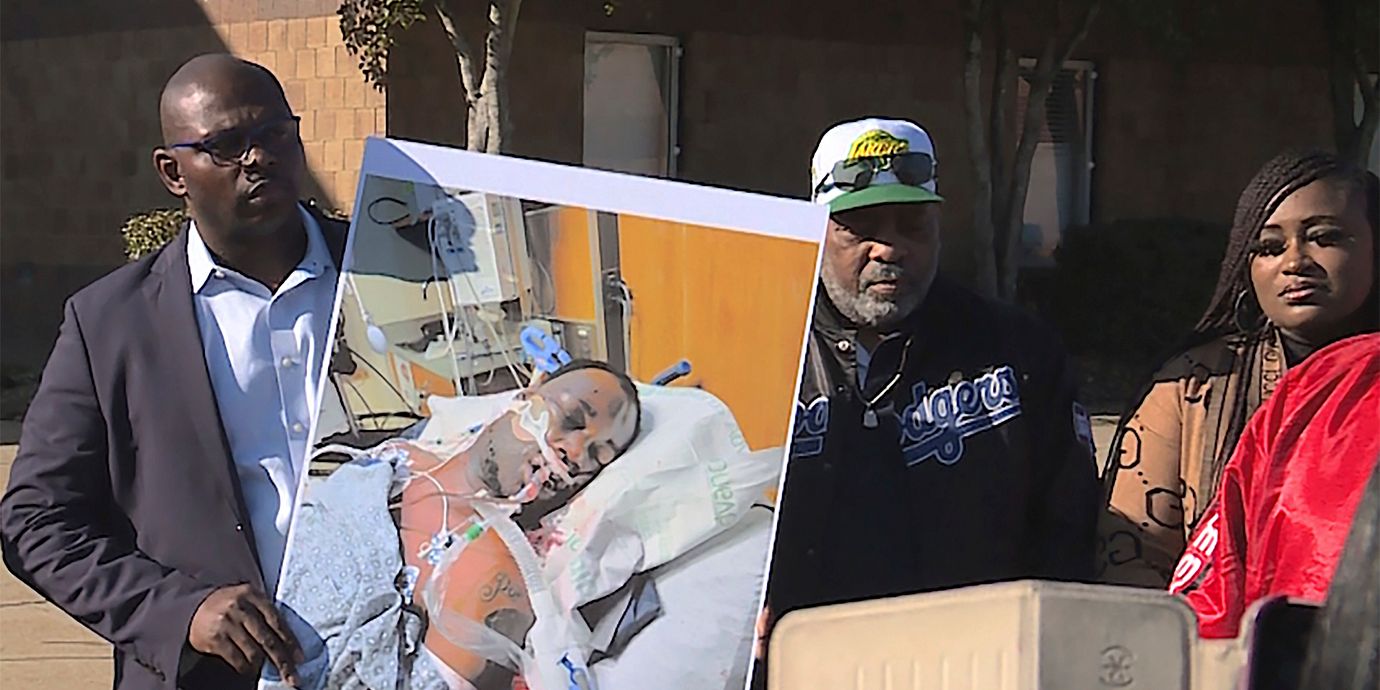
Polischefen i Memphis är djupt upprörd efter de ”alarmerande” videoklipp hon sett från polisens kroppskameror i samband med gripandet av Tyre Nichols, 29, säger hon till CNN.
Enligt polischefen Cerelyn ”CJ” Davis syns hur de fem åtalade poliserna använder brutalt våld mot Nichols. I klippet ska det höras hur 29-åringen ropar efter sin mamma.
– Det är verkligen hjärtslitande ... varför fanns det ingen känsla av omsorg för den här individen?
Filmerna från polisens kroppskameror ska släppas i natt, svensk tid, och väntas leda till demonstrationer i USA. Poliserna, som stängts av från sina tjänster, misstänks för dråp, grov misshandel och kidnappning efter händelsen.
bakgrund
Rodney King
Wikipedia (en)
Rodney Glen King (April 2, 1965 – June 17, 2012) was an African American man who was a victim of police brutality. On March 3, 1991, he was beaten by Los Angeles Police Department (LAPD) officers during his arrest after a pursuit for driving while intoxicated on the I-210. An uninvolved individual, George Holliday, filmed the incident from his nearby balcony and sent the footage to local news station KTLA. The footage showed an unarmed King on the ground being beaten after initially evading arrest. The incident was covered by news media around the world and caused a public furor.
At a press conference, Los Angeles police chief Daryl Gates announced that the four officers involved would be disciplined for use of excessive force and that three would face criminal charges. The LAPD initially charged King with "felony evading", but later dropped the charge. On his release, he spoke to reporters from his wheelchair, with his injuries evident: a broken right leg in a cast, his face badly cut and swollen, bruises on his body and a burn area to his chest where he had been jolted with a stun gun. He described how he had knelt, spread his hands out, then slowly tried to move so as not to make any "stupid moves", being hit across the face by a billy club and shocked. He said he was scared for his life as they drew down on him.Four officers were eventually tried on charges of use of excessive force. Of these, three were acquitted; the jury failed to reach a verdict on one charge for the fourth. Within hours of the acquittals, the 1992 Los Angeles riots started, sparked by outrage among racial minorities over the trial's verdict and related, longstanding social issues, overlaid with tensions between the African American and Korean American communities. The rioting lasted six days and killed 63 people, with 2,383 more injured; it ended only after the California Army National Guard, the Army, as well as the Marine Corps provided reinforcements to re-establish control. King advocated for a peaceful end to the conflict.
The federal government prosecuted a separate civil rights case, obtaining grand jury indictments of the four officers for violations of King's civil rights. Their trial in a federal district court ended in April 1993, with two of the officers being found guilty and sentenced to serve prison terms. The other two were acquitted of the charges. In a separate civil lawsuit in 1994, a jury found the City of Los Angeles liable and awarded King $3.8 million in damages.
Omni är politiskt obundna och oberoende. Vi strävar efter att ge fler perspektiv på nyheterna. Har du frågor eller synpunkter kring vår rapportering? Kontakta redaktionen