Sjukdomen får nytt namn – för att undvika rasism
Världshälsoorganisationen WHO ändrar namnet på virussjukdomen apkoppor, monkeypox på engelska, till mpox. Anledningen är enligt AFP att undvika rasism och stigmatisering utifrån det befintliga namnet.
”Båda namnen kommer att användas under ett år medan apkoppor fasas ut”, skriver FN-organet i et pressmeddelande.
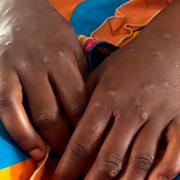
Virussjukdomen fick sitt namn efter att den upptäckts hos apor 1958. På 1970-talet konstaterades första fallet hos människor. Sedan utbrottet i maj har över 81 000 fall bekräftats världen över, främst bland män som har sex med andra män.
bakgrund
WHO
Wikipedia (en)
The World Health Organization (WHO) is a specialized agency of the United Nations responsible for international public health. The WHO Constitution states its main objective as "the attainment by all peoples of the highest possible level of health". Headquartered in Geneva, Switzerland, it has six regional offices and 150 field offices worldwide.
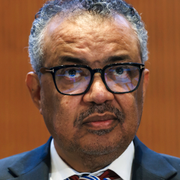
The WHO was established on 7 April 1948. The first meeting of the World Health Assembly (WHA), the agency's governing body, took place on 24 July of that year. The WHO incorporated the assets, personnel, and duties of the League of Nations' Health Organization and the Office International d'Hygiène Publique, including the International Classification of Diseases (ICD). Its work began in earnest in 1951 after a significant infusion of financial and technical resources.The WHO's mandate seeks and includes: working worldwide to promote health, keeping the world safe, and serve the vulnerable. It advocates that a billion more people should have: universal health care coverage, engagement with the monitoring of public health risks, coordinating responses to health emergencies, and promoting health and well-being. It provides technical assistance to countries, sets international health standards, and collects data on global health issues. A publication, the World Health Report, provides assessments of worldwide health topics. The WHO also serves as a forum for discussions of health issues.The WHO has played a leading role in several public health achievements, most notably the eradication of smallpox, the near-eradication of polio, and the development of an Ebola vaccine. Its current priorities include communicable diseases, particularly HIV/AIDS, Ebola, COVID-19, malaria and tuberculosis; non-communicable diseases such as heart disease and cancer; healthy diet, nutrition, and food security; occupational health; and substance abuse. Its World Health Assembly, the agency's decision-making body, elects and advises an executive board made up of 34 health specialists. It selects the director-general, sets goals and priorities, and approves the budget and activities. The current director-general is Tedros Adhanom Ghebreyesus of Ethiopia.The WHO relies on contributions from member states (both assessed and voluntary) and private donors for funding. Its total approved budget for 2020–2021 is over $7.2 billion, of which the majority comes from voluntary contributions from member states.
Since the late 20th century, the rise of new actors engaged in global health such as the World Bank, the Bill & Melinda Gates Foundation, the US President's Emergency Plan for AIDS Relief (PEPFAR) and dozens of public-private partnerships for global health have weakened the WHO's role as a coordinator and policy leader in the field.
Omni är politiskt obundna och oberoende. Vi strävar efter att ge fler perspektiv på nyheterna. Har du frågor eller synpunkter kring vår rapportering? Kontakta redaktionen