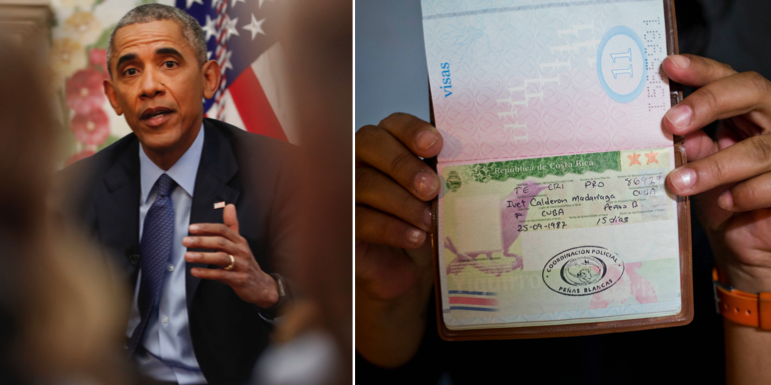
USA slopar rätten för kubaner att stanna
President Barack Obama slopar omedelbart regeln om att kubaner som anländer till USA utan visum ändå får permanent uppehållstillstånd. Det meddelar Vita huset i ett uttalande.
Regeln, som kallas ”wet foot, dry foot” och infördes på 1990-talet efter en kraftig ökning av antalet kubaner som försökte ta sig sjövägen till USA. Den som når fast mark får stanna och den som inte gör det skickas tillbaka.
Havanna har länge hävdat att regeln uppmuntrar kubaner att göra den farofyllda sjöresan från Kuba till Florida. Beslutet är enligt Washington ett steg i Obamas arbete för att normalisera förbindelserna med Kuba.
bakgrund
Relationen mellan Kuba och USA
Wikipedia (en)
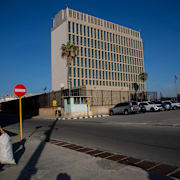
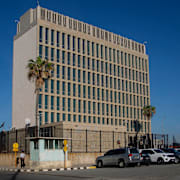
Cuba and the United States restored diplomatic relations on 20 July 2015, which had been severed in 1961 during the Cold War. U.S. diplomatic representation in Cuba is handled by the United States Embassy in Havana, and there is a similar Cuban Embassy in Washington, D.C.. The United States, however, continues to maintain its commercial, economic, and financial embargo, which makes it illegal for U.S. corporations to do business with Cuba. Although the U.S. President, Barack Obama, has called for the ending of the embargo, U.S. law requires congressional approval to end the embargo.
The hold of the Spanish Empire on possessions in the Americas was reduced in the 1820s as a result of the Spanish American wars of independence; only Cuba and Puerto Rico remained under Spanish rule until the Spanish–American War (1898) that resulted from the Cuban War of Independence. Under the Treaty of Paris, Cuba became a U.S. protectorate; the U.S. gained a position of economic and political dominance over the island, which persisted after it became formally independent in 1902.
Following the Cuban Revolution of 1959, bilateral relations deteriorated substantially. In 1961, the U.S. severed diplomatic ties with Cuba and began pursuing covert operations to topple the Communist regime. Moreover, the U.S. imposed and subsequently tightened a comprehensive set of restrictions and bans vis-à-vis the Cuban regime as retaliation for the nationalization of U.S. corporations' property by Cuba. Meanwhile, several organizations, including a nearly unanimous UN General Assembly, have called for "an end to the United States' decades-long economic, commercial and financial embargo against Cuba."
On 17 December 2014, U.S. President Barack Obama and Cuban President Raúl Castro announced the beginning of a process of normalizing relations between Cuba and the U.S., which media sources have named "the Cuban Thaw". Negotiated in secret in Canada and Vatican City over preceding months, and with the assistance of Pope Francis, the agreement led to the lifting of some U.S. travel restrictions, fewer restrictions on remittances, U.S. banks access to the Cuban financial system, and the establishment of a U.S. embassy in Havana, which closed after Cuba became closely allied with the USSR in 1961. The countries' respective "interests sections" in one another's capitals were upgraded to embassies on 20 July 2015. On 20 March 2016, President Barack Obama visited Cuba, becoming the first President in 88 years to visit the island.
Omni är politiskt obundna och oberoende. Vi strävar efter att ge fler perspektiv på nyheterna. Har du frågor eller synpunkter kring vår rapportering? Kontakta redaktionen