USA straffar polisen på Kuba efter demonstrationer
USA inför sanktioner mot Kubas polisstyrka och två höga polischefer, rapporterar CNN.
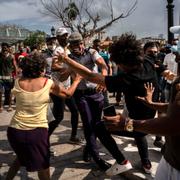
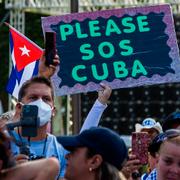
Beslutet är ett svar på att Kubas styre slagit ner mot regeringskritiska demonstranter.
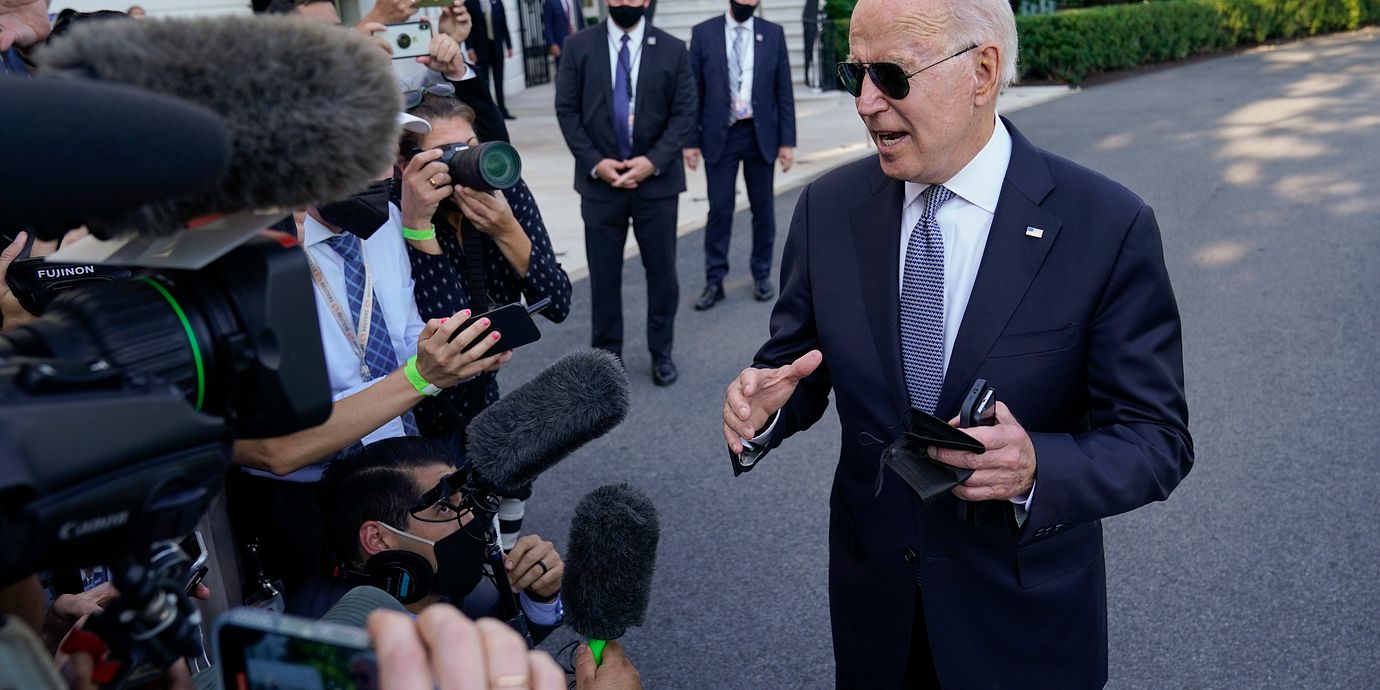
– Vi hör er. Vi hör era rop för frihet som kommer från ön, sa USA:s president Joe Biden under ett möte med exilkubanska företrädare i Vita huset i går kväll.
bakgrund
Relationen mellan USA och Kuba
Wikipedia (en)
Cuba and the United States restored diplomatic relations on 20 July 2015. Relations had been severed in 1961 during the Cold War. U.S. diplomatic representation in Cuba is handled by the United States Embassy in Havana, and there is a similar Cuban Embassy in Washington, D.C. The United States, however, continues to maintain its commercial, economic, and financial embargo, making it illegal for U.S. corporations to do business with Cuba.
Relations began in early colonial times and were focused around extensive trade. In the 1800s, manifest destiny increasingly led to American desire to buy, conquer, or otherwise take some control of Cuba. This included an attempt to buy it during the Polk administration, and a secret attempt to buy it in 1854 known as the Ostend Manifesto, which backfired and caused a scandal. The hold of the Spanish Empire on possessions in the Americas had already been reduced in the 1820s as a result of the Spanish American wars of independence; only Cuba and Puerto Rico remained under Spanish rule until the Spanish–American War (1898) that resulted from the Cuban War of Independence. Under the Treaty of Paris, Cuba became a U.S. protectorate from 1898–1902; the U.S. gained a position of economic and political dominance over the island, which persisted after it became formally independent in 1902.
Following the Cuban Revolution of 1959, bilateral relations deteriorated substantially. In October 1960, the U.S. imposed and subsequently tightened a comprehensive set of restrictions and bans against the Cuban government, ostensibly in retaliation for the nationalization of U.S. corporations' property by Cuba. In 1961, the U.S. severed diplomatic ties with Cuba and engaged in a campaign of terrorism and covert operations in an attempt to bring down the Cuban government. The 1961 Bay of Pigs Invasion, the extensive killing of Cuban civilians by US terrorism, the 1962 Cuban Missile Crisis, and American efforts to prevent Fidel Castro's attempts to "spread communism" throughout Latin America and Africa, are main features of U.S.-Cuba animosity during the Cold War, although Nixon, Ford, Kennedy, and Johnson resorted to back-channel talks with the Cuban government during the Cold War.In 2014, U.S. President Barack Obama and Cuban leader Raúl Castro announced the beginning of a process of normalizing relations between Cuba and the U.S., which media sources have named "the Cuban Thaw". Negotiated in secret in Canada and the Vatican City, and with the assistance of Pope Francis, the agreement led to the lifting of some U.S. travel restrictions, fewer restrictions on remittances, access to the Cuban financial system for U.S. banks, and the establishment of a U.S. embassy in Havana, which closed after Cuba became closely allied with the USSR in 1961. The countries' respective "interests sections" in one another's capitals were upgraded to embassies in 2015. In 2016, President Barack Obama visited Cuba, becoming the first sitting U.S. president in 88 years to visit the island.On 16 June 2017 President Donald Trump announced that he was suspending the policy for unconditional sanctions relief for Cuba, while also leaving the door open for a "better deal" between the U.S. and Cuba. On 8 November 2017, it was announced that the business and travel restrictions which were loosened by the Obama administration would be reinstated and they went into effect on 9 November. On 4 June 2019, the Trump administration announced new restrictions on American travel to Cuba.
Omni är politiskt obundna och oberoende. Vi strävar efter att ge fler perspektiv på nyheterna. Har du frågor eller synpunkter kring vår rapportering? Kontakta redaktionen