Hem
(ANDREW J. RUSSELL/UPI)

Veteran: AI är som järnvägen var på 1800-talet

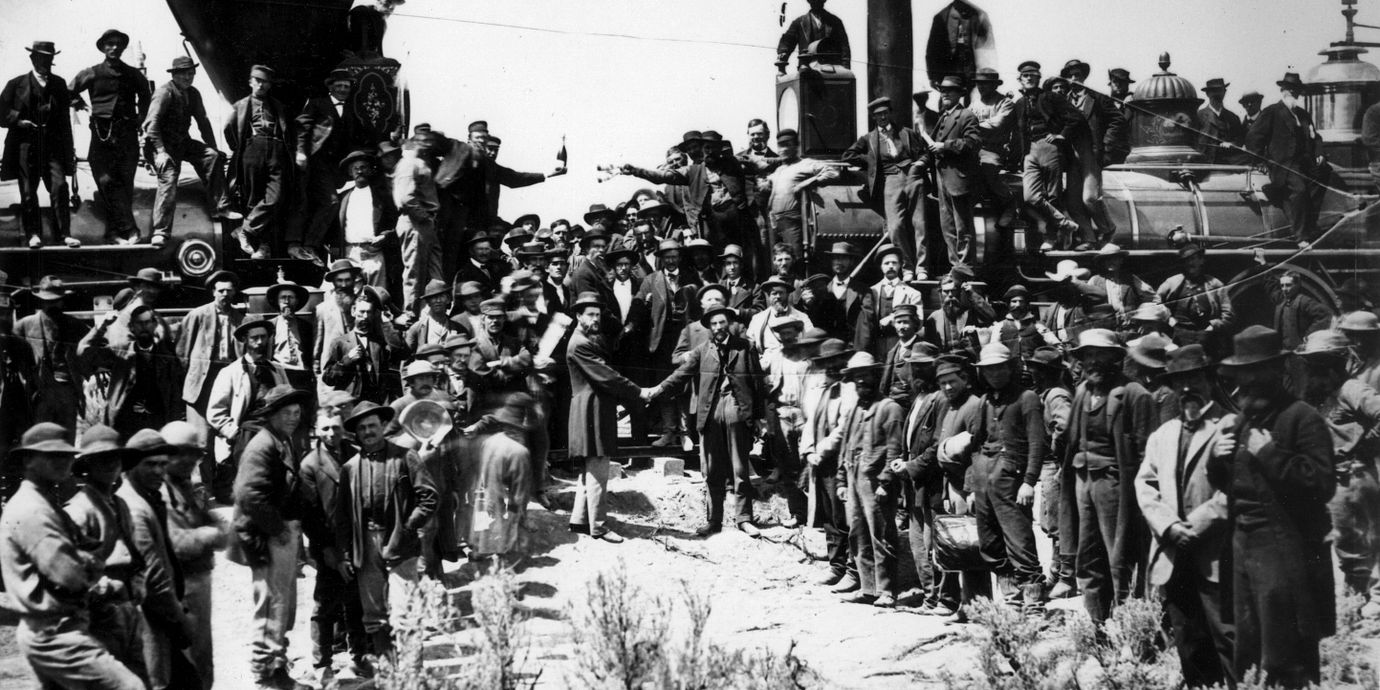
Det finns många likheter mellan den pågående AI-utbyggnaden och järnvägsboomen under 1800-talet, skriver Bloomberg-veteranen Adrian Wooldridge i en krönika. Hans uppmaning är att lära av historien och han pekar på finanskriserna 1837, 1857, 1873 och 1893 – där järnvägen stod i centrum.

”Den första lärdomen är att när man bygger ut innan det finns efterfrågan så närapå garanterar man både uppsving och krasch”, skriver han.

Historien berättar även om uppblåsta egon vars berättelser – då doktrinen ”manifest destiny”, nu superintelligens – bör tas med en nypa salt.

Wooldridges slutsats är att den nya tekniken kan ligga till grund för både en bubbla och ett paradigmskifte.

”Den största lärdomen från 1800-talets järnvägsmani är att det kan vara båda”, skriver han.

bakgrund
 
Adrian Wooldridge
Wikipedia (en)
Adrian Wooldridge (born 1959) is an author and columnist. He is the Global Business Columnist at Bloomberg Opinion.
bakgrund
 
Manifest destiny
Wikipedia (sv)
Manifest destiny ("Ett bestämt öde", "bestämt mål" eller Ödets manifest) är en doktrin som utvecklades i USA på 1830- och 1840-talen. Den uttrycker övertygelsen att USA var förutbestämt att expandera västerut ända till Stilla havet. Uttrycket användes första gången i mitten av 1800-talet, ofta för att uppmuntra amerikansk territoriell expansion. Många amerikaner fascinerades av tanken att USA hade en speciell uppgift: att civilisera Nordamerika. Detta väckte visioner om den nya amerikanska civilisationen – invandrarna till USA – som inte gick att stoppa förrän hela kontinenten ända till Stilla havet hade blivit civiliserad.
bakgrund
 
Paniken 1893
Wikipedia (en)
The Panic of 1893 was an economic depression in the United States. It began in February 1893 and officially ended eight months later. The Panic of 1896 followed. It was the most serious economic depression in history until the Great Depression of the 1930s. The Panic of 1893 deeply affected every sector of the economy and produced political upheaval that led to a political realignment and the presidency of William McKinley. The panic climaxed with a run on gold from the United States Treasury. Unemployment rates in many states rose above 25% and poverty became widespread.
bakgrund
 
Paniken 1873
Wikipedia (en)
The Panic of 1873 was a financial crisis that triggered an economic depression in Europe and North America that lasted from 1873 to 1877 or 1879 in France and in Britain. In Britain, the Panic started two decades of stagnation known as the "Long Depression" that weakened the country's economic leadership. In the United States, the Panic was known as the "Great Depression" until the events of 1929 and the early 1930s set a new standard. The Panic of 1873 and the subsequent depression had several underlying causes for which economic historians debate the relative importance. American inflation, rampant speculative investments (overwhelmingly in railroads), the demonetization of silver in Germany and the United States, ripples from economic dislocation in Europe resulting from the Franco-Prussian War (1870–1871), and major property losses in the Great Chicago Fire (1871) and the Great Boston Fire (1872) helped to place massive strain on bank reserves, which, in New York City, plummeted from $50 million to $17 million between September and October 1873. The first symptoms of the crisis were financial failures in Vienna, the capital of Austria-Hungary, which spread to most of Europe and to North America by 1873.
bakgrund
 
Paniken 1857
Wikipedia (en)
The Panic of 1857 was a financial crisis in the United States caused by the declining international economy and over-expansion of the domestic economy. Because of the invention of the telegraph by Samuel F. Morse in 1844, the Panic of 1857 was the first financial crisis to spread rapidly throughout the United States. The world economy was more interconnected by the 1850s, which made the Panic of 1857 the first worldwide economic crisis. In Britain, the Palmerston government circumvented the requirements of the Bank Charter Act 1844, which required gold and silver reserves to back up the amount of money in circulation. Surfacing news of this circumvention set off the Panic in Britain. Beginning in September 1857, the financial downturn did not last long, but a proper recovery was delayed until the onset of the American Civil War in 1861. The sinking of SS Central America in September 1857 contributed to the panic, because New York City banks were waiting on its much-needed shipment of gold. After the failure of Ohio Life Insurance and Trust Company, the financial panic quickly spread with businesses beginning to fail, the railroad industry experiencing financial declines, and hundreds of thousands of workers being laid off. Because the years immediately preceding the Panic of 1857 were prosperous, many banks, merchants, and farmers had seized the opportunity to take risks with their investments, and, as soon as market prices began to fall, they quickly began to experience the effects of financial panic. American banks did not recover until after the Civil War.
bakgrund
 
Paniken 1837
Wikipedia (en)
The Panic of 1837 was a financial crisis in the United States that began a major depression which lasted until the mid-1840s. Profits, prices, and wages dropped, westward expansion was stalled, unemployment rose, and pessimism abounded. The panic had both domestic and foreign origins. Speculative lending practices in the West, a sharp decline in cotton prices, a collapsing land bubble, international specie flows, and restrictive lending policies in Britain were all factors. The lack of a central bank to regulate fiscal matters, which President Andrew Jackson had ensured by not extending the charter of the Second Bank of the United States, was also key. The ailing economy of early 1837 led investors to panic, and a bank run ensued, giving the crisis its name. The bank run came to a head on May 10, 1837, when banks in New York City ran out of gold and silver. They immediately suspended specie payments, and would no longer redeem commercial paper in specie at full face value. A significant economic collapse followed: despite a brief recovery in 1838, the recession persisted for nearly seven years. Over 40% of all banks failed, businesses closed, prices declined, and there was mass unemployment. From 1837 to 1844, deflation in wages and prices was widespread. As the nation underwent hardships, positive forces were at work that, in time, would invigorate the economy. Railroads had begun their relentless expansion, and furnace masters had discovered how to smelt greater quantities of pig iron. The machine tool and the metalworking industries were taking shape. Coal had begun its ascent, replacing wood as the nation’s major source of heat. Innovations with agricultural machinery would bring greater productivity from the land. The nation’s population would also increase by more than one-third during the 1840s, despite the economic turmoil (mostly due to immigration, especially Irish emigration during the Irish Famine). After downturns in 1845–1846 and 1847–1848, gold was discovered in California in 1848, setting off a prosperity of its own. Meanwhile, individuals and institutions were hurting.
Omni är politiskt obundna och oberoende. Vi strävar efter att ge fler perspektiv på nyheterna. Har du frågor eller synpunkter kring vår rapportering? Kontakta redaktionen