Wikipedia (en)
The Rohingya people (, , , or ) are a stateless Indo-Aryan people from Rakhine State, Myanmar, which they claim to be their homeland for generations. There are an estimated 1 million Rohingyas living in Myanmar. The majority of them are Muslim and a minority are Hindu. Described as "one of the most persecuted minorities in the world", most of the Rohingya population are denied citizenship under the 1982 Burmese citizenship law, which restricts full citizenship to British Indian migrants who settled after 1823. The Rohingyas are also restricted from freedom of movement, state education and civil service jobs in Myanmar. Despite promises of equality by Myanmar's independence leader Aung San, the Rohingyas have faced military crackdowns in 1978, 1991–1992, 2012, 2015 and 2016–2017. UN officials have described Myanmar's persecution of the Rohingya as ethnic cleansing, while there have been warnings of an unfolding genocide. Yanghee Lee, the UN special investigator on Myanmar, believes the country wants to expel its entire Rohingya population.
Migration from the Indian subcontinent to Myanmar (formerly Burma) has taken place for centuries, including as part of the spread of Buddhism, Hinduism and Islam in the region. The historical region of Bengal (now divided between Bangladesh and the Indian state of West Bengal) has historical and cultural links with Rakhine State (formerly Arakan). Bengali-speaking settlers are recorded in Arakan since at least the 17th century, when the Kingdom of Mrauk U reigned. The Rohingya language shares similarities with the Chittagonian dialect of Bengali. The term Rohingya, in the form of Rooinga, was recorded by the East India Company as early as 1799, but Burmese nationalists dispute its origins. Indian migration increased during the period of British rule in Burma, as Burma was a part of British India until 1937. Arakan had the largest percentage of British Indians in Burma. British Indians in Arakan were involved in agriculture and trade. Their presence was resented by many in the Rakhine majority.
During the Second World War, the Arakan massacres in 1942 involved communal violence between British-armed V Force Rohingya recruits and pro-Japanese Rakhines, which polarized the region along ethnic lines. After Burmese independence in 1948, the region witnessed an Arkanese Independence Movement by Rakhine Buddhists and attempts by Rohingya Muslims to merge their territory with East Pakistan. In 1982, General Ne Win's government enacted the Burmese nationality law, which did not recognize the Rohingya as one of the "national races" of Burma, unlike the Kachin, Kayah, Karen, Chin, Bamar, Mon, Rakhine, Shan, Kaman and Zerbadee. As a result, the majority of the Rohingya population were rendered stateless. In the years following the 8888 Uprising and return of martial law, the Burmese military junta launched a military crackdown against Rohingyas in 1991 and 1992, which caused 250,000 refugees to flee to neighboring Bangladesh and brought the two countries to the brink of war.
The Rohingyas maintain the view that they are long standing residents of western Myanmar, and they also maintain the view that their community includes a mixture of precolonial and colonial settlers. The official stance of the Myanmar government, however, has been that they are illegal immigrants from Bangladesh. Myanmar's government does not recognize the term "Rohingya" and it prefers to refer to the community as Bengalis.
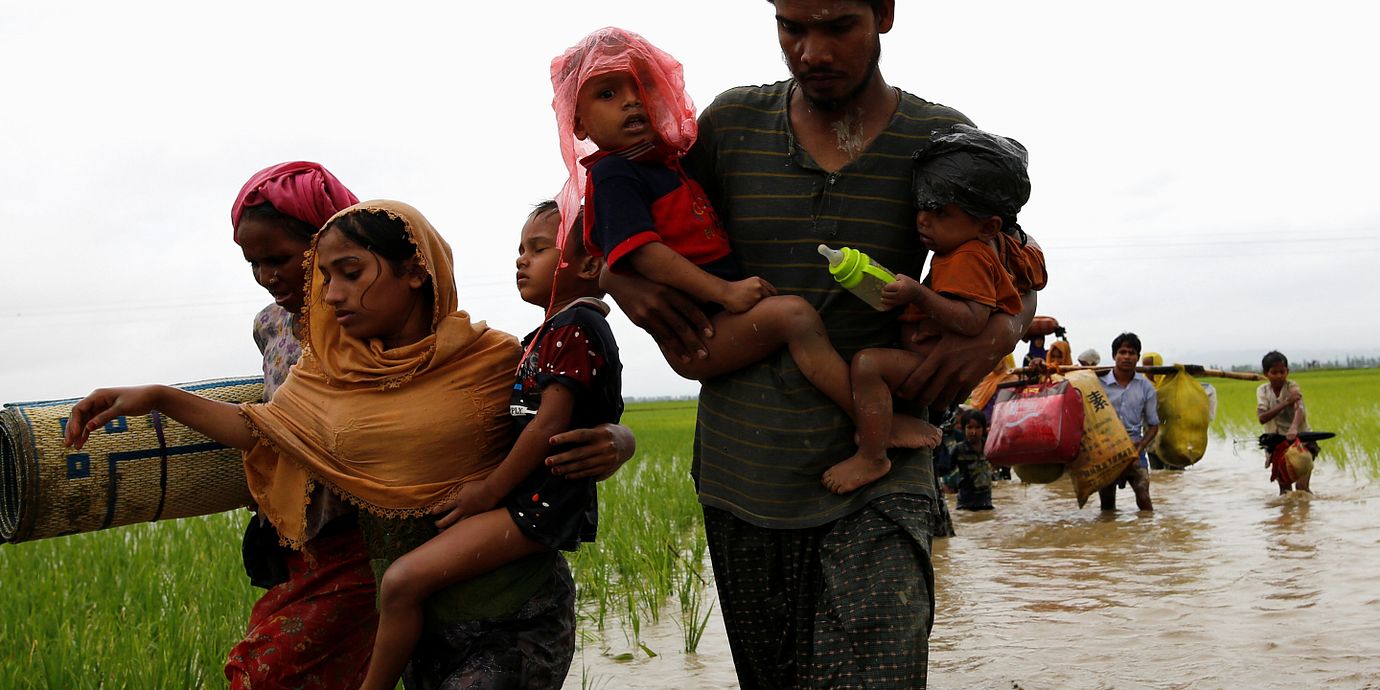
Prior to the 2015 Rohingya refugee crisis and the military crackdown in 2016 and 2017, the Rohingya population in Myanmar was around 1.1 to 1.3 million They reside mainly in the northern Rakhine townships, where they form 80–98% of the population. Many Rohingyas have fled to southeastern Bangladesh, where there are 500,000 refugees, as well as to India, Thailand, Malaysia, Indonesia, Saudi Arabia and Pakistan. More than 100,000 Rohingyas in Myanmar live in camps for internally displaced persons, and the authorities do not allow them to leave. Probes by the UN have found evidence of increasing incitement of hatred and religious intolerance by "ultra-nationalist Buddhists" against Rohingyas while the Burmese security forces have been conducting "summary executions, enforced disappearances, arbitrary arrests and detentions, torture and ill-treatment and forced labour" against the community. International media and human rights organizations have often described the Rohingyas as one of the most persecuted minorities in the world. According to the United Nations, the human rights violations against the Rohingyas could be termed "crimes against humanity". Rohingyas have received international attention in the wake of the 2012 Rakhine State riots, the 2015 Rohingya refugee crisis, and the 2016–17 military crackdown.