6 000 nya fall i Indien – högsta sedan utbrottet
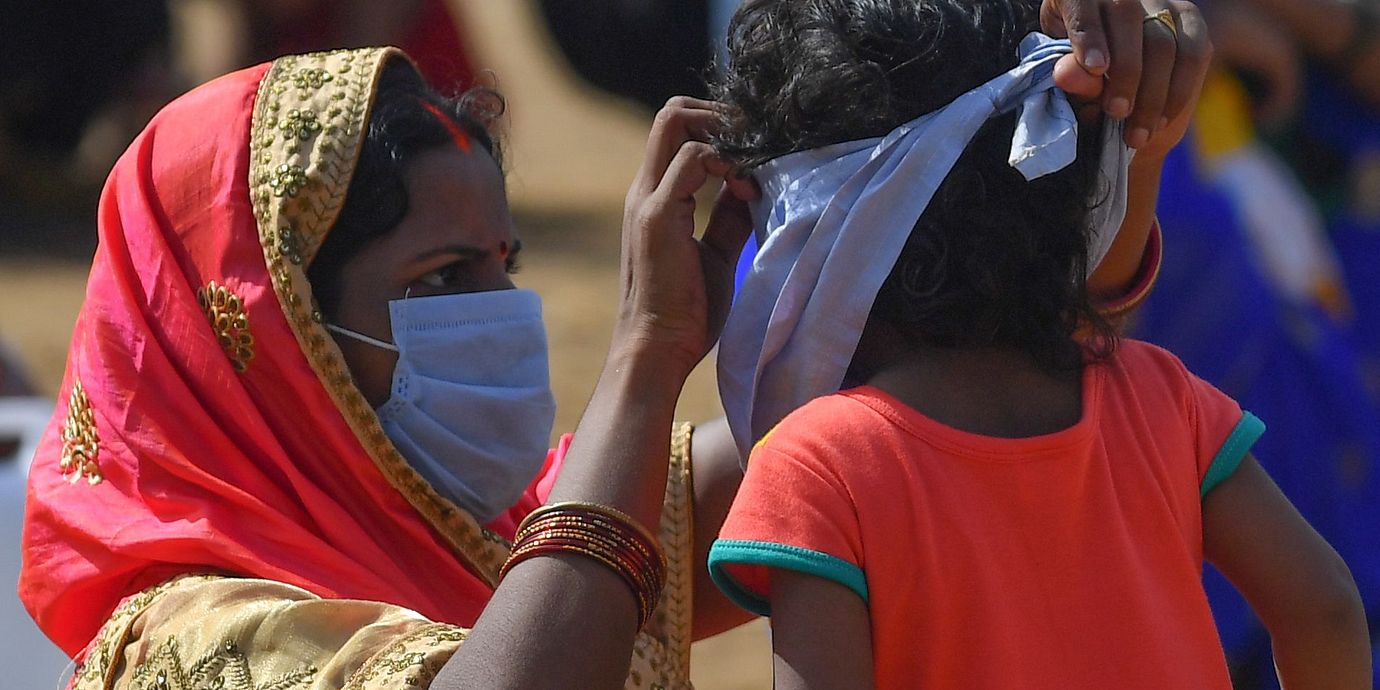
Indien har nu över 118 000 bekräftade fall av covid-19 – bara det senaste dygnet har 6 000 nya fall rapporterats in. Det är den högsta siffran sedan pandemin bröt ut, rapporterar Reuters.
Totalt har 3 853 personer i Indien dött efter att ha drabbats av viruset.
Samtidigt har vissa områden där antalet smittade är lägre börjat släppa lite på de hårda restriktioner som råder i landet.
bakgrund
Pandemin i Indien
Wikipedia (en)
The first case of the COVID-19 pandemic in India was reported on 30 January 2020, originating from China. As of 22 May 2020, the Ministry of Health and Family Welfare have confirmed a total of 118,447 cases, 48,534 recoveries (including 1 migration) and 3,583 deaths in the country. India currently has the fourth largest number of confirmed cases in Asia with number of cases breaching the 100,000 mark on 19 May 2020. The highest single day surge in new cases was recorded on 22 May 2020, when 6,088 cases were reported. India's case fatality rate is relatively lower at 3.09%, against the global 6.63% as of 20 May 2020. Five cities account for around half of all reported cases in the country – Mumbai, Delhi, Ahmedabad, Chennai and Pune. As of 20 May 2020, two regions, Sikkim and Lakshadweep have not reported a case.
The outbreak has been declared an epidemic in more than a dozen states and union territories, where provisions of the Epidemic Diseases Act, 1897 have been invoked, and educational institutions and many commercial establishments have been shut down. India has suspended all tourist visas, as a majority of the confirmed cases were linked to other countries.On 22 March 2020, India observed a 14-hour voluntary public curfew at the instance of the prime minister Narendra Modi. The government followed it up with lockdowns in 75 districts where COVID-19 cases had occurred as well as all major cities. Further, on 24 March, the prime minister ordered a nationwide lockdown for 21 days, affecting the entire 1.3 billion population of India. On 14 April, the prime minister extended the ongoing nationwide lockdown till 3 May. On 1 May, lockdown across the country was further extended by two more weeks till 17 May.Michael Ryan, chief executive director of the World Health Organisation's health emergencies programme, said that India had "tremendous capacity" to deal with the coronavirus outbreak and, as the second most populous country, will have enormous impact on the world's ability to deal with it. Other commentators worried about the economic devastation caused by the lockdown, which has huge effects on informal workers, micro and small enterprises, farmers and the self-employed, who are left with no livelihood in the absence of transportation and access to markets. Observers state that the lockdown has slowed the growth rate of the pandemic by 6 April to a rate of doubling every 6 days, and, by 18 April, to a rate of doubling every 8 days.The Oxford COVID-19 Government Response Tracker (OxCGRT), in its report based on data from 73 countries, reports that the Indian Government has responded more stringently than other countries in tackling the pandemic. It noted the government's swift action, emergency policy making emergency investment in healthcare, fiscal measures, investment in vaccine research and active response to the situation, and scored India with a "100" for its strictness
Omni är politiskt obundna och oberoende. Vi strävar efter att ge fler perspektiv på nyheterna. Har du frågor eller synpunkter kring vår rapportering? Kontakta redaktionen