Feminister och hbtq-aktivister stödjer Tsai
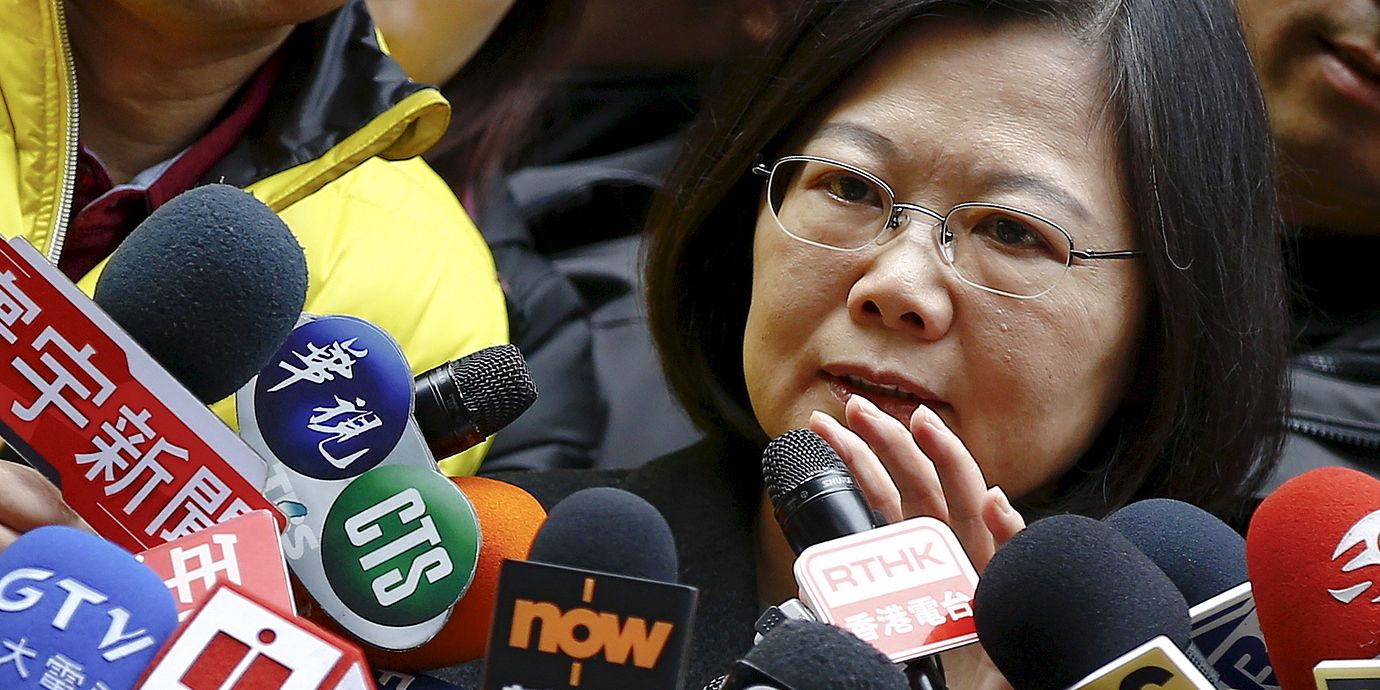
Presidentkandidaten Tsai Ing-Wen kan bli Taiwans första kvinnliga president när landet i dag går till val. Förhållandet till Kina är en av de stora valfrågorna och den sittande presidenten Ma Ying-Jeou, från nationalistpartiet KMT, anses ha förlorat stöd på grund av närmandena till Kina.
Det tidigare juristen Tsai Ing-Wen, som nu leder opinionsmätningarna, sitter i Demokratiska framstegspartiet och har haft en Kina-skeptisk hållning som hon visserligen försökt tona ner något under valrörelsen.
Valet följs noga av feministiska aktivister i Kina, där kvinnor haft mycket svårare att få plats i politiken. Tsai Ing-Wen har även stöd av hbtq-aktivister eftersom hon uttalat sig positivt om lagförslag om samkönade äktenskap.
bakgrund
Valet i Taiwan
Wikipedia (en)
General elections will be held in Taiwan on Saturday, 16 January 2016 to elect the 14th president and vice president of the Republic of China, and all 113 members of the 9th Legislative Yuan.
bakgrund
Tsai Ing-wen
Wikipedia (en)
Tsai Ing-wen (Chinese: 蔡英文; pinyin: Cài Yīngwén; born 31 August 1956 in Taipei, Taiwan) is a Taiwanese politician. She is the incumbent chairwoman of the Democratic Progressive Party (DPP), and the party's presidential candidate in 2016. Tsai previously served as chair from 2008 to 2012, and was the party's presidential candidate in 2012.
Having studied in Taiwan, the US and then Britain, Tsai earned a LL.B. from National Taiwan University, a LL.M. from Cornell University Law School and a PhD from the London School of Economics. Tsai held professorial positions at several universities upon returning from her study abroad in 1984. Starting 1993, she was appointed to a series of governmental positions by the then-ruling Kuomintang (KMT) and was one of the chief drafters of the Special state-to-state relations doctrine of then President Lee Teng-hui.
After DPP President Chen Shui-bian took office in 2000, Tsai was invited to serve as Minister of the Mainland Affairs Council throughout Chen's first term as a non-partisan. She became a DPP member in 2004 and served briefly as a DPP-listed non-constituency member of the Legislative Yuan. From there, she was appointed Vice Premier under Premier Su Tseng-chang until the cabinet's mass resignation in 2007. She was elected and assumed DPP chairpersonship in 2008, following her party's defeat in the 2008 presidential election. She resigned as chairperson after losing her 2012 presidential election bid.
Tsai ran for New Taipei City mayorship in the November 2010 municipal elections but was defeated by another former vice premier, Eric Chu (KMT). In April 2011, Tsai became the first female presidential candidate of a major party in the history of the Republic of China after defeating her former superior, Su Tseng-chang, in the DPP's primary by a slight margin. She was defeated by incumbent Kuomintang candidate Ma Ying-jeou in the 5th direct presidential election in 2012.
Omni är politiskt obundna och oberoende. Vi strävar efter att ge fler perspektiv på nyheterna. Har du frågor eller synpunkter kring vår rapportering? Kontakta redaktionen