Valförrättaren: Om våra val är tråkiga – gå på teater
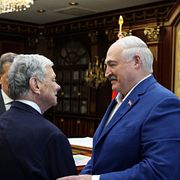
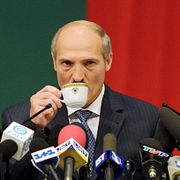
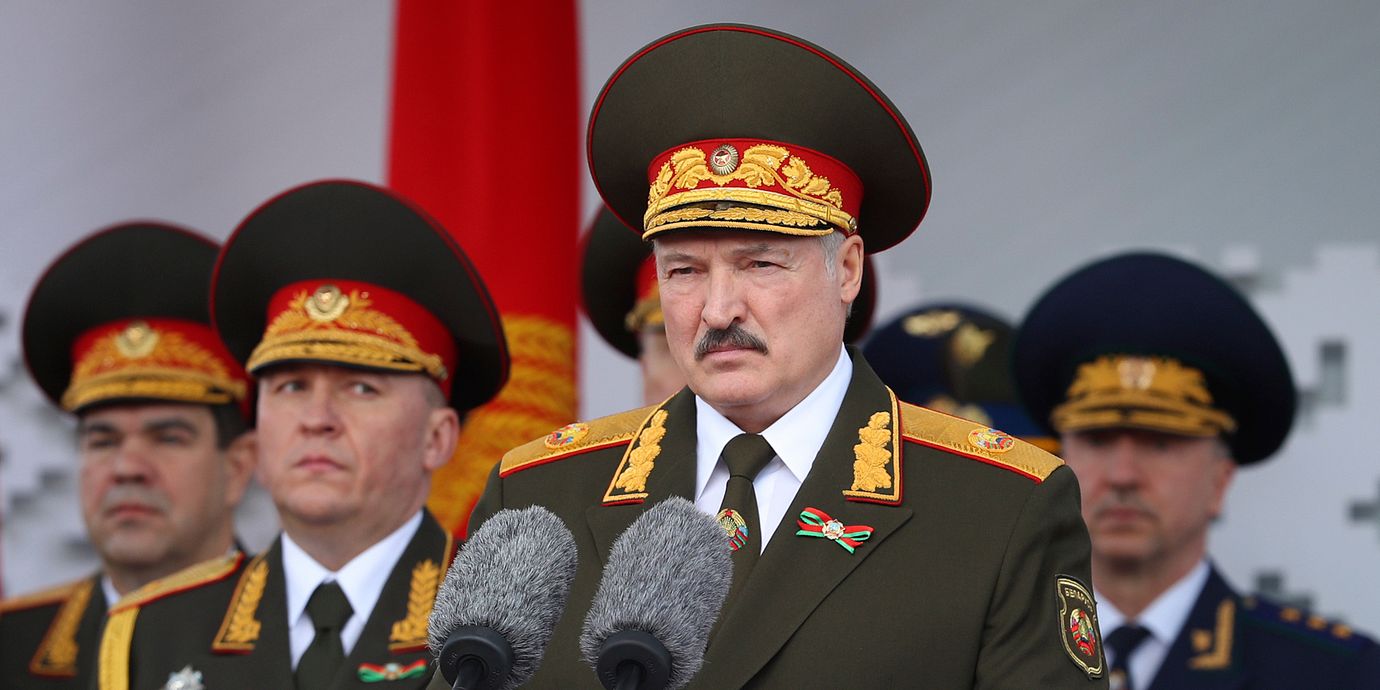
I dag går Belarus till val. I alla fall i ordets tekniska bemärkelse. Enligt de flesta bedömare är valen ofria och helt i fickan på Aleksandr Luksasjenkos regim, skriver Politico.
Samtliga fyra partier som ställer upp i valet står enade bakom den sittande presidenten.
– Om någon tycker att våra val är tråkiga, så finns det alltid cirkus, teatern eller konserter, säger Igor Karpenko, chef för landets valmyndighet i en tv-sändning.
bakgrund
Alexander Lukasjenko
Wikipedia (en)
Alexander Grigoryevich Lukashenko (also transliterated as Alyaksandr Ryhoravich Lukashenka; born 30 August 1954) is a Belarusian politician who has been the president of Belarus since the office's establishment in 1994. This makes him the longest-serving European president.Before embarking on his political career, Lukashenko worked as the director of a state farm (sovkhoz) and served in both the Soviet Border Troops and the Soviet Army. In 1990, Lukashenko was elected to the Supreme Soviet of the Byelorussian Soviet Socialist Republic. Following the dissolution of the Soviet Union, he assumed the position of head of the interim anti-corruption committee of the Supreme Council of Belarus. In 1994, he won the presidency in the country's inaugural presidential election after the adoption of a new constitution.
Lukashenko opposed economic shock therapy during the 1990s post-Soviet transition, maintaining state ownership of key industries in Belarus. This spared Belarus from recessions as devastating as those in other post-Soviet states and prevented the rise of oligarchy. Lukashenko's maintenance of socialist economic model is consistent with the retaining of Soviet-era symbolism, including the Russian language, coat of arms and national flag. These symbols were adopted after a controversial 1995 referendum.
Subsequent to the same referendum, Lukashenko acquired increased power, including the authority to dismiss the Supreme Council. Another referendum in 1996 further facilitated his consolidation of power. Lukashenko has since presided over an authoritarian government and has been labeled by the media as "Europe's last dictator". International monitors have not regarded Belarusian elections as free and fair, except for his initial win. The government suppresses opponents and limits media freedom. This has resulted in multiple Western governments imposing sanctions on Lukashenko and other Belarusian officials. Lukashenko's contested victory in the 2020 presidential election preceded allegations of vote-rigging, amplifying anti-government protests, the largest seen during his rule. Consequently, the United Kingdom, the European Union, and the United States do not recognise Lukashenko as the legitimate president of Belarus following the disputed election.Such isolation from parts of the West have increased his dependence on Russia, with whom Lukashenko had already maintained close ties with despite some disagreements related to trade. This has been particularly the case following the rise to power of Vladimir Putin, replacing reformist president Boris Yeltsin. Lukashenko played a crucial role in creating the Union State of Russia and Belarus, enabling Belarusians and Russians to travel, work, and study freely between the two countries. He also reportedly played a crucial role in brokering a deal to end the Russian Wagner Group rebellion in 2023, allowing some Wagner soldiers into Belarus.
Omni är politiskt obundna och oberoende. Vi strävar efter att ge fler perspektiv på nyheterna. Har du frågor eller synpunkter kring vår rapportering? Kontakta redaktionen