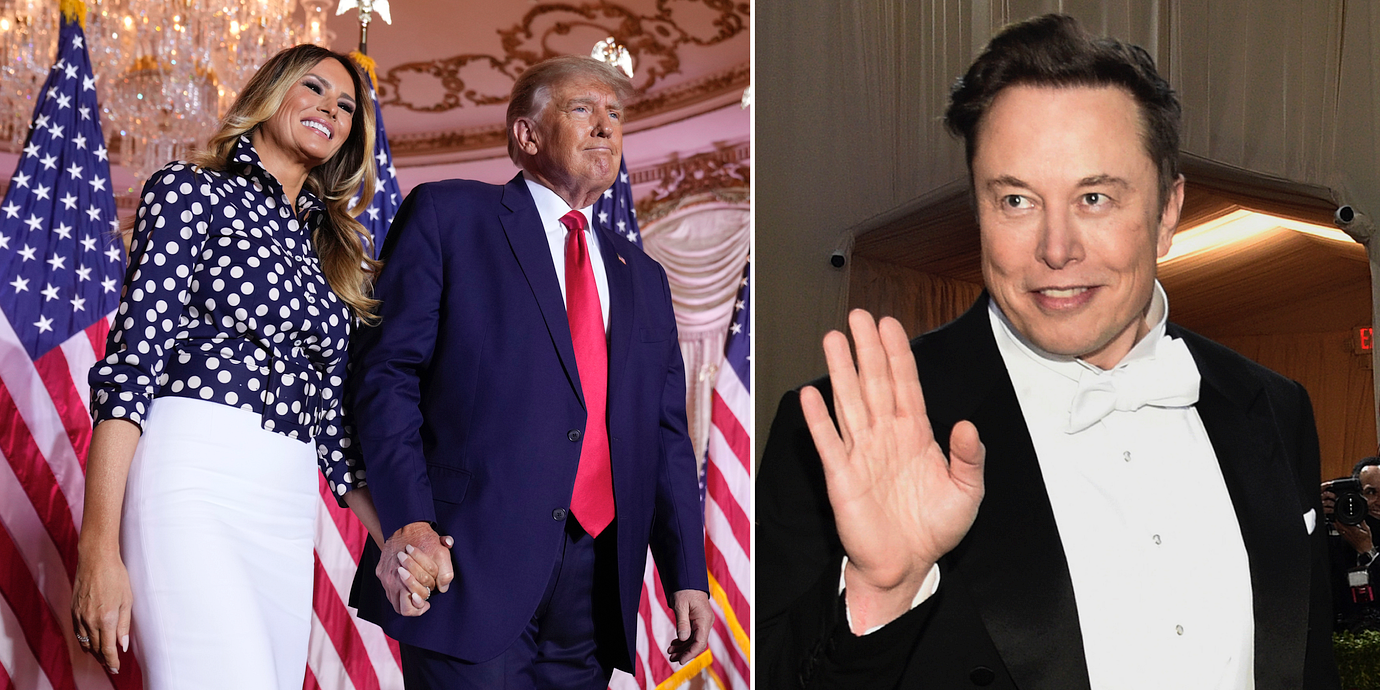
Trump välkomnas tillbaka till Twitter efter omröstningen: ”Folkets röst är Guds röst”
Donald Trump kommer att välkomnas tillbaka till Twitter efter sin nästan två år långa avstängning, meddelar Twitterägaren Elon Musk i natt.
I helgen publicerade Musk en omröstning, där han lät sina följare bestämma om ex-presidenten skulle få en ny chans. Över 15 miljoner människor besvarade frågan och 51,8 procent tog Trumps parti.
”Vox Populi, Vox Dei”, skriver Musk, en latinsk fras som betyder ”folket röst är Guds röst”.
Det är ännu inte klart om Trump faktiskt kommer att återvända, skriver AP. Han har tidigare sagt att han inte kommer att använda Twitter igen, även om han skulle bli insläppt. Sedan han blev avstängd har han lanserat sin egen variant av Twitter, som heter Truth Social.
Trumps konto är nu återigen aktivt och sökbart.
bakgrund
Vox Populi, Vox Dei
Wikipedia (en)
Vox Populi, Vox Dei, a Latin phrase meaning "the voice of the people is the voice of God", was used as the title of a Whig tract of 1709, which was expanded in 1710 and later reprintings as The Judgment of whole Kingdoms and Nations: Concerning the Rights, Power, and Prerogative of Kings, and the Rights, Privileges, and Properties of the People. The author is unknown but was probably either Robert Ferguson or Thomas Harrison. There is no evidence for persistent attribution to Daniel Defoe or John Somers as authors.
The most cited section of the revised (1710) version of the pamphlet read:
“There being no natural or divine Law for any Form of Government, or that one Person rather than another should have the sovereign Administration of Affairs, or have Power over many thousand different Families, who are by Nature all equal, being of the same Rank, promiscuously born to the same Advantages of Nature, and to the Use of the same common Faculties; therefore Mankind is at Liberty to choose what Form of Government they like best.”
The 1709 tract's use of the Latin phrase was consistent with earlier usage of vox populi, vox Dei in English political history since at least as early as 1327 when the Archbishop of Canterbury Walter Reynolds brought charges against King Edward II in a sermon "Vox populi, vox Dei". From Reynolds onwards English political use of the phrase was favorable, not referencing the original context of the usage by Alcuin (739) who in a letter advised the emperor Charlemagne to resist such a dangerous democratic idea on the grounds that "the riotousness of the crowd is always very close to madness".Vox Populi, Vox Dei : being true Maxims of Government was the next year, 1710, republished under the title of The Judgment of whole Kingdoms and Nations, with considerable alterations. The 10th printing of the revised tract was in 1771.
Omni är politiskt obundna och oberoende. Vi strävar efter att ge fler perspektiv på nyheterna. Har du frågor eller synpunkter kring vår rapportering? Kontakta redaktionen