Obama: Flygattacker mot IS gör USA säkrare
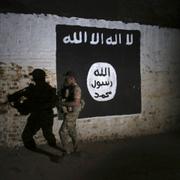
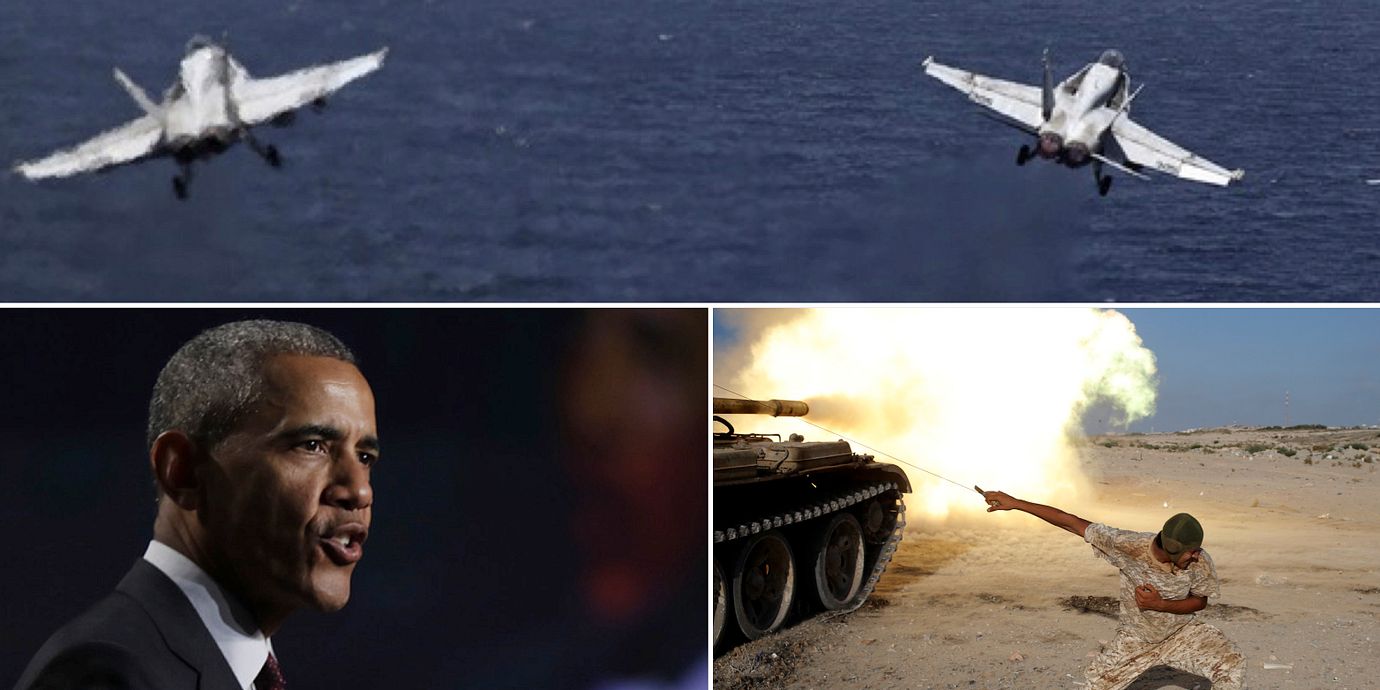
USA:s flygbombningar mot terrorgruppen IS i Libyen fortsatte på tisdagen, samtidigt som regeringstrogna styrkor ryckte fram mot IS-fästet Sirte.
Flygattackerna inleddes i går på order av USA:s president Barack Obama.
– Det ligger i USA:s nationella säkerhetsintresse att bekämpa Isil (IS) och att hjälpa (den nationella regeringen) att göra sitt jobb, sa president Obama på en presskonferens i Vita huset på tisdagen.
Efter två dagars räder uppger försvarshögkvarteret Pentagon att amerikanskt stridsflyg har attackerat sju mål i och i närheten av IS-fästet Sirte, skriver AP.
bakgrund
IS i Libyen
Wikipedia (en)
The Islamic State of Iraq and the Levant - Libya Province is a branch of the militant Islamist group Islamic State of Iraq and the Levant (ISIL), active in Libya. The branch was formed on 13 November 2014, following pledges of allegiance to ISIL leader Abu Bakr al-Baghdadi by militants in Libya. Al-Baghdadi announced the creation of three branches in Libya: Cyrenaica in the east, Fezzan in the desert south, and Tripolitania (or Tarabulus) in the west.
bakgrund
Inbördeskriget i Libyen
Wikipedia (en)
The second Libyan Civil War is an ongoing conflict among rival groups seeking control of the territory of Libya. The conflict is mostly between the government of the Council of Deputies that was elected democratically in 2014, also known as the "Tobruk government" and internationally recognized as the "Libyan Government"; and the rival Islamist government of the General National Congress (GNC), also called the "National Salvation Government", based in the capital Tripoli. The Tobruk government, strongest in eastern Libya, has the loyalty of the Libyan Army under the command of General Khalifa Haftar and has been supported by air strikes by Egypt and the UAE. The Islamist government of the GNC, strongest in western Libya, rejected the results of the 2014 election, and is led by the Muslim Brotherhood, backed by the wider Islamist coalition known as "Libya Dawn" and other militias, and aided by Qatar, Sudan, and Turkey.
In addition to these, there are also smaller rival groups: the Islamist Shura Council of Benghazi Revolutionaries, led by Ansar al-Sharia (Libya), which has had the support of the GNC; the Islamic State of Iraq and the Levant's (ISIL's) Libyan provinces; as well as Tuareg militias of Ghat, controlling desert areas in the southwest; and local forces in Misrata District, controlling the towns of Bani Walid and Tawergha. The belligerents are coalitions of armed groups that sometimes change sides.
In recent months there have been many political developments. The United Nations brokered a cease-fire in December 2015, and on 31 March 2016, the leaders of a new UN-supported "unity government" arrived in Tripoli. On 5 April, the rival Islamist government announced that it was suspending operations and handing power to the new unity government, officially named the "Government of National Accord", although it was not yet clear whether the new arrangement would succeed. As of 28 April, the unity government still had not received the approval of Haftar's supporters in the Tobruk government.
Omni är politiskt obundna och oberoende. Vi strävar efter att ge fler perspektiv på nyheterna. Har du frågor eller synpunkter kring vår rapportering? Kontakta redaktionen