bakgrund
Lagarna om väljar-id i USA
Wikipedia (en)
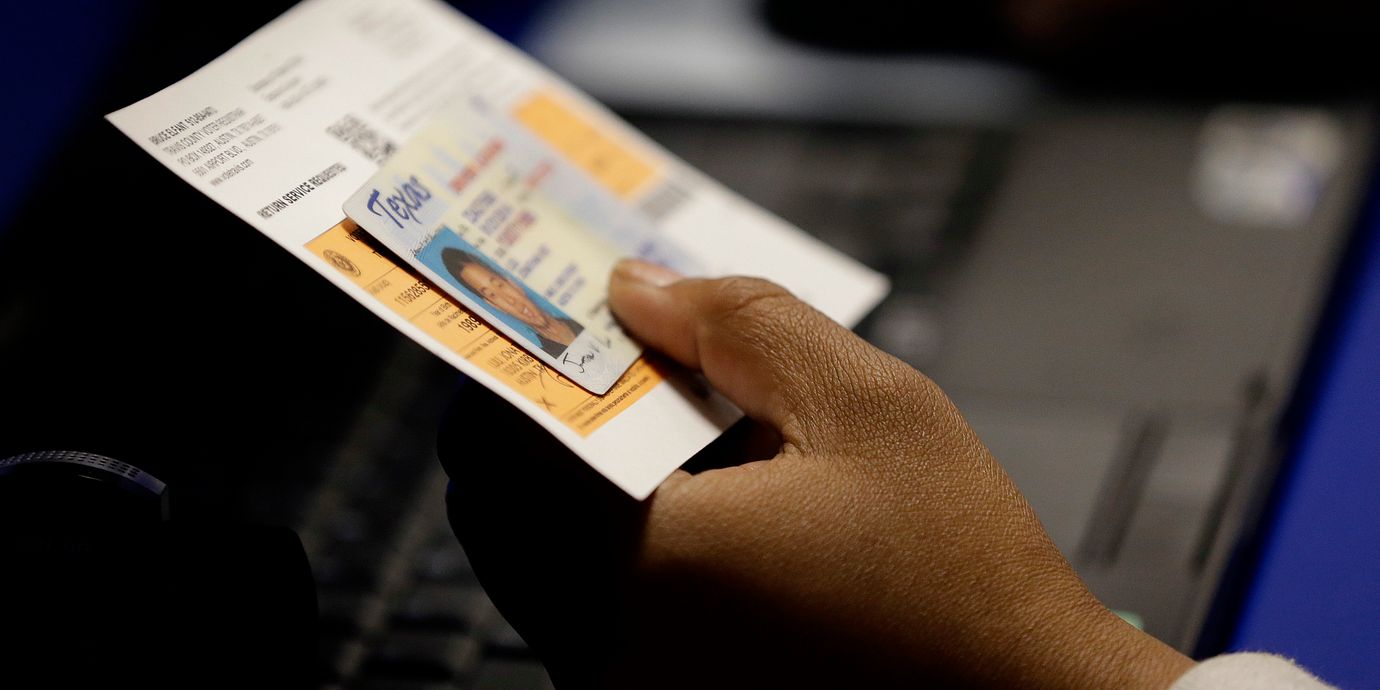
A voter ID law is a law that requires some form of official identification in order for a person to register to vote, receive a ballot for an election, or to vote.
In the United States, voter ID laws have been passed in thirty-three states. At the federal level, the 2002 Help America Vote Act requires a voter ID for all new voters in federal elections who registered by mail and who did not provide a driver's license number or the last four digits of a Social Security number that was matched against government records.
Voter ID laws first generated controversy in 1999 when Virginia attempted to implement an ID requirement in a pilot program. Proponents argue that the laws are a common-sense effort to reduce voter fraud and place little burden on voters. Opponents argue that voter fraud is extremely rare and has been magnified as an issue to create barriers to voter registration and voting that discriminate against minority groups and others who are statistically less likely to possess photo IDs.
Since 2012, 17 states have new voting restrictions in place, according to the Brennan Center for Justice at the New York University School of Law. Lawsuits have been filed against many of these requirements. Critics have argued that the barriers could result in the disenfranchisement of black, Hispanic and other minority voters.
Five federal lawsuits involving Native Americans have been filed against new state voter registration laws passed since the Supreme Court 2013 decision overturning a portion of the Voting Rights Act requiring federal approval before such changes. Three were filed in 2016. Suits in North Dakota, Utah, South Dakota and Arizona claim that new voting rules passed in these majority-Republican states are discriminatory and could reduce voting by tribal members, who tend to back Democrats. A suit in Alaska, for example, claimed the state violated federal rules by failing to translate voting materials for tribal voters.
By the end of July 2016, federal courts had ruled on five voter ID or registration cases in which restrictions had been challenged in five states: Ohio, Kansas, Texas, North Carolina and Wisconsin. While the Texas law was not overturned, the state was advised it needed to have alternative processes in place that were not discriminatory before the November 2016 election. A North Carolina law was overturned as "its provisions deliberately 'target African-Americans'... in an effort to depress black turnout at the polls." Parts of Wisconsin's voter ID laws were ruled to be unconstitutional, and it was advised to accept more forms of identification for the fall 2016 election cycle. On August 1, 2016 a federal judge ruled that North Dakota's restrictive law placed an undue burden on Native Americans, and alternative forms of ID had to be accepted for this election cycle.