Ekonom varnar: Sänk inte räntan för mycket
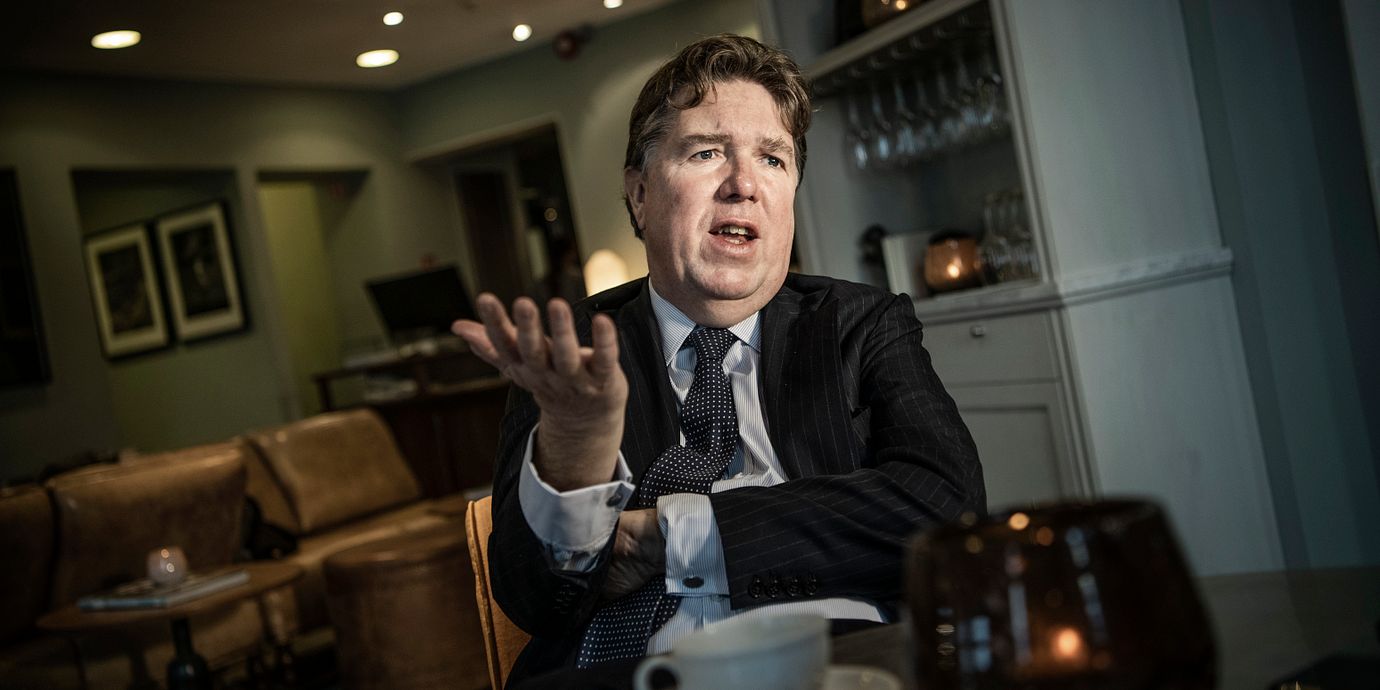
Nationalekonomen Paul Tucker, forskare vid Harvarduniversitetet, varnar Riksbanken och andra centralbanker för att sänka räntan för mycket under noll, när penningpolitiska lättnader behövs nästa gång. Det skriver SvD Näringsliv.
– Jag skulle vara nervös för att sänka räntan till för långt under noll utan starkt politiskt stöd. Till slut skulle folk skulle säga vad i helvete är det som händer, säger han.
bakgrund
Paul Tucker
Wikipedia (en)
Sir Paul Tucker (born 24 March 1958) is a British economist and central banker. He was formerly the Deputy Governor of the Bank of England, with responsibility for financial stability, and served on the Bank's Monetary Policy Committee from June 2002 until October 2013 and its interim and then full Financial Policy Committee from June 2011. In November 2012 he was turned down for the position of governor in favour of Mark Carney. In June 2013, Tucker announced that he would leave the Bank of England, and later that he would be moving to Harvard. He was knighted in the 2014 New Year Honours for services to central banking.Since late 2013, Tucker has been a Fellow at the Harvard Kennedy School’s Mossavar-Rahmani Center for Business and Government. He is a Senior Fellow at Harvard's Center for European Studies.Tucker's book, Unelected Power: The Quest for Legitimacy in Central Banking and the Regulatory State, was published in May 2018 by Princeton University Press.Tucker was educated at Codsall High School, Wolverhampton, and graduated from Trinity College, Cambridge, where he studied maths and philosophy. He joined the Bank of England very shortly afterwards, in 1980.From 1980-1989 Tucker worked in banking supervision; in corporate finance at a merchant bank; on reforming Hong Kong following the 1987 crash, and then the UK's wholesale payments system, leading to the introduction of real-time gross settlement. He was Principal Private Secretary to Leigh-Pemberton, BOE Governor, for nearly four years until 1993. He became Head of Gilt-Edged & Money Markets Division in mid-1994, during a period of reforms in the money markets. He was Head of Monetary Assessment and Strategy Division 1997-1998, responsible for assessing UK monetary conditions and issues concerning the monetary framework. From January 1999, he was Deputy Director of Financial Stability, and was closely involved with the Bank's Financial Stability Review. From 1997 to 2002, he was also on the Secretariat of the Monetary Policy Committee, preparing the published minutes. Starting in June 2002, he was Executive Director for Markets, with responsibility for (i) the Bank's implementation of monetary policy and the management of its balance sheet more generally, including management of UK's foreign currency reserves; and (ii) for market intelligence and analysis supporting the Bank's monetary and financial stability core purposes.He was appointed a member of the Bank of England’s Monetary Policy Committee and Executive Director for Markets from June 2002; and as Deputy Governor of the Bank of England with effect from March 2009.While Deputy Governor, Tucker became a director of the Bank for International Settlements, and later also chaired the Basel Committee on Payment and Settlement Systems (CPSS). During this period, he was a member of the Steering Committee of the G20 Financial Stability Board ("FSB").
In 2009 Tucker became the first chair of the FSB's Working Group on Cross-Border Crisis Management. According to the British Bankers Association, Tucker was “one of the first to set out thinking on ways to deepen the resolution regime”, in particular to develop "a super special resolution framework that permitted the authorities, on a rapid timetable, to haircut uninsured creditors in a going concern”. Tucker helped to develop the conceptual architecture of bail-in, and also got the FSB and G-20 behind the proposal. In October 2011, the FSB Working Group published the "Key Attributes of Effective Resolution Regimes for Financial Institutions". This document set out core principles to be adopted by all participating jurisdictions, including the legal and operational capability for such a super special resolution regime (now known as 'bail-in').. In late 2012, Tucker co-authored an op-ed with FDIC Chairman Martin Gruenberg that described how different countries should cooperate on the resolution of a cross-border bank.A July 2012 memo submitted to the Treasury Select Committee and released by the Wall Street Journal suggested that Tucker may have implicitly pressured Barclays to manipulate its Libor submissions by relaying a message from senior members of the UK government that "it did not always need to be the case that [Barclays] appeared as high as [Barclays] has recently." The memo also noted that Diamond did not believe he received an instruction from Tucker. In August 2012, the Treasury Select Committee noted in its report into Libor that the conclusion of the Financial Services Authority was that "no instruction for Barclays to lower its LIBOR submissions was given during this telephone conversation", but that "as the substance of the telephone conversation was relayed down the chain of command at Barclays, a misunderstanding or miscommunication occurred" so that "Barclays' Submitters believed mistakenly that they were operating under an instruction from the Bank of England". The U.S. Department of Justice and the U.S. Commodity Futures Trading Commission also came to similar conclusions following their investigations.In December 2015, Tucker became chair of the Systemic Risk Council, a body set up in 2012 by former regulators and central bankers to promote financial stability. Its first chair was Sheila Bair, former Chair of the FDIC, and its members include Paul Volcker (former Chair of the Federal Reserve) and Jean-Claude Trichet (former President of the European Central Bank). Since Tucker became chair, the SRC has issued a statement to G20 Finance Ministers and Governors on financial reform and, among other things, intervened on various US Treasury proposals to roll back financial regulation.Following the 2016 referendum on European Union membership in the United Kingdom, Tucker co-authored a paper with Jean Pisani-Ferry, André Sapir, Norbert Rottgen and Guntram Wolff which lays out a proposal of a “continental partnership” between the EU and the UK. According to the paper, such a partnership would grant Britain some control over labor mobility while preserving free movement of capital, goods and services
Omni är politiskt obundna och oberoende. Vi strävar efter att ge fler perspektiv på nyheterna. Har du frågor eller synpunkter kring vår rapportering? Kontakta redaktionen