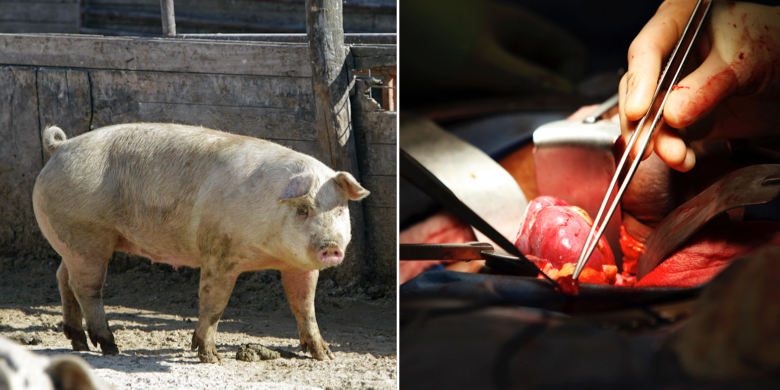
Gris / Bild från en njurtransplantation. (TT)

Grisnjure fäst på människa i banbrytande operation

Forskare på det akademiska sjukhuset NYU Langone i New York har lyckats fästa en njure från en gris på en människa och fått den att fungera, rapporterar USA Today.

Operationen gjordes på en hjärndöd patient som låg i respirator. Grisen hade genmanipulerats eftersom det finns ett socker i vanliga grisceller som gör att människokroppar omedelbart stöter bort deras organ. Forskarna observerade njuren i 54 timmar och kunde konstatera att den klarade att rena blodet från restprodukter och producera urin.

– Den fungerade helt normalt, säger Robert Montgomery, som ledde forskningsteamet under operationen, till AP.

Även om forskarna måste ta reda på mer om njurens livslängd beskrivs operationen som banbrytande och ett stort steg på vägen mot att vården en dag ska kunna använda djurorgan för livsnödvändiga transplantationer.

bakgrund
 
Transplantation över artgränser (xenotransplantation)
Wikipedia (en)
Xenotransplantation (xenos- from the Greek meaning "foreign" or strange), or heterologous transplant, is the transplantation of living cells, tissues or organs from one species to another. Such cells, tissues or organs are called xenografts or xenotransplants. It is contrasted with allotransplantation (from other individual of same species), syngeneic transplantation or isotransplantation (grafts transplanted between two genetically identical individuals of the same species) and autotransplantation (from one part of the body to another in the same person). Xenotransplantation of human tumor cells into immunocompromised mice is a research technique frequently used in pre-clinical oncology research.Human xenotransplantation offers a potential treatment for end-stage organ failure, a significant health problem in parts of the industrialized world. It also raises many novel medical, legal and ethical issues. A continuing concern is that many animals, such as pigs, have a shorter lifespan than humans, meaning that their tissues age at a quicker rate. Disease transmission (xenozoonosis) and permanent alteration to the genetic code of animals are also causes for concern. Similarly to objections to animal testing, animal rights activists have also objected to xenotransplantation on ethical grounds. A few temporarily successful cases of xenotransplantation are published.It is common for patients and physicians to use the term "allograft" imprecisely to refer to either allograft (human-to-human) or xenograft (animal-to-human), but it is helpful scientifically (for those searching or reading the scientific literature) to maintain the more precise distinction in usage.
Omni är politiskt obundna och oberoende. Vi strävar efter att ge fler perspektiv på nyheterna. Har du frågor eller synpunkter kring vår rapportering? Kontakta redaktionen