Rapport: Kurdiska styrkor kan begå krigsbrott i Irak
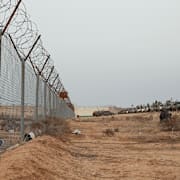
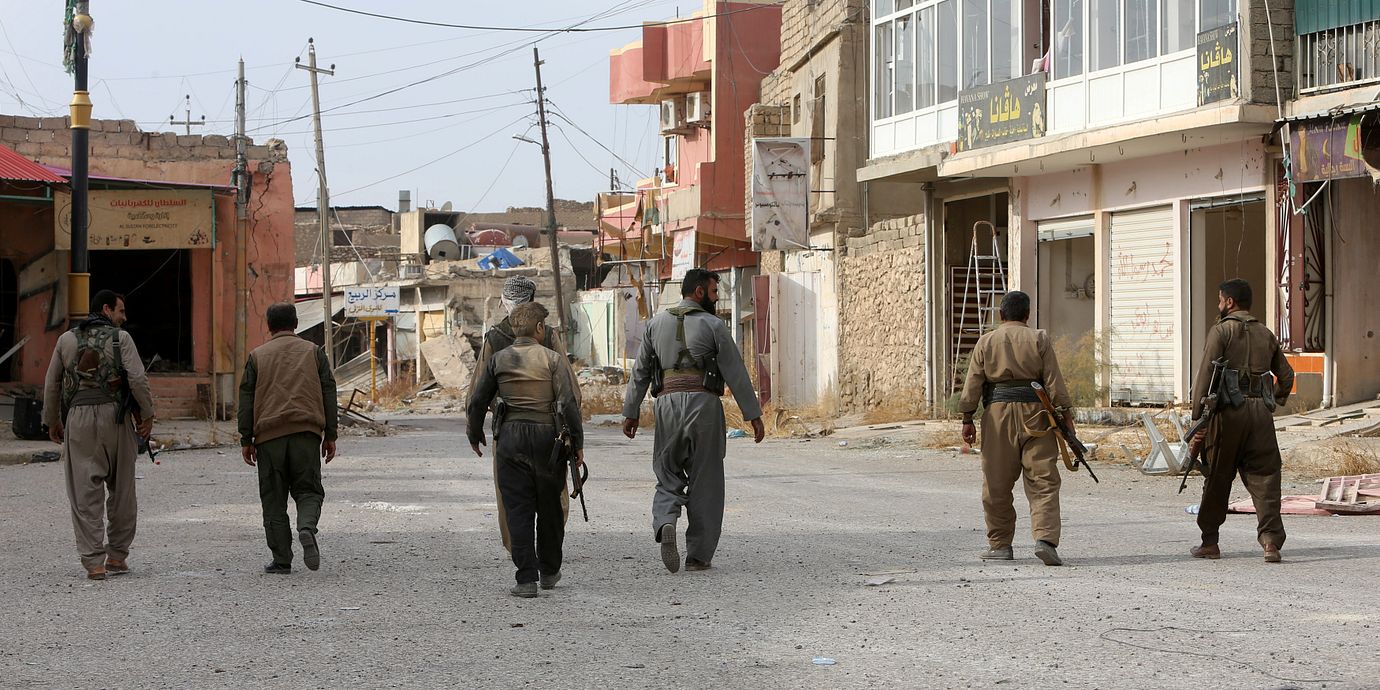
Kurdiska styrkor kan ha begått krigsbrott genom att förstöra bostäder och hela byar i sin kamp mot terrorgruppen IS i norra Irak. Det skriver människorättsorganisationen Human Rights Watch i en ny rapport.
– I by efter by har säkerhetsstyrkor från Kurdistans regionala regering (KRG) förstört arabers hem – men inte kurders – utan något legitimt militärt syfte, säger Joe Stork, Mellanösternchef på Human Rights Watch, enligt Reuters.
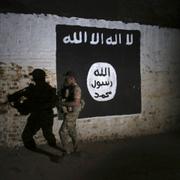
Kurdiska styrkor är del i den stora USA-stödda militärallians som deltar i kampen för att återta Mosul från IS. Enligt Reuters har KRG varit öppna med sin intention att ta över nu IS-kontrollerade områden som en del av kurdiskt autonomt territorium. HRW uppmanar USA att sätta press på de kurdiska styrkorna.
bakgrund
Kurdistans regionala regering
Wikipedia (sv)
Kurdistans regionala regering (kurdiska: Hikûmetî Herêmî Kurdistan), ibland förkortat KRG av dess engelska namn (engelska: Kurdistan Regional Government), administrerar det autonoma självstyret i Irakiska Kurdistan.
bakgrund
Irakiska Kurdistan
Wikipedia (en)
Iraqi Kurdistan, officially called the Kurdistan Region (Central Kurdish: ههرێمی کوردستان, translit. Herêmî Kurdistan, Arabic: إقليم كردستان, translit. Iqlīm Kurdistān) by the Iraqi constitution, is located in the north of Iraq and constitutes the country's only autonomous region. It is frequently referred to as Southern Kurdistan (Central Kurdish: باشووری کوردستان; Northern Kurdish: Başûrê Kurdistanê), as Kurds generally consider it to be one of the four parts of a Greater Kurdistan, which also includes parts of southeastern Turkey (Northern Kurdistan), northern Syria (Rojava or Western Kurdistan), and northwestern Iran (Eastern Kurdistan).
The region is officially governed by the Kurdistan Regional Government (KRG), with the capital being Erbil. Kurdistan is a parliamentary democracy with its own regional Parliament that consists of 111 seats. Masoud Barzani, who was initially elected as president in 2005, was re-elected in 2009. In August 2013 the parliament extended his presidency for another two years. His presidency concluded on 19 August 2015 after the political parties failed to reach an agreement over extending his presidency term. The new Iraqi constitution defines the Kurdistan Region as a federal entity of Iraq, and establishes Kurdish and Arabic as Iraq's joint official languages. The four governorates of Duhok, Hawler, Silemani, and Halabja comprise around 41,710 square kilometres (16,100 sq mi) and have a population of 5.5 million (2015) (2015 estimate). In 2014, during the 2014 Iraq Crisis, Iraqi Kurdistan's forces also took over much of the disputed territories of Northern Iraq.
The establishment of the Kurdistan Region dates back to the March 1970 autonomy agreement between the Kurdish opposition and the Iraqi government after years of heavy fighting. The agreement however failed to be implemented and by 1974 Northern Iraq plunged into another round of bloody conflict between the Kurds and the Arab-dominated government of Iraq. Further, the 1980–88 Iran–Iraq War and especially the Al-Anfal Campaign of the Iraqi army devastated the population and nature of Iraqi Kurdistan. Following the 1991 uprising of Kurds in the north and Shias in the south against Saddam Hussein, Iraqi Kurdistan's military forces, the Peshmerga, succeeded in pushing out the main Iraqi forces from the north. Despite significant casualties and the crisis of Kurdish refugees in bordering regions of Iran and Turkey, the Peshmerga success and establishment of the northern no-fly zone following the First Gulf War in 1991 created the basis for Kurdish self-rule and facilitated the return of refugees. As Kurds continued to fight government troops, Iraqi forces finally left Kurdistan in October 1991, leaving the region with de facto autonomy. In 1992, Kurdish major political movements of KDP and PUK established the semi-autonomous Kurdistan Regional Government. The 2003 invasion of Iraq and the subsequent political changes led to the ratification of a new Constitution of Iraq in 2005.
Omni är politiskt obundna och oberoende. Vi strävar efter att ge fler perspektiv på nyheterna. Har du frågor eller synpunkter kring vår rapportering? Kontakta redaktionen