Wikipedia (en)
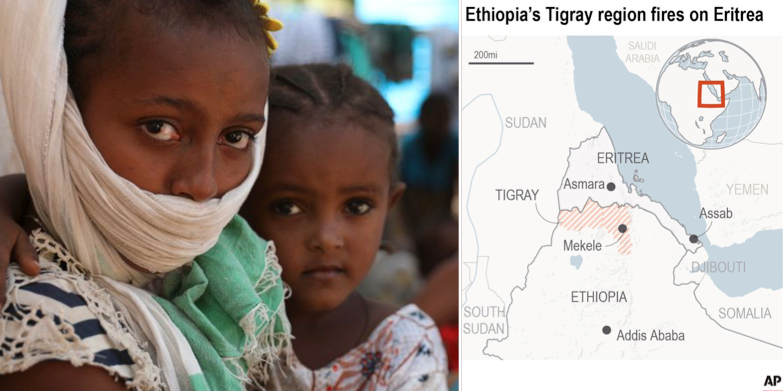
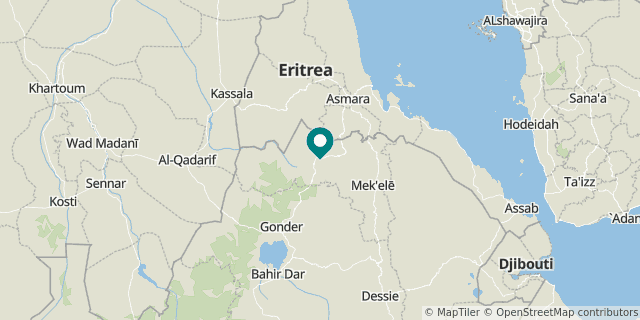
Tigrayans (Tigrinya: ትግርኛ) are a Semitic language-speaking ethnic group found in the Tigray Region in northern Ethiopia and Eritrea. They speak the Tigrinya language.
There are about 8.8 million Tigrayans in Ethiopia, according to the 2007 census; most of them reside in the Tigray Region. Over 90% of Tigrayans are Christians. The great majority are Ethiopian Orthodox Christian, but a minority are Muslims. Since the 19th century, Protestants and Catholics have increased in number, most of which live in Akele Guzay and Agame. Most Tigrayans are traditionally agriculturalists, practising plough agriculture (cultivating teff, sorghum, millet, wheat, maize, etc.) and also keeping cattle, sheep and goats (but usually without stock-breeding), and bees in many areas. Some Tigrayans groups have a strong local identity and used to have their own traditional, quite autonomous self-organization. Sometimes, dominated by egalitarian assemblies of elders, sometimes by leading families or local feudal dynasties. In some areas, the meritorious complex played a considerable role in achieving a social status, which led to the creation of local honorary titles and social institutions, and, historically, to an active involvement in the warfare of Christian Ethiopia; through this, even the sons of simple peasants could rise considerably in the state of hierarchy.The daily life of Tigrayans are highly influenced by religious concepts. For example, the Christian Orthodox fasting periods are strictly observed, especially in Tigray; but also traditional local beliefs such as in spirits, are widespread. In Tigray the language of the church remains exclusively Ge’ez. Tigrayans' society is marked by a strong ideal of communitarianism and, especially in the rural sphere, by egalitarian principles. This does not exclude an important role of gerontocratic rules and in some regions such as the wider Adwa area, formerly the prevalence of feudal lords, who, however, still had to respect the local land rights.