Nytt bakslag med Artemis 1 – oväder sätter stopp
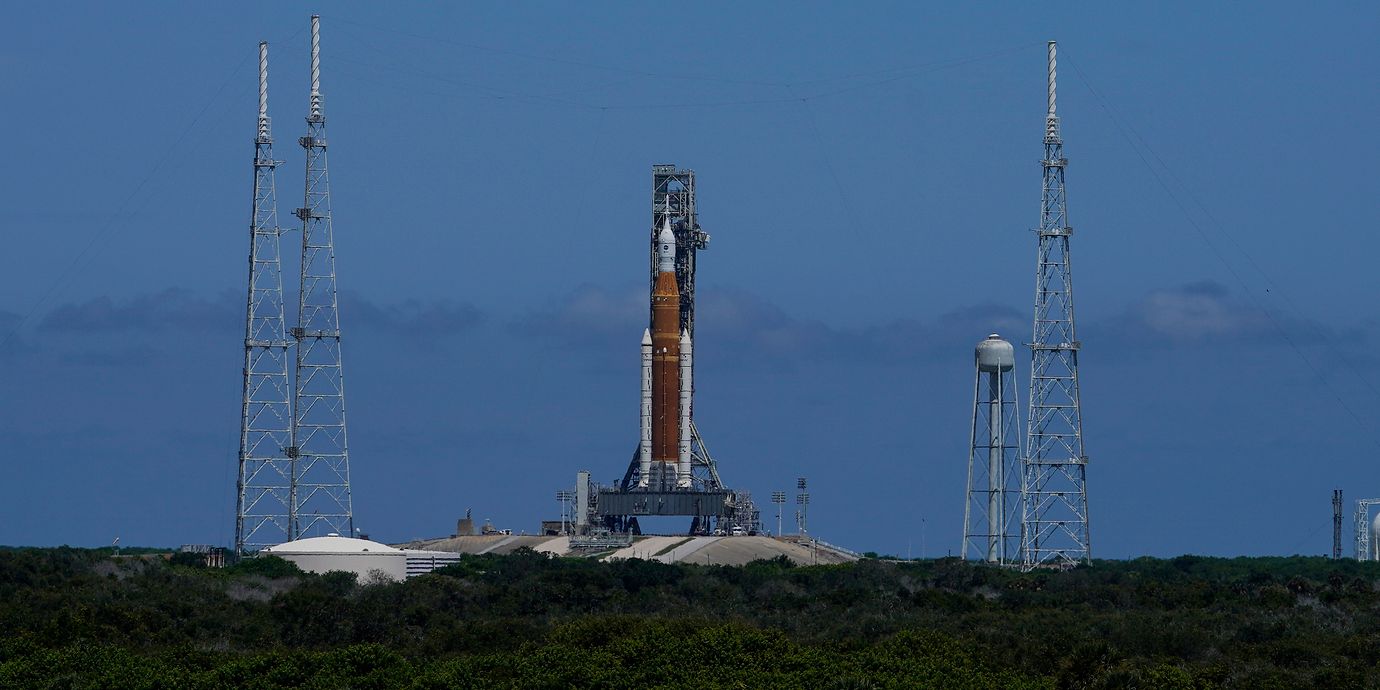
Uppskjutningen av månraketen i Nasa-programmet Artemis 1 skjuts upp ännu en gång, meddelar myndigheten enligt Washington Post. Det på grund av en tropisk storm som är på väg mot Floridas kust.
Uppskjutningen var planerad till tisdagen och det är oklart när det i stället kommer att ske, men man hoppas på ett nytt försök under det nuvarande fönstret som möjliggör uppskjutning. Det avslutas 4 oktober.
Nasa har tidigare ställt in två uppskjutningar till följd av tekniska problem, senast i början av september.
bakgrund
Artemis 1
Wikipedia (en)
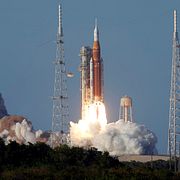
Artemis 1, officially Artemis I, is a planned uncrewed Moon-orbiting mission, the first spaceflight in NASA's Artemis program, and the first flight of the agency's Space Launch System (SLS) rocket and the complete Orion spacecraft. The next window for launch with an opportunity for a long-duration mission starts on 27 September 2022 but launch may not be possible until 2 October 2022 due to Strom IanFormerly known as Exploration Mission-1 (EM-1), the mission was renamed following the creation of the Artemis program. The mission will lift off from Launch Complex 39B at the Kennedy Space Center aboard the Space Launch System rocket. The Orion spacecraft will be launched on a mission of between 26 and 42 days, with at least six of those days in a distant retrograde orbit around the Moon. After reaching orbit and performing a trans-lunar injection (burn to the Moon), the mission will deploy ten CubeSat satellites and the Orion spacecraft will enter a distant retrograde orbit for six days. The Orion spacecraft will then return and reenter the Earth's atmosphere, protected by its heat shield, and splash down in the Pacific Ocean. The mission will certify Orion and the Space Launch System for crewed flights beginning with Artemis 2. After the Artemis 1 mission, Artemis 2 will perform a crewed lunar flyby and Artemis 3 will perform a crewed lunar landing, five decades after the last Apollo mission.
The Orion spacecraft for Artemis 1 was stacked on 20 October 2021, marking the first time a super-heavy-lift vehicle has been stacked inside NASA's Vehicle Assembly Building (VAB) since the final Saturn V. On 17 August 2022, the fully stacked vehicle was rolled out for launch, after a series of delays caused by difficulties in pre-flight testing. The first launch attempt was made on 29 August 2022, but was cancelled due to a faulty reading on a redundant sensor. The second attempt on 3 September 2022 was also cancelled after a hydrogen leak was discovered. On the same day, in order to focus on troubleshooting the SLS, NASA decided to forgo any launch attempts in the launch window ending 6 September. After the leak was satisfactorily repaired, the next launch opportunity was initially on 27 September 2022 before trajectory forecasts for Tropical Storm Ian led to a weather delay.
Omni är politiskt obundna och oberoende. Vi strävar efter att ge fler perspektiv på nyheterna. Har du frågor eller synpunkter kring vår rapportering? Kontakta redaktionen