Japan: Aggressivt Kina kan skapa kris i regionen
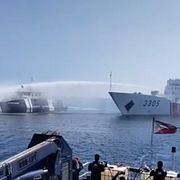
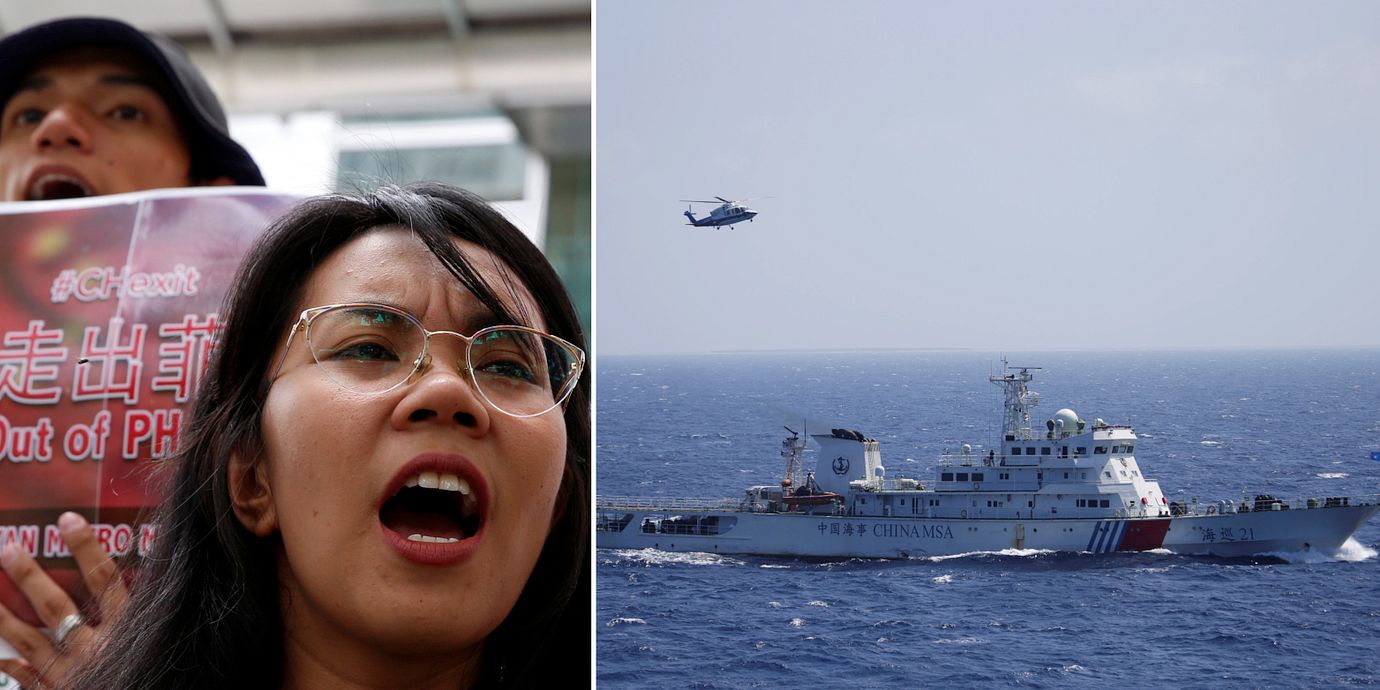
Kinas aggressiva hållning kring territorialvatten kan komma att orsaka konflikter med asiatiska grannländer. Den varningen utfärdades av Japan i dess årliga säkerhetsanalys på tisdagen. Faran förstärks av att kriserna kan utlösas oavsiktligt, skriver Japan i rapporten som kallas Vita papperet.
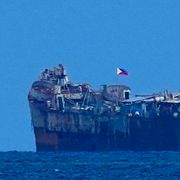
Inte minst Kinas allmänna krav på områden i Sydkinesiska sjön, där landet byggt flera artificiella öar som kan användas för militära insatser, väcker oro.
bakgrund
Fejden kring Sydkinesiska havet
Wikipedia (en)
The South China Sea disputes involve both island and maritime claims among several sovereign states within the region, namely the Nation of Brunei, the People's Republic of China, the Republic of China (Taiwan), Malaysia, the Republic of the Philippines, and the Socialist Republic of Vietnam. Non-claimants want the South China Sea to remain as international waters, with the United States of America conducting "freedom of navigation" operations.
There are disputes concerning both the Spratly and the Paracel islands, as well as maritime, areas near to sea, boundaries in the Gulf of Tonkin and elsewhere. There is a further dispute in the waters near the Indonesian Natuna Islands. The interests of different nations include acquiring fishing areas around the two archipelagos; the potential exploitation of crude oil and natural gas under the waters of various parts of the South China Sea, and the strategic control of important shipping lanes.
The Shangri-La Dialogue serves as the "Track One" exchange forum on security issues surrounding the Asia-Pacific region, including territorial disputes in the South China Sea. The Council for Security Cooperation in the Asia Pacific is the "Track Two" forum for dialogue on security issues.
In February 2016, President Obama initiated the US-ASEAN Summit at Sunnylands for closer engagement with the Association of Southeast Asian Nations. Territorial disputes in the South China Sea were a major topic, but its joint statement, the "Sunnylands Declaration", did not name the South China Sea, instead calling for "respect of each nation's sovereignty and for international law". Analysts believe it indicates divisions within the group on how to respond to China's maritime strategy.
In July 2016, an arbitral tribunal constituted under Annex VII of the United Nations Convention on the Law of the Sea ruled against China's territorial claims in Philippines v. China. Although it is not enforceable China does not acknowledge the tribunal nor abide by its ruling, insisting that any resolution should be through bilateral negotiations with other claimants.
Omni är politiskt obundna och oberoende. Vi strävar efter att ge fler perspektiv på nyheterna. Har du frågor eller synpunkter kring vår rapportering? Kontakta redaktionen