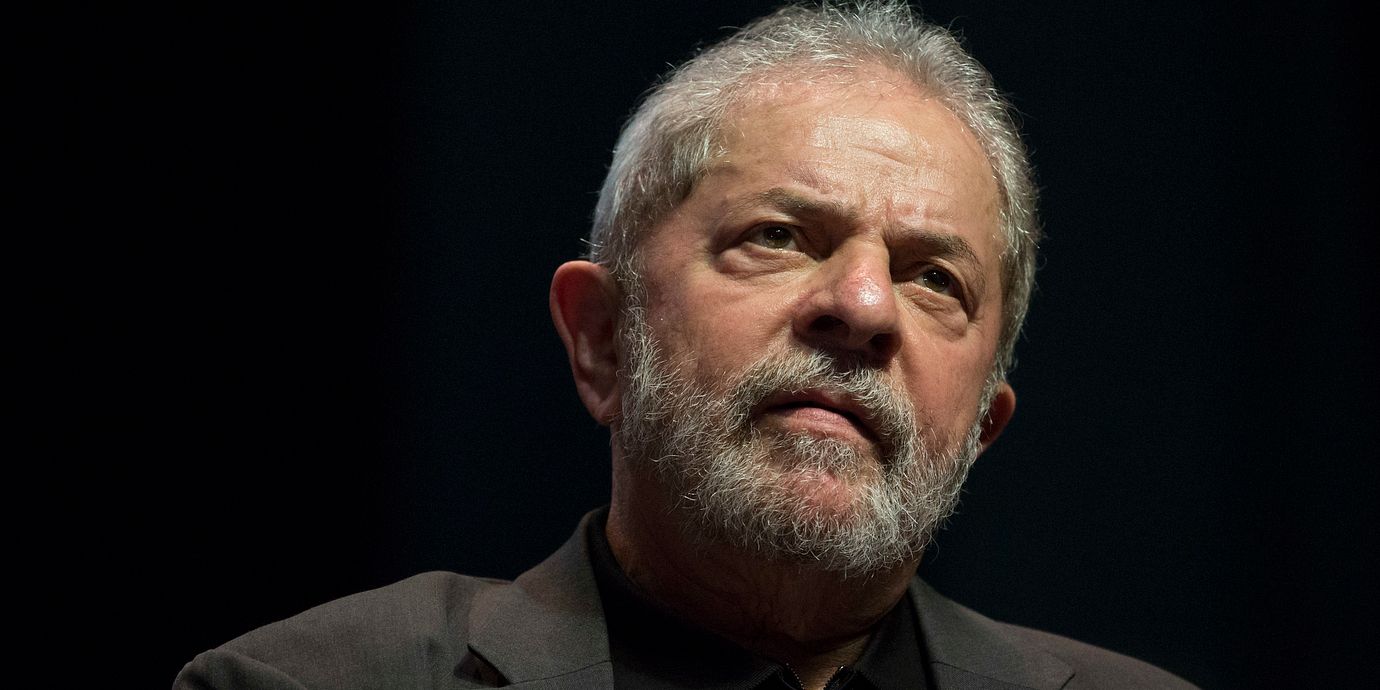
Lula: Medierna och polisen vill förstöra min image
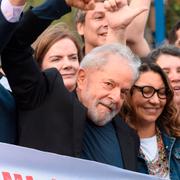
Brasiliens expresident Lula da Silva utreds i fyra olika brottsutredningar, och hans efterträdare Dilma Rousseff riskerar riksrätt. Men ”det finns inget brott” – det hela är en konspiration från samhällseliten för att få bort hans arbetarparti från makten, säger Lula da Silva i en intervju med Guardian.
– Delar av eliten vill inte dela med sig, säger han.
Han ser också anklagelserna som ett sätt att stoppa hans planer på att återta presidentposten i valet 2018.
– Jag tror att det finns ett arrangemang mellan delar av medierna, åklagarna och polisen för att förstöra min image, säger expresidenten till tidningen.
Tidigare:
bakgrund
Luiz Inácio ”Lula” da Silva
Wikipedia (en)
Luiz Inácio Lula da Silva (born 27 October 1945), known simply as Lula, is a Brazilian politician who served as President of Brazil from 1 January 2003 to 1 January 2011. He is a founding member of the Workers' Party (PT – Partido dos Trabalhadores) and ran for president three times unsuccessfully, first in the 1989 election, then again in 1994 and 1998. Lula achieved victory in the 2002 election, and was inaugurated as president on 1 January 2003. In the 2006 election he was elected for a second term as president, which ended on 1 January 2011. Succeeded by his former Chief of Staff, Dilma Rousseff, he left an enduring mark on Brazilian politics in the form of Lulism.
He is often regarded as one of the most popular politicians in the history of Brazil and, at the time of his mandate, one of the most popular in the world. Social programs like Bolsa Família and Fome Zero are hallmarks of his time in office. Lula played a prominent role in recent international relations developments, including the nuclear program of Iran and global warming, and was described as "a man with audacious ambitions to alter the balance of power among nations." He was featured in Time's The 100 Most Influential People in the World for 2010, and has been called "the most successful politician of his time." In October 2011, Lula—who was a smoker for 40 years—was diagnosed with throat cancer and quickly started chemotherapy treatment. Since the cancer was found, he has successfully recovered and has since resumed his roles.
In early 2016, Lula was to become the Chief of Staff under Rousseff's administration; however, Justice Gilmar Mendes of the Supreme Federal Court blocked the appointment, due to ongoing federal investigations.
bakgrund
Brasilianska Arbetarpartiet
Wikipedia (en)
The Workers' Party (Portuguese: Partido dos Trabalhadores, PT) is a political party in Brazil. Launched in 1980, it is one of the largest left-wing movements of Latin America. It governs at the federal level in a coalition government with several other parties since January 1, 2003. After the 2002 parliamentary election, PT became the largest party in the Chamber of Deputies and the largest in the Federal Senate for the first time ever. Lula, the President with the highest approval rating in the history of the country, is PT's most prominent member. His successor, Dilma Rousseff, is also a member of PT; she took office on January 1, 2011. The party's symbols are the red flag with a white star in the center; the five-pointed red star, inscribed with the initials "PT" in the center; and the Workers Party's anthem. Workers' Party's TSE (Supreme Electoral Court) Identification Number is 13.
Both born from the opposition to the coup d'état of 1964 and the subsequent military dictatorship, Workers' Party (PT) and the Brazilian Social Democracy Party (PSDB) are since the mid-1990s the biggest adversaries in contemporary Brazilian politics, with their candidates finishing either first or second on the ballot on the last six presidential elections. Both parties generally prohibit any kind of coalition or official cooperation with each other.
Omni är politiskt obundna och oberoende. Vi strävar efter att ge fler perspektiv på nyheterna. Har du frågor eller synpunkter kring vår rapportering? Kontakta redaktionen