”Trump kan provocera fram en riksrättsprocess”
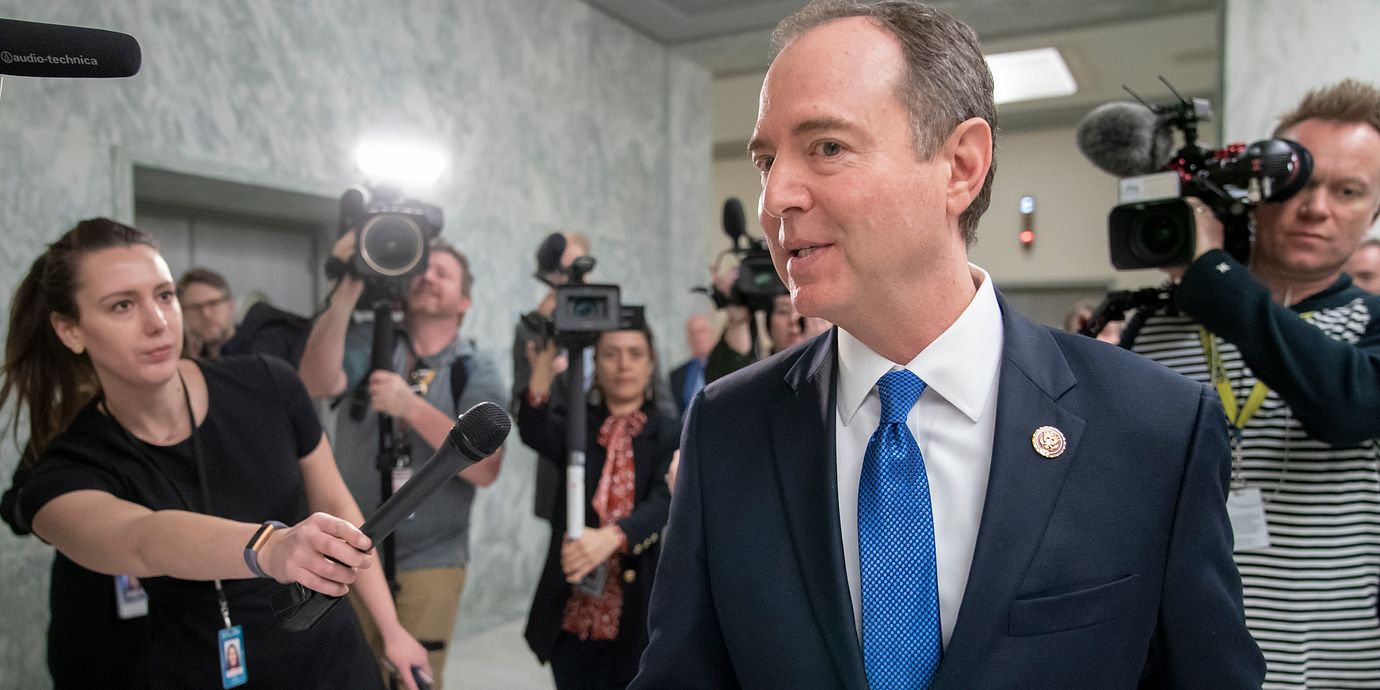
Demokraterna i USA är ovilliga att ställa president Donald Trump inför riksrätt, men han kan provocera fram ett sådant agerande genom att fortsätta blockera kongressens försök att utreda hans administration. Det säger Adam Schiff, ordförande för representanthusets underrättelseutskott, i ABC:s ”This week”.
Samtidigt säger Schiff att en riksrättsprocess mot Trump förmodligen inte skulle gå igenom i den republikan-ledda senaten.
– Men han (Trump) kan göra att vi hamnar där. Han verkar verkligen försöka och kanske är det här hans motsträviga sätt att få oss mer splittrade ... han tror att det är till hans politiska fördel, men det är verkligen inte till landets fördel.

bakgrund
Robert Muellers Rysslandsutredning
Wikipedia (en)
The Special Counsel investigation was an investigation of Russian interference in the 2016 United States elections and suspicious links between Trump associates and Russian officials, conducted by special prosecutor Robert Mueller from May 2017 to March 2019. It was also called the Russia investigation, the Mueller probe, and the Mueller investigation. Since July 2016, the Federal Bureau of Investigation (FBI) had been covertly investigating activities by Russian operatives and by members of the Trump presidential campaign, under the code name "Crossfire Hurricane". In March 2017, President Donald Trump dismissed FBI Director James Comey, partly because he was critical of Comey's handling of the Russia probe. Within eight days, following a call to action by Democrat lawmakers and revelations by Comey, Deputy Attorney General Rod Rosenstein appointed Mueller, a former FBI director, to take over the FBI's work. According to its authorizing document, the investigation's scope included allegations that there were "links snd/or coordination" between the Trump campaign and the Russian government. Mueller was also mandated to pursue "any matters that arose or may arise directly from the investigation." The probe included a criminal investigation which looked into potential obstruction of justice charges against Trump and members of his campaign or his administration.A total of thirty-four individuals were indicted by Mueller's investigators. Eight have pled guilty to or been convicted of felonies, including five Trump associates and campaign officials. Retired General Michael Flynn, who had been appointed as National Security Advisor by the incoming Trump administration, was convicted of making false statements to FBI investigators about his conversations with Russian ambassador Sergey Kislyak during the presidential transition, and he was dismissed from his position. Former Trump campaign chairman Paul Manafort was found guilty on eight felony counts of tax evasion and bank fraud, pursuant to his earlier lobbying activities for the Party of Regions of former Ukrainian president Viktor Yanukovich. He later pled guilty to conspiracy to defraud and obstruction of justice; in total, he was sentenced to over seven years in jail. In February 2018, Mueller's team indicted thirteen Russian citizens and three Russian entities, including the Internet Research Agency, for conducting social media campaigns about the U.S. elections, and twelve members of the Russian GRU cyber espionage group known as Fancy Bear, for hacking and leaking DNC emails. In June 2018 Konstantin Kilimnik, Manafort's business partner, was indicted for witness tampering at the behest of Manafort; Kilimnik is also suspected of working for Russian intelligence. Also among the convicted were Trump's personal lawyer Michael Cohen, who pled guilty to making hush payments to Stormy Daniels and Karen McDougal for Trump in violation of campaign finance and possibly state tax laws, Trump campaign adviser George Papadopoulos, and Russian spy Maria Butina, who was interviewed by Special Counsel investigators but prosecuted by the National Security Law Unit. Longtime Trump advisor Roger Stone, who had met with a Russian agent offering to sell information about Hillary Clinton, was indicted on seven charges.Initially receiving bipartisan support, the Special Counsel investigation was later criticized by Trump and his supporters. Don McGahn told investigators that Trump asked that the investigation be halted, and that Mueller be fired. Trump has criticized people or groups related to the investigation over 1,000 times. Some allegations of investigators' misconduct have been raised and were almost immediately debunked. Trump and his supporters criticized the cost of the investigation. By December 2018, the investigation had cost approximately $25 million while gaining approximately $48 million through asset forfeitures.The Special Counsel's office concluded its investigation and submitted a report (also known as the "Mueller Report") to Attorney General William Barr on March 22, 2019. Barr had been previously critical of the investigation before Trump announced on December 7, 2018, his intent to nominate Barr for Attorney General. A redacted version of the report was released on April 18, 2019. The report concluded that Russian interference in the 2016 presidential election did occur and "violated U.S. criminal law." Firstly a Russian social media campaign supported Trump's presidential candidacy while attacking the Hillary Clinton presidential campaign; secondly, Russian intelligence performed computer hacking and strategic releasing of damaging material from the Clinton campaign and Democratic Party organizations. The report writes that the investigation "identified numerous links between the Russian government and the Trump campaign", and that the Trump campaign "expected it would benefit electorally" from Russian hacking efforts, but ultimately "the investigation did not establish that members of the Trump campaign conspired or coordinated with the Russian government in its election interference activities". The report describes 10 or 11 episodes where Trump could potentially have obstructed justice. However, as the investigation intentionally took an approach that could not result in a judgment that President Trump committed a crime, the report stated "while this report does not conclude that the President committed a crime, it also does not exonerate him". The special counsel's office concluded that Congress can decide whether Trump obstructed justice, and has the authority to take action against Trump if obstruction occurred. Following the conclusion of the special counsel, at least three dozen ongoing investigations originally handled by the Special Counsel's office were passed on to district and state prosecutors, other Department of Justice branches, other federal agencies, and Congress.
Omni är politiskt obundna och oberoende. Vi strävar efter att ge fler perspektiv på nyheterna. Har du frågor eller synpunkter kring vår rapportering? Kontakta redaktionen