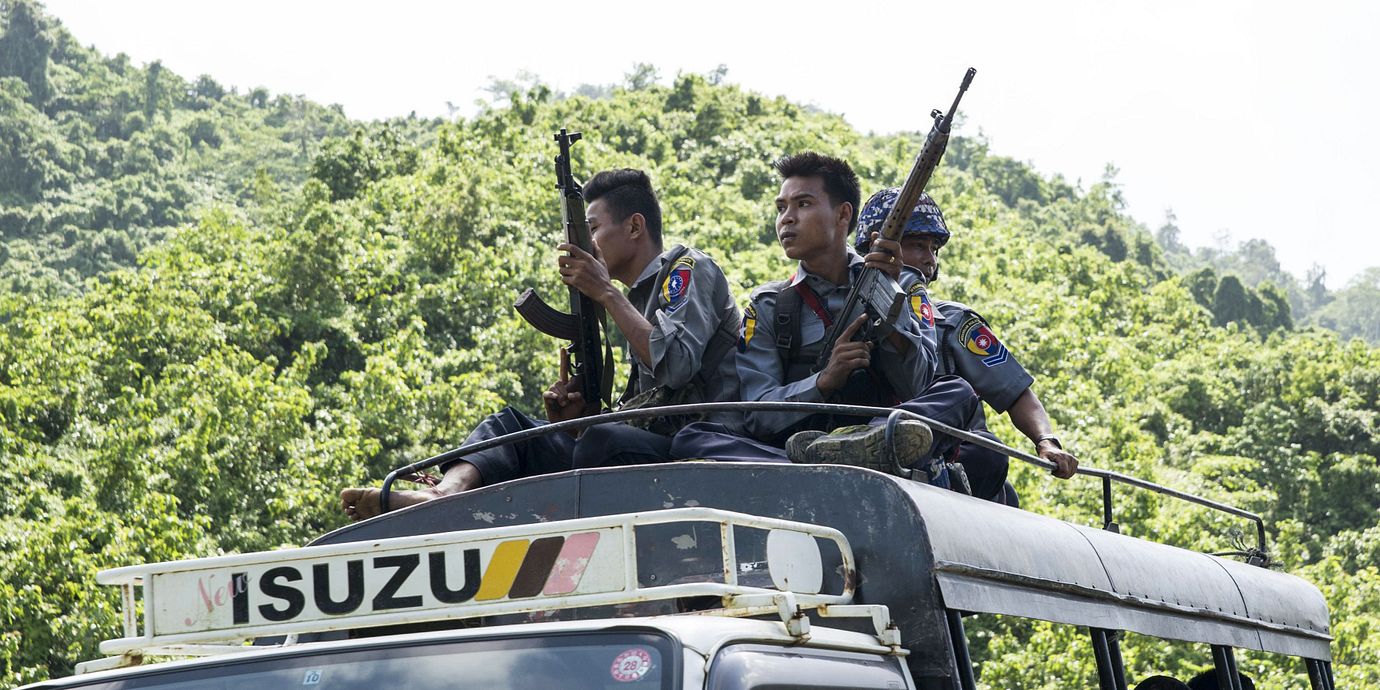
Värsta våldsutbrottet på decennier – 400 har dött
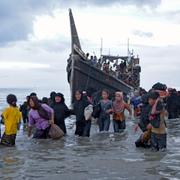
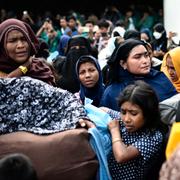
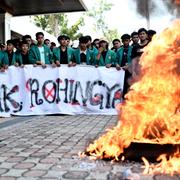
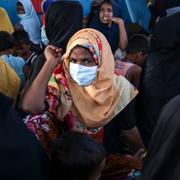
Nästan 400 personer har dött i strider i nordvästra Burma de senaste veckorna, rapporterar Reuters. Våldsutbrottet tros vara det dödligaste på decennier.
Oroligheterna tog fart i området sedan rohingyarebeller attackerade polisposteringar och en armébas i Rakhineområdet, vilket lett till sammandrabbningar och en militär motoffensiv, skriver TT.
bakgrund
Rohingya
Wikipedia (en)
The Rohingya people (, , , or ) are a stateless Indo-Aryan people from Rakhine State, Myanmar, which they claim to be their native homeland. There are an estimated 1 million Rohingyas living in Myanmar. The majority of them are Muslim and a minority are Hindu. Described as "one of the most persecuted minorities in the world", most of the Rohingya population are denied citizenship under the 1982 Burmese citizenship law, which restricts full citizenship to British Indian migrants who settled after 1823. The Rohingyas are also restricted from freedom of movement, state education and civil service jobs in Myanmar. Despite promises of equality by Myanmar's independence leader Aung San, the Rohingyas have faced military crackdowns in 1978, 1991-1992, 2012, 2015 and 2016-2017.
According to the Rohingyas and some scholars, they are indigenous to Rakhine State, while other historians claim that the group represents a mixture of precolonial and colonial immigrations. The official stance of the Myanmar government, however, has been that the Rohingyas are mainly illegal immigrants who migrated into Arakan following Burmese independence in 1948 or after the Bangladesh liberation war in 1971.
Muslims have settled in Rakhine State (also known as Arakan) since the 15th century, although the number of Muslim settlers before British rule is unclear. Despite debates concerning its origins, the term "Rohingya", in the form of Rooinga, first appeared in 1799 in an article about a language spoken by Muslims claiming to be natives of Arakan. In 1826, after the First Anglo-Burmese War, the British annexed Arakan and encouraged migrations from Bengal to work as farm laborers. The Muslim population may have constituted 5% of Arakan's population by 1869, although estimates for earlier years give higher numbers. Successive British censuses of 1872 and 1911 recorded an increase in Muslim population from 58,255 to 178,647 in Akyab District. During the Second World War, the Arakan massacres in 1942 involved communal violence between British-armed V Force Rohingya recruits and Buddhist Rakhine people and the region became increasingly ethnically polarized. After Burmese independence in 1948, the mujahideen rebellion began as a separatist movement to merge the region into the East Pakistan and continued into the 1960s, along with the Arkanese Independence Movement by Rakhine Buddhists. The rebellion left enduring mistrust and hostilities in both Muslim and Buddhist communities. In 1982, General Ne Win's government enacted the Burmese nationality law, which denied Rohingya citizenship, rendering a majority of Rohingya population stateless. Since the 1990s, the term "Rohingya" has increased in usage among Rohingya communities.
Prior to the 2015 Rohingya refugee crisis and the military crackdown in 2016 and 2017, the Rohingya population in Myanmar was around 1.1 to 1.3 million They reside mainly in the northern Rakhine townships, where they form 80–98% of the population. Many Rohingyas have fled to neighbouring Bangladesh, to areas along the border with Thailand, and to the Pakistani city of Karachi. More than 100,000 Rohingyas in Myanmar live in camps for internally displaced persons, not allowed by authorities to leave. Probes by the UN have found evidence of increasing incitement of hatred and religious intolerance by "ultra-nationalist Buddhists" against Rohingyas while the Burmese security forces have been conducting "summary executions, enforced disappearances, arbitrary arrests and detention, torture and ill-treatment and forced labour" against the community. International media and human rights organizations have often described Rohingyas as one of the most persecuted minorities in the world. According to the United Nations, the human rights violations against Rohingyas could be termed as "crimes against humanity". Rohingyas have received international attention in the wake of the 2012 Rakhine State riots, the 2015 Rohingya refugee crisis, and the 2016–17 military crackdown.
Omni är politiskt obundna och oberoende. Vi strävar efter att ge fler perspektiv på nyheterna. Har du frågor eller synpunkter kring vår rapportering? Kontakta redaktionen