Amerikansk nedstängning stoppas fram till jul
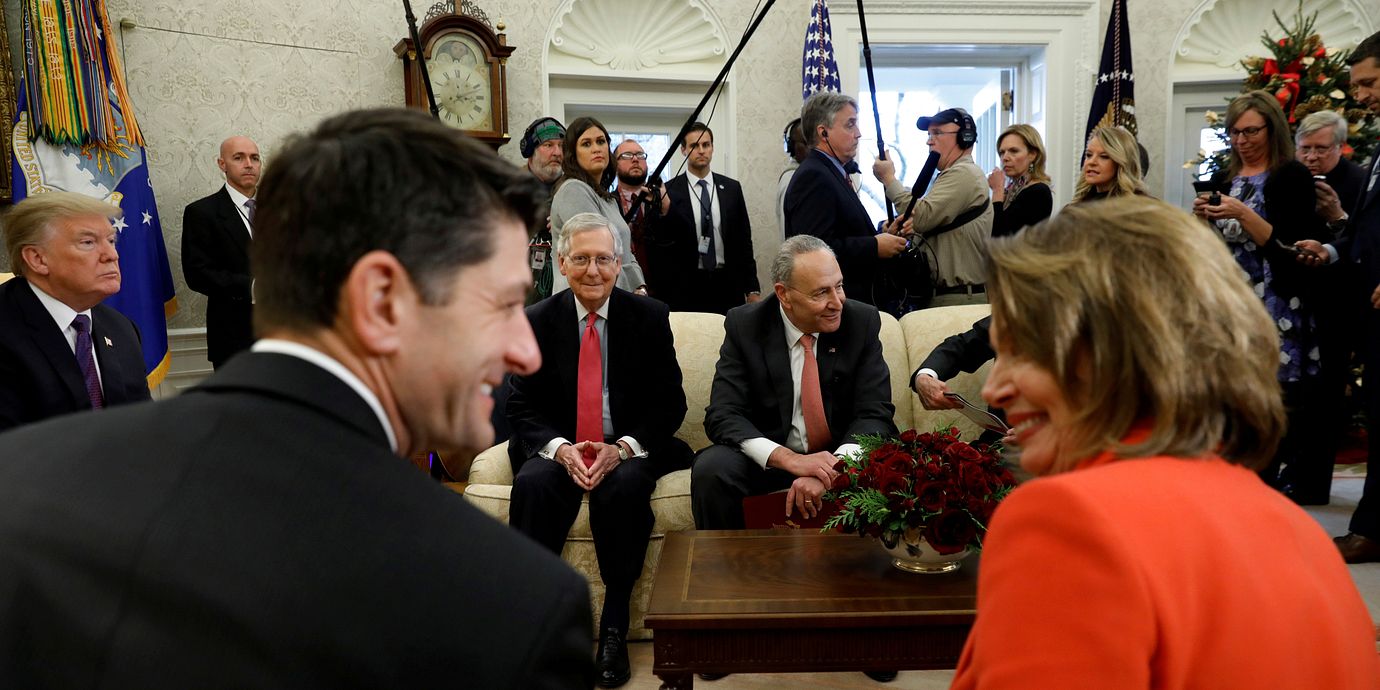
Kongressen i USA har röstat igenom en lag som förhindrar en nedstängning av amerikanska myndigheter i helgen och håller den federala verksamheten flytande till den 22 december. Lagen skickas nu till president Donald Trumps bord för underskrift, rapporterar amerikanska medier.
Nu väntar nya förhandlingar under de kommande två veckorna, förhandlingar som enligt nyhetsbyrån AP väntas bli svårare än torsdagens beslut.
bakgrund
Nedstängning av amerikanska myndigheter
Wikipedia (en)
In United States politics, a government shutdown is the process the Executive Branch must enter into when Congress and the President fail to pass legislation funding government operations and agencies. If interim or full-year appropriations are not enacted into law, the current interpretation of the Antideficiency Act requires that the federal government begin a "shutdown" of the affected activities, often involving the furlough of non-essential personnel and curtailment of agency activities and services. Programs that are funded by laws other than annual appropriations acts (like Social Security) also may be affected by a funding gap, if program execution relies on activities that receive annually appropriated funding. Although the term government shutdown usually refers to what occurs at the federal level, shutdowns have also occurred at the state/territorial and local levels of government.
Since 1976, when the current budget and appropriations process was enacted, there have been eighteen (18) gaps in budget funding, seven of which led to federal employees being furloughed. During the Reagan administration, there were three funding gaps leading to shutdowns lasting one day or less. A funding gap in 1990 during the George H. W. Bush administration caused a weekend shutdown. During the Clinton administration, there were two full government shutdowns during 1995 and 1996 lasting 5 and 21 days respectively, the longest to that date, leading to furloughs and significant disruption. The president and congress disagreed on whether to cut government services.
During Barack Obama's presidency, the United States federal government shutdown of 2013 ran from October 1 to 16, 2013. The primary issue of dispute between the Republican-controlled House of Representatives and the Democratic Senate was the Republicans' desire to delay or defund the Patient Protection and Affordable Care Act (Obamacare), signed into law in 2010. A bill to end the shutdown and fund federal agencies through January 15, 2014, passed the Senate and the House and was signed into law on October 17, 2013. Standard & Poor's, the financial ratings agency, stated on October 16 that the shutdown had "to date has taken $24 billion out of the economy," and "shaved at least 0.6 percent off annualized fourth-quarter 2013 GDP growth."
Omni är politiskt obundna och oberoende. Vi strävar efter att ge fler perspektiv på nyheterna. Har du frågor eller synpunkter kring vår rapportering? Kontakta redaktionen