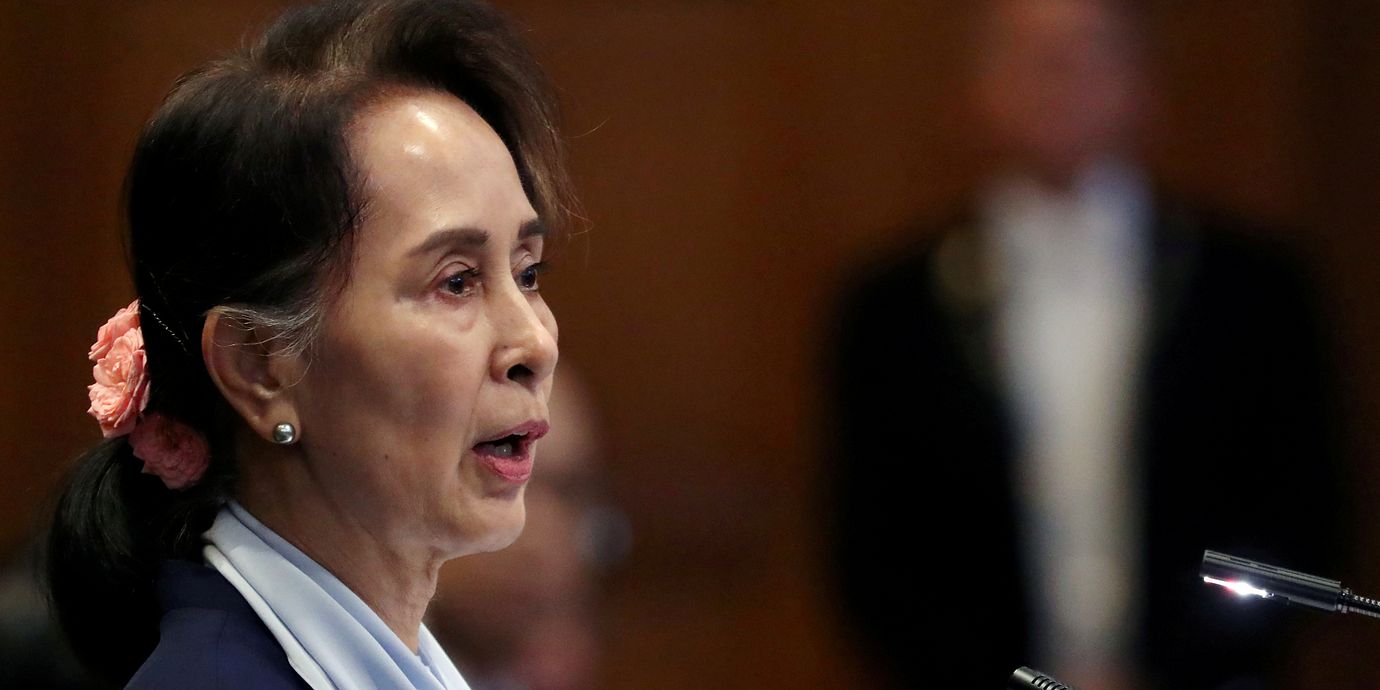
Suu Kyi: ”Har fått styrka av stödet från folket”
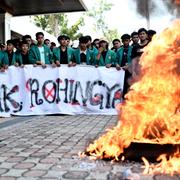
Aung San Suu Kyi tackar de som organiserat demonstrationer för att stötta henne under processen i Internationella domstolen (ICJ) i Haag där hon försvarat Myanmars armés agerande mot minoritetsgruppen rohingyer.
– Stödet från vårt folk som varit generöst och utan invändningar har gett oss kraft när vi gett vår sida av saken i ICJ, säger Suu Kyi under onsdagen, enligt Reuters.
Ledaren har förnekat att det skett ett folkmord på den muslimska minoriteten.
Tidigare rapportering
bakgrund
Rohingya
Wikipedia (en)
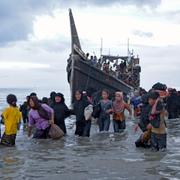
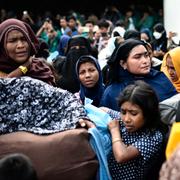
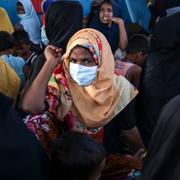
The Rohingya people () are a stateless Indo-Aryan ethnic group who follow Islam and reside in Rakhine State, Myanmar (previously known as Burma). There were an estimated 1 million Rohingya living in Myanmar before the 2016–17 crisis. Described by the United Nations in 2013 as one of the most persecuted minorities in the world, the Rohingya population is denied citizenship under the 1982 Myanmar nationality law. They are also restricted from freedom of movement, state education and civil service jobs. The legal conditions faced by the Rohingya in Myanmar have been widely compared to apartheid by many international academics, analysts and political figures, including Nobel laureate Bishop Desmond Tutu, a South African anti-apartheid activist.The Rohingya maintain they are indigenous to western Myanmar with a heritage of over a millennium and influence from the Arabs, Mughals and Portuguese. The community claims it is descended from people in precolonial Arakan and colonial Arakan; historically, the region was an independent kingdom between Southeast Asia and the Indian subcontinent. The position of the Myanmar government is that Rohingyas are not a national "indigenous race", but are illegal immigrants from neighbouring Bangladesh. It argues that the Muslims of precolonial times are now recognized as Kameins and that the Rohingya conflate their history with the history of all Muslims in Arakan to advance a separatist agenda. In addition, Myanmar's government does not recognize the term "Rohingya" and prefers to refer to the community as "Bengalis" in a pejorative manner. Rohingya campaign groups, notably the Arakan Rohingya National Organization, demand the right to "self-determination within Myanmar".Various armed insurrections by the Rohingya have taken place since the 1940s and the population as a whole has faced military crackdowns in 1978, 1991–1992, 2012, 2015, 2016–2017 and particularly in 2017–2018, when most of the Rohingya population of Myanmar was driven out of the country, into neighboring Bangladesh. By December 2017, an estimated 625,000 refugees from Rakhine, Myanmar, had crossed the border into Bangladesh since August 2017. UN officials and Human Rights Watch have described Myanmar's persecution of the Rohingya as ethnic cleansing. The UN human rights envoy to Myanmar reported "the long history of discrimination and persecution against the Rohingya community... could amount to crimes against humanity", and there have been warnings of an unfolding genocide. Probes by the UN have found evidence of increasing incitement of hatred and religious intolerance by "ultra-nationalist Buddhists" against Rohingyas while the Myanmar security forces have been conducting "summary executions, enforced disappearances, arbitrary arrests and detentions, torture and ill-treatment, and forced labour" against the community.Before the 2015 Rohingya refugee crisis and the military crackdown in 2016 and 2017, the Rohingya population in Myanmar was around 1.0 to 1.3 million, chiefly in the northern Rakhine townships, which were 80–98% Rohingya. Since 2015, over 900,000 Rohingya refugees have fled to south-eastern Bangladesh alone, and more to other surrounding countries, and major Muslim nations. More than 100,000 Rohingyas in Myanmar are confined in camps for internally displaced persons. Shortly before a Rohingya rebel attack that killed 12 security forces on 25 August 2017, the Myanmar military launched "clearance operations" against the Rohingya Muslims in Rakhine state that, according to NGOs, the Bangladeshi government and international news media, left many dead, many more injured, tortured or raped, with villages burned. The government of Myanmar has denied the allegations.
Omni är politiskt obundna och oberoende. Vi strävar efter att ge fler perspektiv på nyheterna. Har du frågor eller synpunkter kring vår rapportering? Kontakta redaktionen