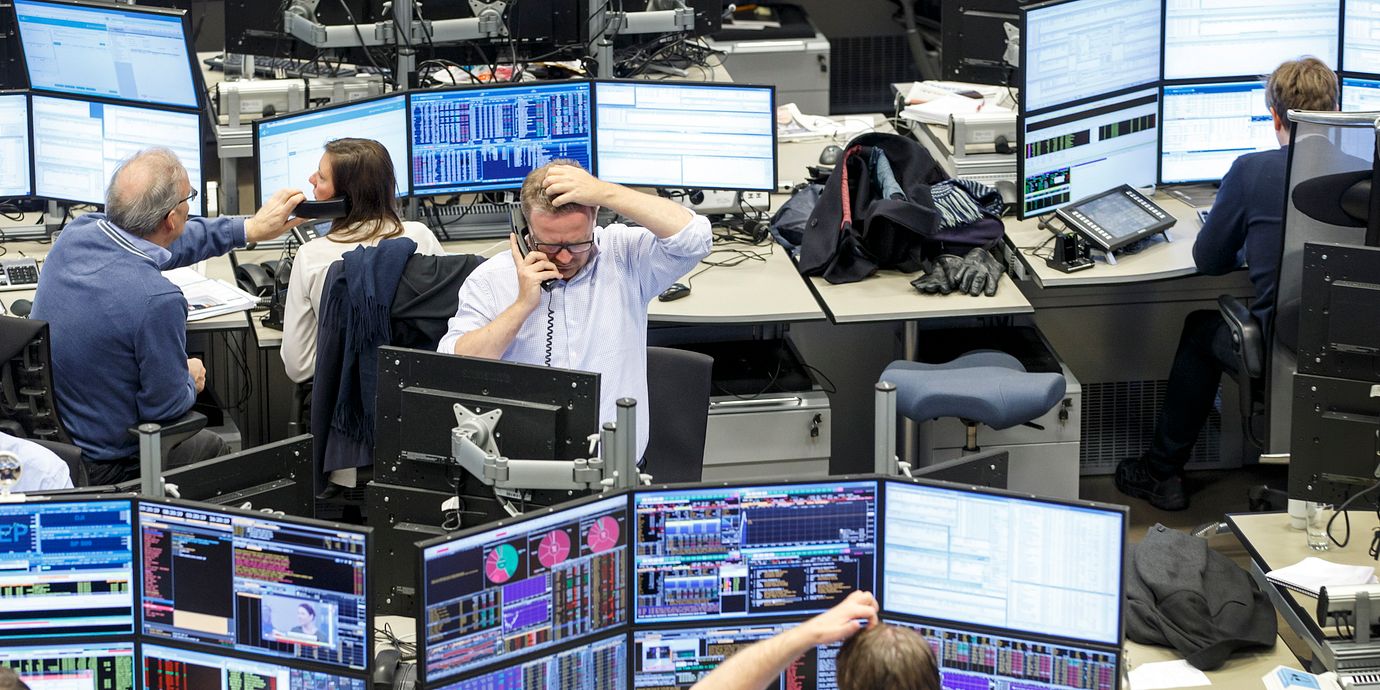
Arkivbild. (Kallestad, Gorm / TT NYHETSBYRÅN)

Chockvågor på marknaden – skräckindex rusar

Upptrappningen mellan USA och Nordkorea fortsätter att påverka finansmarknaderna. Vid 14-tiden på onsdagseftermiddagen hade New York-börsens skräckindex Vix stigit nästan 13 procent. Nedgångarna på Europabörsen har tilltagit och breda S&P Europe var samma tid ner 1,5 procent.

Samtidigt samlas investerarna i säkra investeringar, där schweizerfrancen, som anses vara en traditionell ”fristad”, hade sin största uppgång på två och ett halvt år mot euron med upp 1,4 procent, skriver Reuters. Guldpriset har stigit med över 1 procent och priset på säkra tillgångar som statsobligationer har också stigit.

Robert Bergqvist, chefsekonom på SEB, säger till DI att det är svårt att förutse vad ordkriget mellan USA och Nordkorea långsiktigt innebär för finansmarknaderna men att effekterna oftast är övergående.

– Generellt sett vet vi att sådana här politiska risker får kortsiktiga effekter, säger han till tidningen.


bakgrund
 
Vix-index
Wikipedia (en)
The CBOE's Volatility Index, known by its ticker symbol VIX, is a popular measure of the implied volatility of S&P 500 index options, calculated and published by the Chicago Board Options Exchange (CBOE). It is colloquially referred to as the fear index or the fear gauge. The formulation of a volatility index, and financial instruments based on such an index, were developed by Menachem Brenner and Dan Galai in 1986 and described in academic papers. The authors stated the "volatility index, to be named Sigma Index, would be updated frequently and used as the underlying asset for futures and options. ... A volatility index would play the same role as the market index play for options and futures on the index." In 1986, Brenner and Galai proposed to the American Stock Exchange the creation of a series of volatility indices, beginning with an index on stock market volatility, and moving to interest rate and foreign exchange rate volatility. In 1987, Brenner and Galai met with Joseph Levine and Deborah Clayworth at the Chicago Board of Options Exchange to propose various structures for a tradeable index on volatility; those discussions continued until 1991. The current VIX concept formulates a theoretical expectation of stock market volatility in the near future. The current VIX index value quotes the expected annualized change in the S&P 500 index over the next 30 days, as computed from the options-based theory and current options-market data. The CBOE retained consultant Robert Whaley in 1992 to develop a tradable volatility instrument based on index option prices. Since 1993, CBOE has published VIX real-time data. Based on historical index option prices, Whaley has computed a data series of retrospective daily VIX levels from January 1986 onward.
Omni är politiskt obundna och oberoende. Vi strävar efter att ge fler perspektiv på nyheterna. Har du frågor eller synpunkter kring vår rapportering? Kontakta redaktionen