”Visar att världen tycker att vi går åt rätt håll”
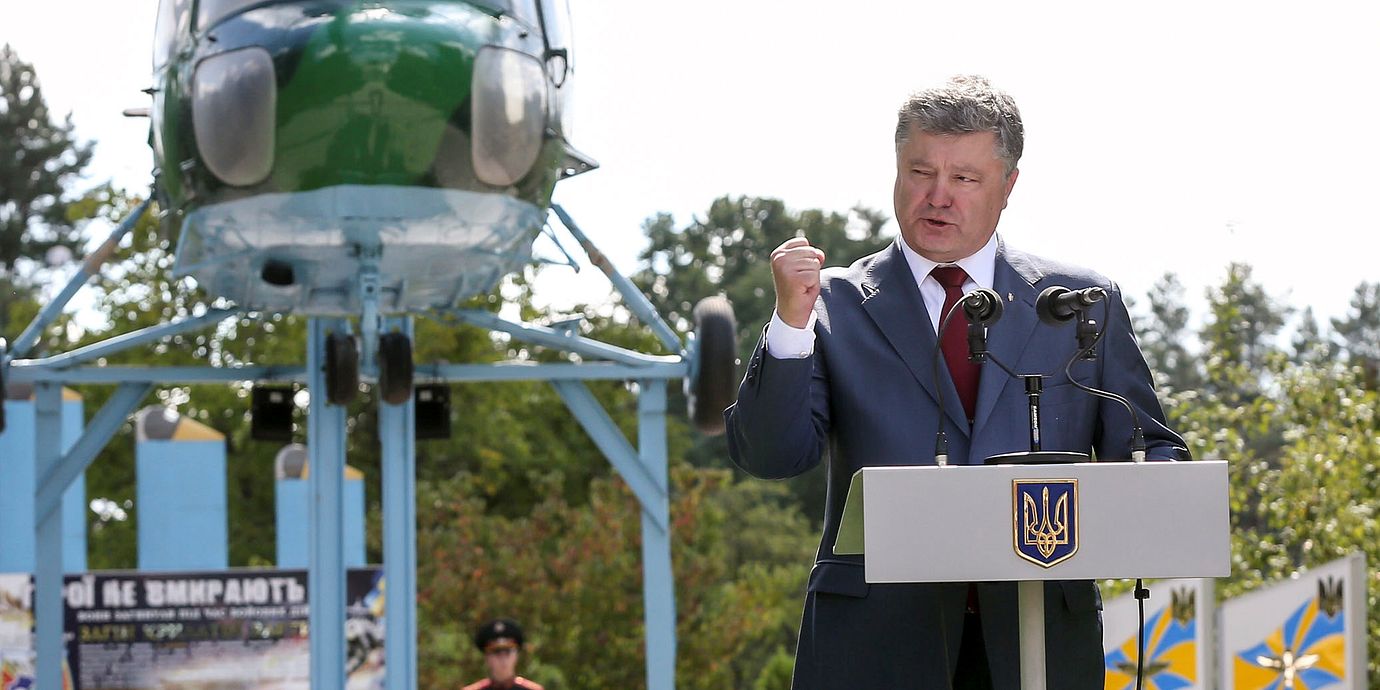
Ukrainas president Petro Porosjenko välkomnar IMF:s beslut att återuppta utbetalningarna av stödpaketet, skriver Reuters.
– Det positiva beslutet från IMF är ett bevis för att världen erkänner att det pågår reformer i Ukraina, att verkliga och positiva förändringar händer i Ukraina och att landet går i rätt riktning, säger han i ett uttalande.
bakgrund
Ukrainas ekonomi
Wikipedia (en)
The economy of Ukraine is an emerging free market. Like other post-Soviet states, its gross domestic product fell sharply for 10 years following the collapse the Soviet Union in 1991. However, it grew rapidly from 2000 until 2008 when the Great Recession began worldwide and reached Ukraine as the 2008-2009 Ukrainian financial crisis. The economy recovered in 2010, but since 2013 the Ukrainian economy has been suffering from a severe downturn.
The depression during the 1990s included hyperinflation and a fall in economic output to less than half of the GDP of the preceding Ukrainian SSR. GDP growth was recorded for the first time in 2000, and continued for eight years. This growth was halted by the global financial crisis of 2008, but the Ukrainian economy recovered and achieved positive GDP growth in the first quarter of 2010. By October 2013, the Ukrainian economy lapsed into another recession. The previous summer Ukrainian export to Russia was substantially worsened due to stricter border and customs control by Russia. The early 2014 annexation of Crimea by Russia, and the War in Donbass that started in the spring of 2014 severely damaged Ukraine's economy and severely damaged two of the more industrial oblasts. In 2013, Ukraine saw zero growth in GDP. Ukraine's economy shrank by 6.8% in 2014, and this continued with a 12% decline in GDP in 2015. In December 2015, Ukraine declared a moratorium on debt payments to Russia and entered a de facto state of default. As of 11 January 2016, the World Bank states that despite entering default, Ukraine will experience an economic growth rate of 1% in 2016, which if true will end the recession.
bakgrund
International Monetary Fund (IMF)
Wikipedia (en)
The International Monetary Fund (IMF) is an international organization headquartered in Washington, D.C., of "189 countries working to foster global monetary cooperation, secure financial stability, facilitate international trade, promote high employment and sustainable economic growth, and reduce poverty around the world." Formed in 1944 at the Bretton Woods Conference, it came into formal existence in 1945 with 29 member countries and the goal of reconstructing the international payment system. It now plays a central role in the management of balance of payments difficulties and international financial crises. Countries contribute funds to a pool through a quota system from which countries experiencing balance of payments problems can borrow money. As of 2010, the fund had SDR476.8 billion, about US$755.7 billion at then exchange rates.
Through the fund, and other activities such as statistics-keeping and analysis, surveillance of its members' economies and the demand for particular policies, the IMF works to improve the economies of its member countries. The organization's objectives stated in the Articles of Agreement are: to promote international monetary cooperation, international trade, high employment, exchange-rate stability, sustainable economic growth, and making resources available to member countries in financial difficulty.
Omni är politiskt obundna och oberoende. Vi strävar efter att ge fler perspektiv på nyheterna. Har du frågor eller synpunkter kring vår rapportering? Kontakta redaktionen