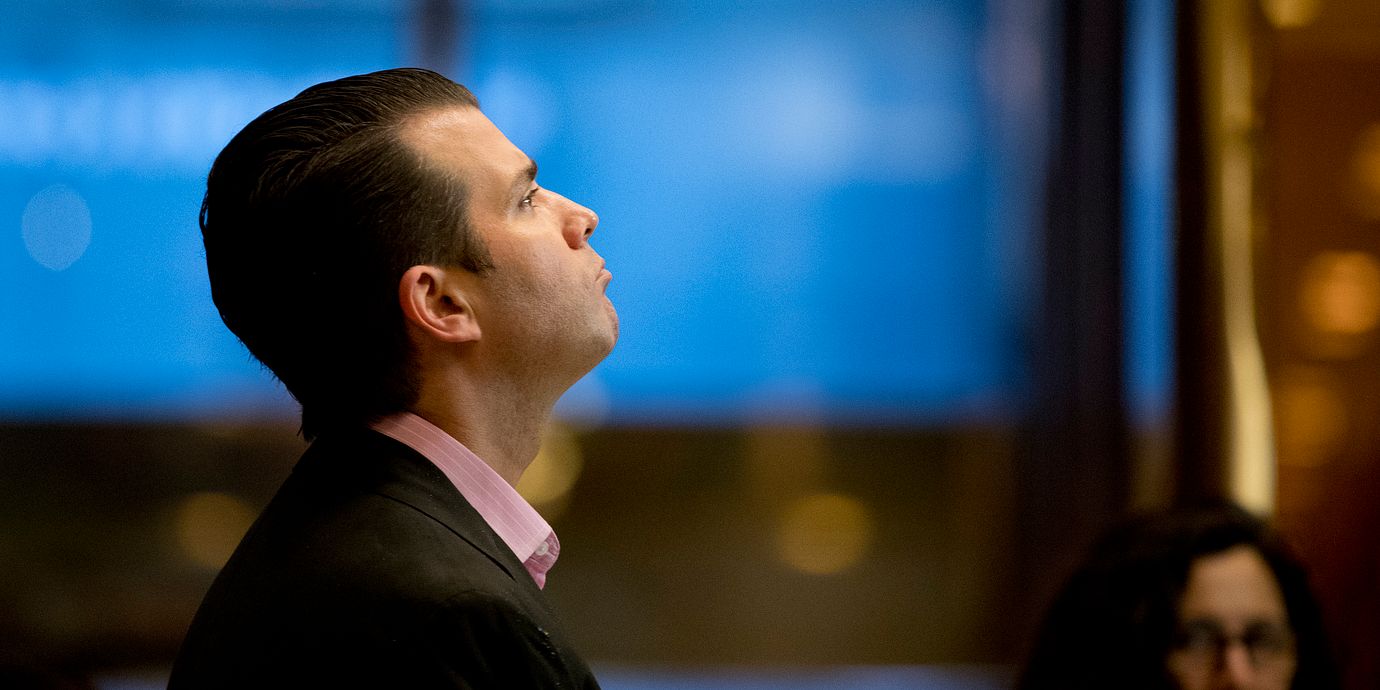
Donald Trump Jr. (Carolyn Kaster / TT / NTB Scanpix)

Analys: Kan utredas som brott mot vallagen

Mötet mellan Donald Trump Jr och den ryska juristen Natalia Veselnitskaja kan komma att utredas som ett brott mot den amerikanska vallagen, skriver Reuters i en analys.

Enligt vallagen är det olagligt för en utländsk medborgare att bidra till en amerikansk politisk kampanj och kampanjen är förbjuden från att be om sådan hjälp. Experter är dock oense om huruvida lagen gäller i det här fallet.

Juristen Paul S. Ryan säger till nyhetsbyrån att ett bidrag inte behöver vara ekonomiskt medan James Gardner, som är expert på vallagen, säger att den specifikt rör donationer av kontanter, varor eller tjänster.

Tidningen National Review skriver i en analys att den yngre Trumps förehavanden inte framstår som olagliga, men att det inte betyder att hans handlingar är försvarbara.

”Ingen amerikan – demokrat eller republikan – borde försvara den uttryckta avsikten med detta möte”, skriver tidningen.

bakgrund
 
USA:s vallag
Wikipedia (en)
The Federal Election Campaign Act of 1971 (FECA, Pub.L. 92–225, 86 Stat. 3, enacted February 7, 1972, 52 U.S.C. § 30101 et seq.) is the primary United States federal law regulating political campaign spending and fundraising. The law originally focused on increased disclosure of contributions for federal campaigns. The S. 382 legislation was passed by the 92nd U.S. Congressional session and signed by the 37th President of the United States Richard Nixon on February 7, 1972. In 1974, the Act was amended to place legal limits on the campaign contributions and expenditures. The 1974 amendments also created the Federal Election Commission (FEC). The Act was amended again in 1976, in response to the provisions ruled unconstitutional by Buckley v. Valeo, including the structure of the FEC and the limits on campaign expenditures, and again in 1979 to allow parties to spend unlimited amounts of hard money on activities like increasing voter turnout and registration. In 1979, the FEC ruled that political parties could spend unregulated or "soft" money for non-federal administrative and party building activities. Later, this money was used for candidate-related issue ads, which led to a substantial increase in soft money contributions and expenditures in elections. This in turn led to passage of the Bipartisan Campaign Reform Act of 2002 ("BCRA"), effective on January 1, 2003, banning soft money expenditure by parties. Some of the legal limits on giving of "hard money" were also changed by BCRA. In addition to limiting the size of contributions to candidates and political parties, FECA also requires campaigns and political committees to report the names, addresses, and occupations of donors of more than $200. The FECA contains an express preemption clause. The FECA expressly preempts state and federal law with respect to federal elections.
Omni är politiskt obundna och oberoende. Vi strävar efter att ge fler perspektiv på nyheterna. Har du frågor eller synpunkter kring vår rapportering? Kontakta redaktionen