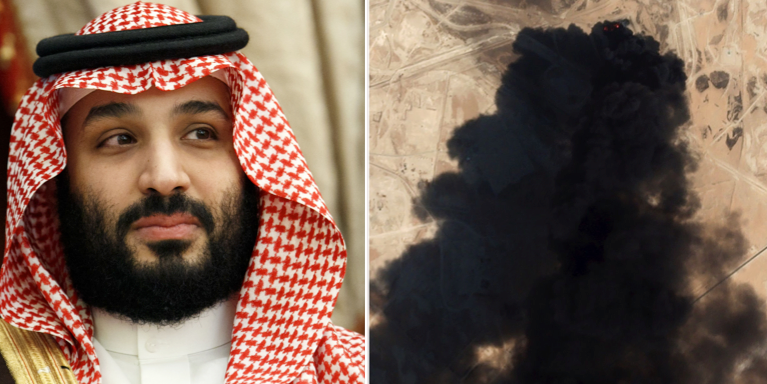
Saudiarabien ber Sydkorea om hjälp efter attackerna
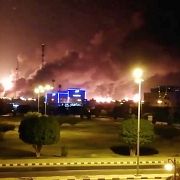
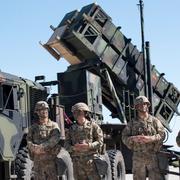
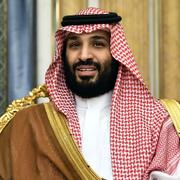
Saudiarabiens kronprins Mohammed bin Salman ber Sydkorea om hjälp för att stärka landets flygvapen, rapporterar Reuters med hänvisning till sydkoreanska nyhetsbyrån Yonhap. Detta efter helgens drönarattacker mot saudiska oljeanläggningar.
Länderna har haft diplomatiska relationer sedan 1963 och under 2017 slöts ett handelsavtal mellan dem.
bakgrund
Saudiarabiens diplomatiska relationer
Wikipedia (en)
Saudi Arabian stated policy is focused on co-operation with the oil-exporting Gulf States, the unity of the Arab world, Islamic strength and solidarity, and support for the United Nations (UN). In practice, the main concerns in recent years have been relations with the US, the Israeli–Palestinian conflict, Iraq, the perceived threat from the Islamic Republic of Iran, the effect of oil pricing, and using its oil wealth to increase the influence of Islam. Saudi Arabia contributes large amounts of development aid to Muslim countries. From 1986 to 2006, the country donated £49 billion in aid.Although a member of the Non-Aligned Movement, Saudi Arabia was once described as leading the "Pro-Western Camp" of Arab countries, aligned with the U.S. and composed of Egypt, Jordan, and Arab states of the Persian Gulf. Saudi Arabia and the United States are close strategic allies and partners. However, the relationship became strained and witnessed major decline during the last few years of the Obama administration, but has since greatly strengthened following the election of President Donald Trump who has since forged close ties with the Saudi royal family. Islam is the main religion of Saudi. China and Saudi Arabia are major allies, with relationship between the two countries growing significantly in recent decades. A majority of Saudi Arabians have expressed a favorable view of China.As a founding member of OPEC, Saudi Arabia's long-term oil pricing policy has been to keep prices stable and moderate—high enough to earn large amounts of revenue, but not so high as to encourage alternative energy sources among oil importers, or jeopardise the economies of Western countries where many of its financial assets are located and which provide political and military support for the Saudi government. The major exception to this occurred during the 1973 oil crisis when Saudi Arabia, with the other Arab oil states, used an embargo on oil supplies to pressure the US to stop supporting Israel.Saudi Arabia is a founding member of several multinational organizations, including OPEC, the United Nations, the Arab League. It is also a founding member of the Gulf Cooperation Council, Muslim World League, the Organisation of Islamic Cooperation, and the Islamic Development Bank—all of which are headquartered in Saudi. The country plays a prominent role in the International Monetary Fund, the World Bank, and in 2005 joined the World Trade Organization.
According to a UCLA history professor, Saudi Arabia recently has become much more active in terms of foreign and security policy for three reasons: the Arab uprisings of 2010 and 2011, the policies of the Obama administration and the collapse of oil prices.
Läs mer
Omni är politiskt obundna och oberoende. Vi strävar efter att ge fler perspektiv på nyheterna. Har du frågor eller synpunkter kring vår rapportering? Kontakta redaktionen