(Andrew Harnik / TT / NTB Scanpix)

Trumps advokater skickar varningsbrev till Bannon

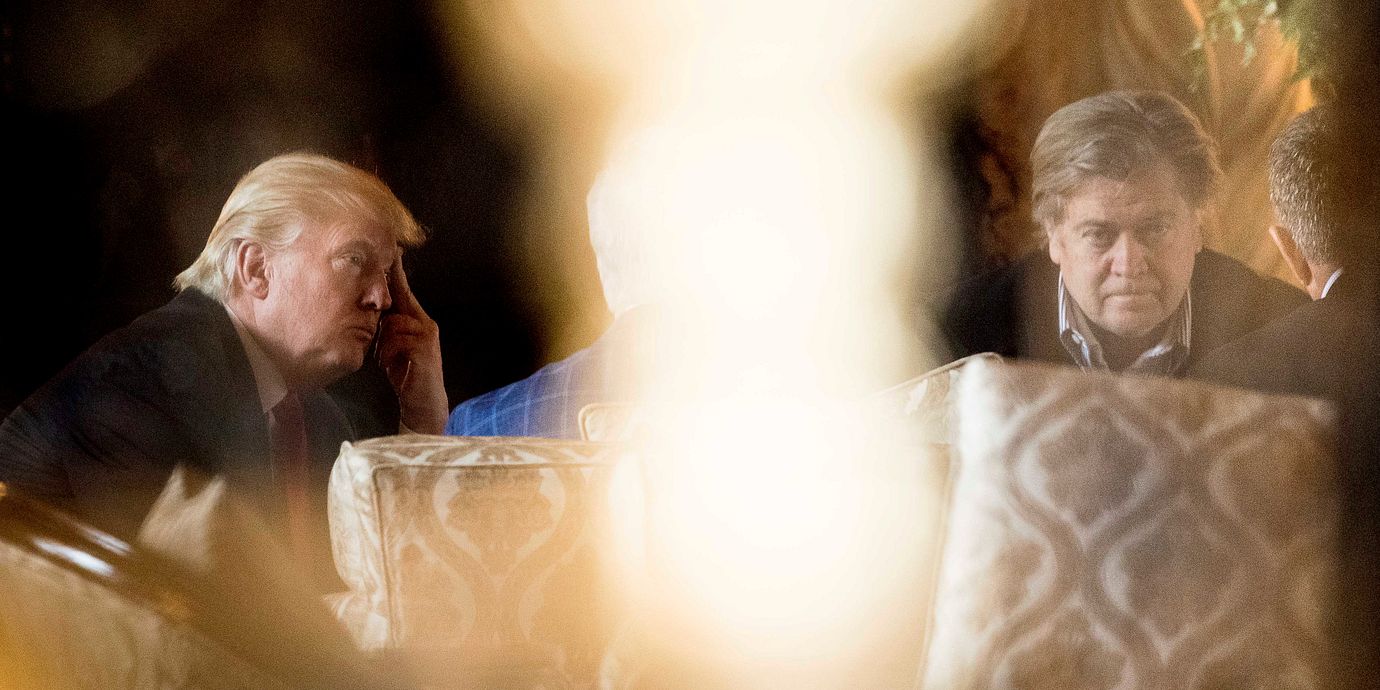
President Donald Trumps advokater har skickat ett varningsbrev, ett så kallat ”cease-and-desist”, till förre chefsstrategen Steve Bannon för att han brutit mot ett sekretessavtal när han talat om tiden vid kampanjen och i Vita huset i en kommande bok. Det rapporterar Washington Post.

I brevet skriver advokaterna att Bannon brutit mot sitt anställningsavtal och att han förtalat presidenten. Samtidigt kräver de att han slutar kommunicera konfidentiell eller nedsättande information samt att han behåller alla handlingar – för att förbereda sig för ”överhängande rättsliga åtgärder”.

Brevet är en följd av rapporteringen kring journalisten och författaren Michael Wolffs kommande boken ”Fire and fury: Inside the Trump White house”, i vilken Bannon bland annat kallar mötet som Trump Jr hade med ryska företrädare för ”förräderi” och ”opatriotiskt”.

Tidigare under onsdagen sa Trump i ett uttalande att Bannon ”förlorat förståndet”.

bakgrund
 
Cease and desist
Wikipedia (en)
A cease and desist letter is a document sent to an individual or business to stop purportedly illegal activity ("cease") and to not restart later ("desist"). The letter may warn that if the recipient does not discontinue specified conduct, or take certain actions, by deadlines set in the letter, that party may be sued. When issued by a public authority, a cease and desist letter, being "a warning of impending judicial enforcement", is most appropriately called a "cease and desist order". Although cease and desist letters are not exclusively used in the area of intellectual property, such letters "are frequently utilized in disputes concerning intellectual property and represent an important feature of the intellectual property law landscape". The holder of an intellectual property right such as a copyrighted work, a trademark, or a patent, may send the cease and desist letter to inform a third party "of the right holders' rights, identity, and intentions to enforce the rights". The letter may merely contain a licensing offer or may be an explicit threat of a lawsuit. A cease and desist letter often triggers licensing negotiations, and is a frequent first step towards litigation. Receiving numerous cease and desist letters may be very costly for the recipient. Each claim in the letters must be evaluated, and it should be decided whether to respond to the letters, "whether or not to obtain an attorney's opinion letter, prepare for a lawsuit, and perhaps initiate [in case of letters regarding a potential patent infringement] a search for alternatives and the development of design-around technologies". Cease and desist letters are sometimes used to intimidate recipients and can be "an effective tool used by corporations to chill the critical speech of gripe sites operators". A company owning a trademark may send such letter to a gripe site operator alleging a trademark infringement, although the actual use of the trademark by the gripe site operator may fall under a fair use exception (in compliance with, in the U.S., the protection of free speech under the First Amendment).
bakgrund
 
Mötet mellan Trumplägret och Ryssland
Wikipedia (en)
Members of the 2016 Trump campaign had several meetings with individuals who had or were perceived to have Russian connections. On June 9, 2016, a meeting was held in Trump Tower in New York City between three senior members of the Donald Trump presidential campaign – Donald Trump Jr., Jared Kushner, and Paul Manafort – and at least five other people, including Russian lawyer Natalia Veselnitskaya. The meeting was arranged by publicist and long-time Trump acquantiance, Rob Goldstone on behalf of his client, singer-songwriter Emin Agalarov. It was disclosed to U.S. government officials when Kushner filed a revised version of his security clearance form. Donald Trump Jr. initially told the press that the meeting was held to discuss adoptions of Russian children by Americans. On July 8, 2017, Trump Jr. tweeted that he agreed to the meeting with the understanding that he would receive information damaging to Hillary Clinton, and that he was conducting opposition research. Goldstone had stated in his email that the Russian government was involved. Robert Mueller, the special counsel of the Department of Justice in charge of Russia-related investigations, is investigating the emails and the meeting. Prior to that meeting, Trump campaign advisor George Papadopoulos met at least twice with a professor who said he had access to "dirt" on Hillary Clinton in the form of "thousands of emails." This occurred before the hacking of the DNC computers had become public knowledge. At a meeting on March 24, 2016, the professor brought along a Russian woman, Olga Polonskaya. Papadopoulos also made multiple unsuccessful attempts to set up meetings in Russia between Trump or members of his campaign and Russian officials. He communicated his proposals and interactions to several Trump campaign officials. In October 2017 he pleaded guilty to one count of making false statements to the FBI about his actions.
Omni är politiskt obundna och oberoende. Vi strävar efter att ge fler perspektiv på nyheterna. Har du frågor eller synpunkter kring vår rapportering? Kontakta redaktionen