bakgrund
Hillary Clintons mejlskandal
Wikipedia (en)
In March 2015 it became publicly known that Hillary Clinton, during her tenure as United States Secretary of State, had exclusively used her family's private email server for official communications, rather than official State Department email accounts maintained on federal servers. Those official communications included thousands of emails that would later be marked classified by the State Department retroactively.
The controversy unfolded against the backdrop of Clinton's 2016 presidential election campaign and hearings held by the United States House Select Committee on Benghazi. Some experts, officials, and members of Congress have contended that her use of private messaging system software and a private server violated State Department protocols and procedures, as well as federal laws and regulations governing recordkeeping. In response, Clinton has said that her use of personal email was in compliance with federal laws and State Department regulations and that former secretaries of state had also maintained personal email accounts, though not their own private email servers.
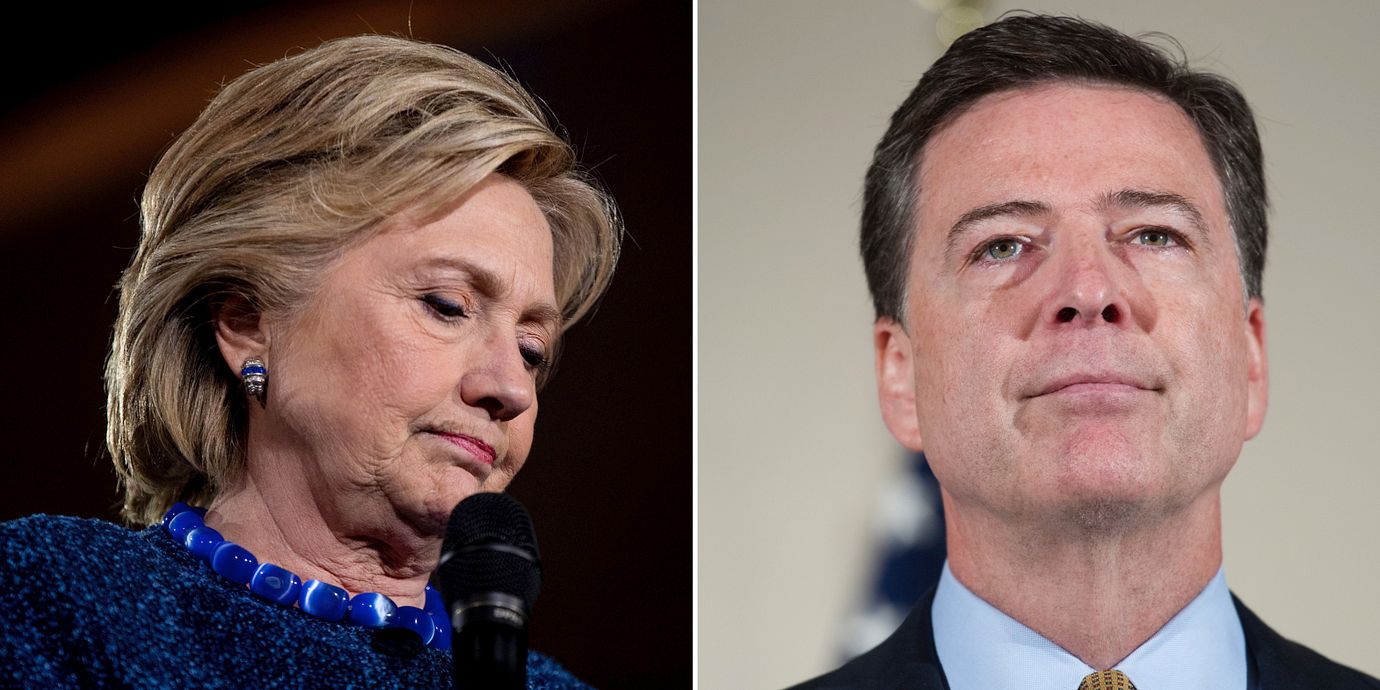
After allegations were raised that some of the emails in question contained classified information, an investigation was initiated by the Federal Bureau of Investigation (FBI) regarding how classified information was handled on the Clinton server. Of the emails on the server, 113 emails contained information which was classified at the time it was sent, including 65 emails deemed "Secret" and 22 deemed "Top Secret." Of the 113 emails, just three contained markings indicating they could be classified, although they lacked classified headers and were only marked with a small "c" in parentheses, described as "portion markings" by FBI Director James Comey. Comey also said it was possible Clinton was not “technically sophisticated” enough to understand what the three classified markings meant. Nearly 2,100 emails on the server were retroactively marked as classified by the State Department. Government policy, reiterated in the non-disclosure agreement signed by Clinton as part of gaining her security clearance, is that sensitive information should be considered and handled as classified even if not marked as such.
In May 2016, the State Department's Office of the Inspector General released an 83-page report about the State Department's email practices, including Clinton's. On July 5, 2016, Comey announced that the FBI's investigation had concluded that Clinton was "extremely careless" in handling her email system but recommended that no charges be filed against her. On July 6, 2016, Attorney General Loretta Lynch announced that no charges would be filed. On July 7, the State Department reopened its probe into the email controversy. On October 28, 2016, Comey notified Congress that the FBI has started looking into newly discovered emails that may be pertinent to the case. Law enforcement officials stated the emails were found on an electronic device shared by Huma Abedin and Anthony Weiner.